 Add to Chrome
 Add to Firefox
 Add to Edge
SWE-Marathon: Can Agents Autonomously Complete Ultra-Long-Horizon Software Work?
Jun 05, 2026
AI agents are increasingly expected to complete long-horizon workflows that require sustained progress over hours, millions of tokens, and complex environments. Yet current agent benchmarks largely evaluate short-form tasks, such as single pull requests, small tickets, or 5-10 minute exercises, limiting our ability to measure agents' capabilities in planning, long-context understanding, and memory use. We introduce SWE-Marathon, a benchmark of 20 long-horizon tasks spanning software engineering and adjacent technical domains. Each task consists of a unique executable environment, a human-written reference solution, and a multi-layer verification suite. Logged agent attempts average 27.2M total tokens, making SWE-Marathon substantially longer-horizon than existing SWE and command-line agent benchmarks. Current frontier coding agents solve fewer than 30% of tasks. Failures often arise from poor self-verification, self-reported infeasibility, and premature termination. We also observe reward-hacking behavior in 13.8% of rollouts, where agents attempt to exploit the environment or verifier to bypass the intended workflow. SWE-Marathon includes adversarial review of test suites and execution environments, as well as multi-layer checks designed to prevent shortcut solutions. We release SWE-Marathon, evaluation code, and agent trajectories at https://swe-marathon.org/.

Attacking Compressed Vision Transformers
Sep 28, 2022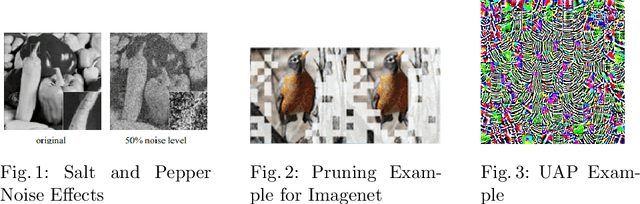
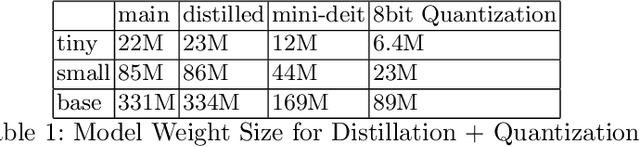

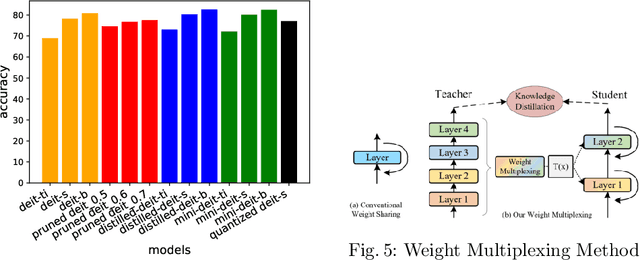
Vision Transformers are increasingly embedded in industrial systems due to their superior performance, but their memory and power requirements make deploying them to edge devices a challenging task. Hence, model compression techniques are now widely used to deploy models on edge devices as they decrease the resource requirements and make model inference very fast and efficient. But their reliability and robustness from a security perspective is another major issue in safety-critical applications. Adversarial attacks are like optical illusions for ML algorithms and they can severely impact the accuracy and reliability of models. In this work we investigate the transferability of adversarial samples across the SOTA Vision Transformer models across 3 SOTA compressed versions and infer the effects different compression techniques have on adversarial attacks.