 Add to Chrome
 Add to Firefox
 Add to Edge
Honest Lying: Understanding Memory Confabulation in Reflexive Agents
May 28, 2026
Reflexion-style agents rely on self-generated reflections as memory, implicitly assuming that agents can accurately diagnose their own failures.We show that this assumption can fail systematically: across ALFWorld and HumanEval, agents store confident but incorrect interpretations of the task and continue acting on them across trials,even though the environment resets to the correct task each time. We call this failure mode memory confabulation and introduce the Reflection Repetition Rate (RRR), a log-based metric that detects repeated reliance on incorrect reflective content.Using RRR, we identify 16 frozen environments in ALFWorld, where 0 of 121 reflections mention the correct target object, and 4 analogous cases in HumanEval. Our mitigation replaces open-ended self-diagnosis with programmatic extraction of trajectory-level failure signals, increasing correct object mention from 0% to 86%, reducing RRR from 0.64 to 0.10, and solving 3 of 16 frozen ALFWorld environments, suggesting that reflective memory can reinforce false beliefs rather than correct them.

WildfireVLM: AI-powered Analysis for Early Wildfire Detection and Risk Assessment Using Satellite Imagery
Feb 09, 2026Wildfires are a growing threat to ecosystems, human lives, and infrastructure, with their frequency and intensity rising due to climate change and human activities. Early detection is critical, yet satellite-based monitoring remains challenging due to faint smoke signals, dynamic weather conditions, and the need for real-time analysis over large areas. We introduce WildfireVLM, an AI framework that combines satellite imagery wildfire detection with language-driven risk assessment. We construct a labeled wildfire and smoke dataset using imagery from Landsat-8/9, GOES-16, and other publicly available Earth observation sources, including harmonized products with aligned spectral bands. WildfireVLM employs YOLOv12 to detect fire zones and smoke plumes, leveraging its ability to detect small, complex patterns in satellite imagery. We integrate Multimodal Large Language Models (MLLMs) that convert detection outputs into contextualized risk assessments and prioritized response recommendations for disaster management. We validate the quality of risk reasoning using an LLM-as-judge evaluation with a shared rubric. The system is deployed using a service-oriented architecture that supports real-time processing, visual risk dashboards, and long-term wildfire tracking, demonstrating the value of combining computer vision with language-based reasoning for scalable wildfire monitoring.
SBI-RAG: Enhancing Math Word Problem Solving for Students through Schema-Based Instruction and Retrieval-Augmented Generation
Oct 17, 2024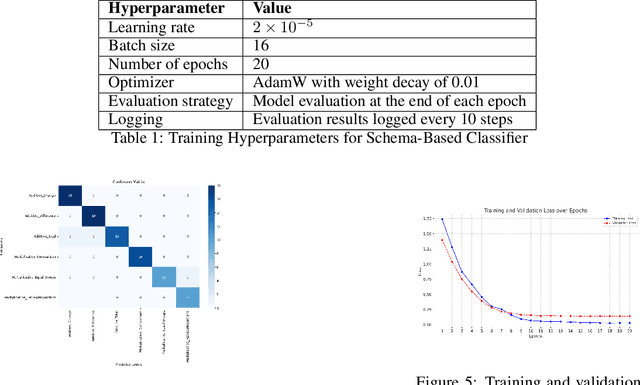
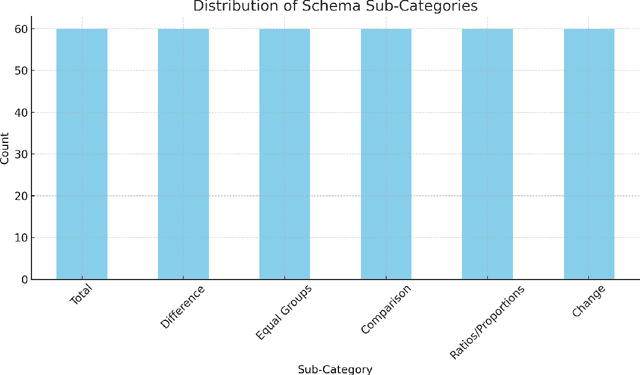
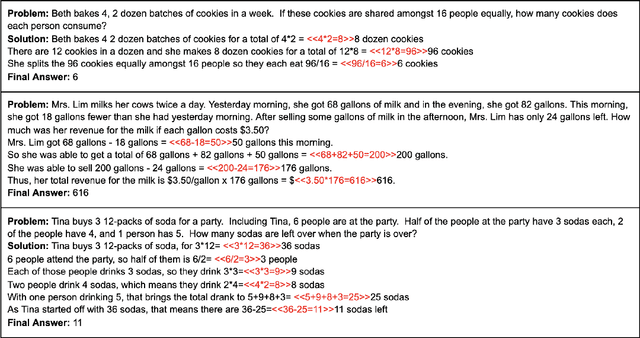
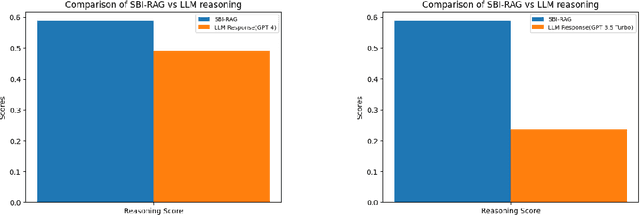
Many students struggle with math word problems (MWPs), often finding it difficult to identify key information and select the appropriate mathematical operations.Schema-based instruction (SBI) is an evidence-based strategy that helps students categorize problems based on their structure, improving problem-solving accuracy. Building on this, we propose a Schema-Based Instruction Retrieval-Augmented Generation (SBI-RAG) framework that incorporates a large language model (LLM).Our approach emphasizes step-by-step reasoning by leveraging schemas to guide solution generation. We evaluate its performance on the GSM8K dataset, comparing it with GPT-4 and GPT-3.5 Turbo, and introduce a "reasoning score" metric to assess solution quality. Our findings suggest that SBI-RAG enhances reasoning clarity and problem-solving accuracy, potentially providing educational benefits for students
ReProHRL: Towards Multi-Goal Navigation in the Real World using Hierarchical Agents
Aug 17, 2023
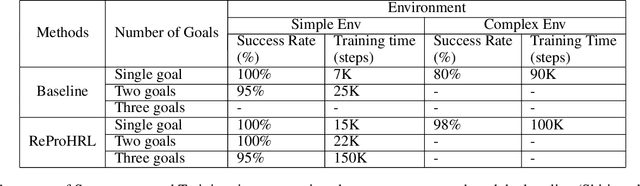
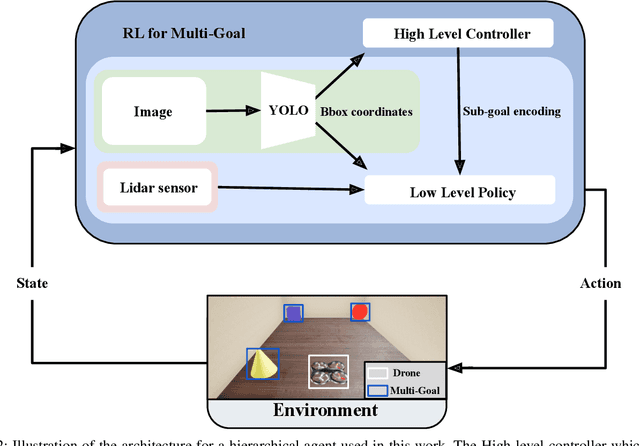

Robots have been successfully used to perform tasks with high precision. In real-world environments with sparse rewards and multiple goals, learning is still a major challenge and Reinforcement Learning (RL) algorithms fail to learn good policies. Training in simulation environments and then fine-tuning in the real world is a common approach. However, adapting to the real-world setting is a challenge. In this paper, we present a method named Ready for Production Hierarchical RL (ReProHRL) that divides tasks with hierarchical multi-goal navigation guided by reinforcement learning. We also use object detectors as a pre-processing step to learn multi-goal navigation and transfer it to the real world. Empirical results show that the proposed ReProHRL method outperforms the state-of-the-art baseline in simulation and real-world environments in terms of both training time and performance. Although both methods achieve a 100% success rate in a simple environment for single goal-based navigation, in a more complex environment and multi-goal setting, the proposed method outperforms the baseline by 18% and 5%, respectively. For the real-world implementation and proof of concept demonstration, we deploy the proposed method on a nano-drone named Crazyflie with a front camera to perform multi-goal navigation experiments.