 Add to Chrome
 Add to Firefox
 Add to Edge
Graph Neural Networks for Interferometer Simulations
Dec 18, 2025

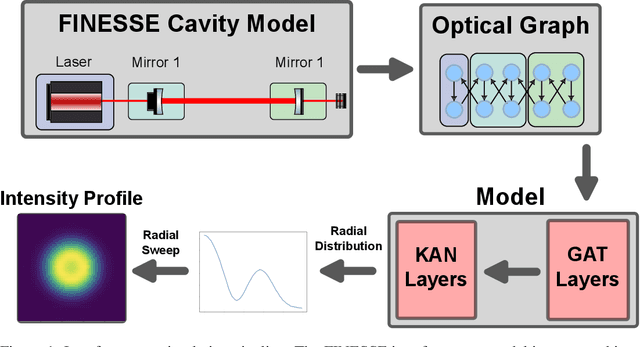
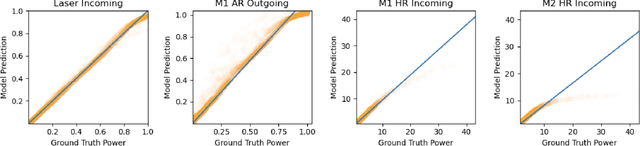
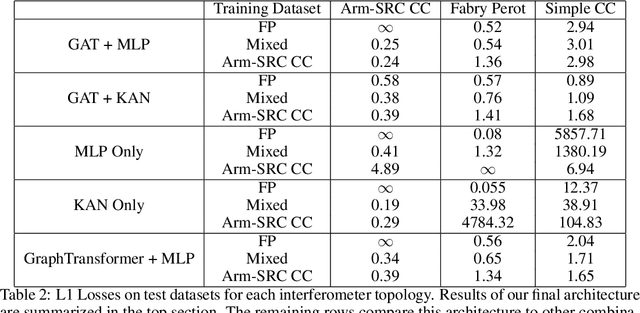
In recent years, graph neural networks (GNNs) have shown tremendous promise in solving problems in high energy physics, materials science, and fluid dynamics. In this work, we introduce a new application for GNNs in the physical sciences: instrumentation design. As a case study, we apply GNNs to simulate models of the Laser Interferometer Gravitational-Wave Observatory (LIGO) and show that they are capable of accurately capturing the complex optical physics at play, while achieving runtimes 815 times faster than state of the art simulation packages. We discuss the unique challenges this problem provides for machine learning models. In addition, we provide a dataset of high-fidelity optical physics simulations for three interferometer topologies, which can be used as a benchmarking suite for future work in this direction.

Multivariate Time Series Clustering for Environmental State Characterization of Ground-Based Gravitational-Wave Detectors
Dec 13, 2024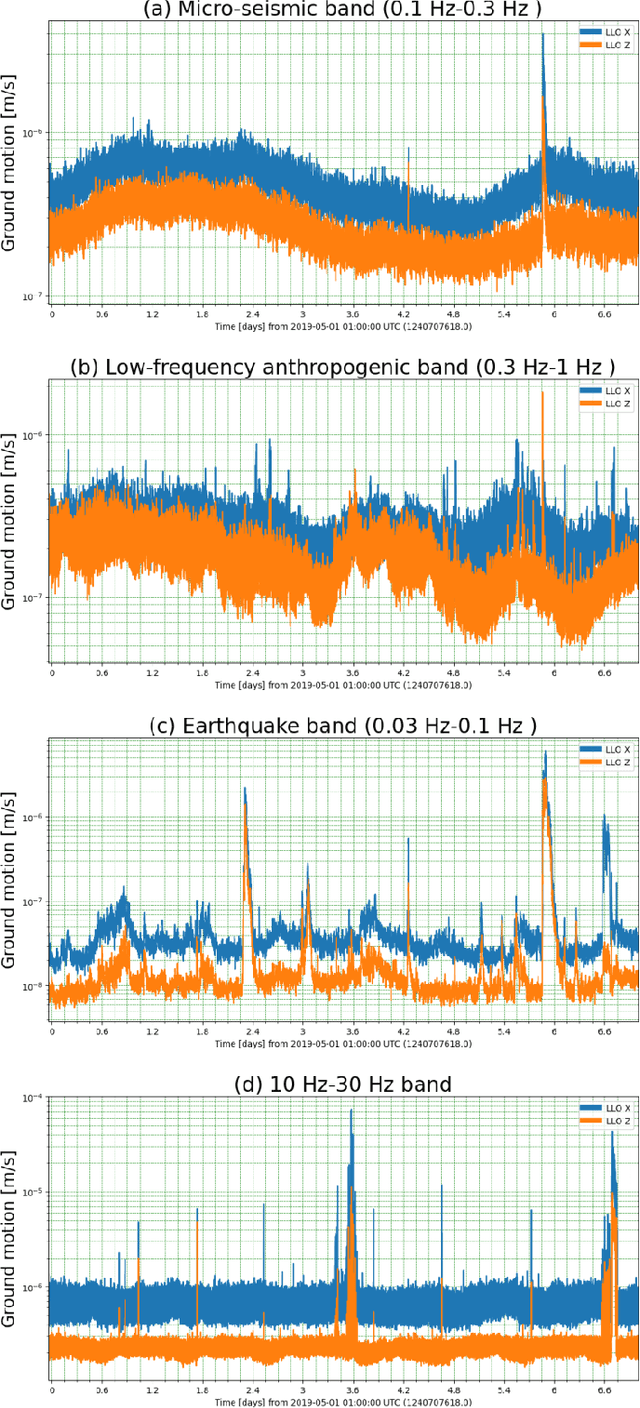
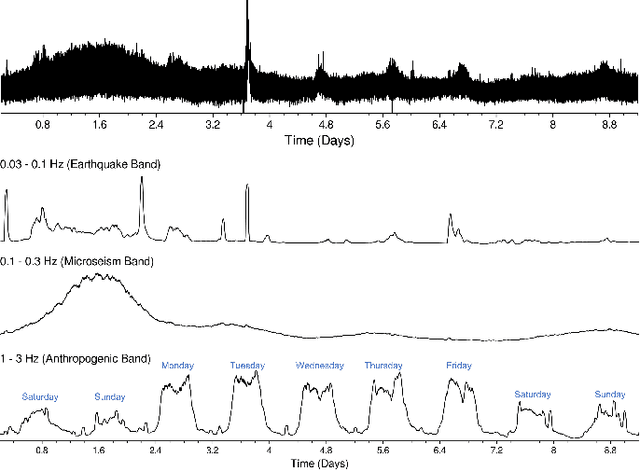
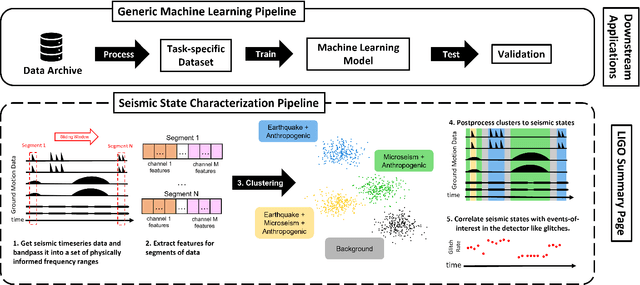
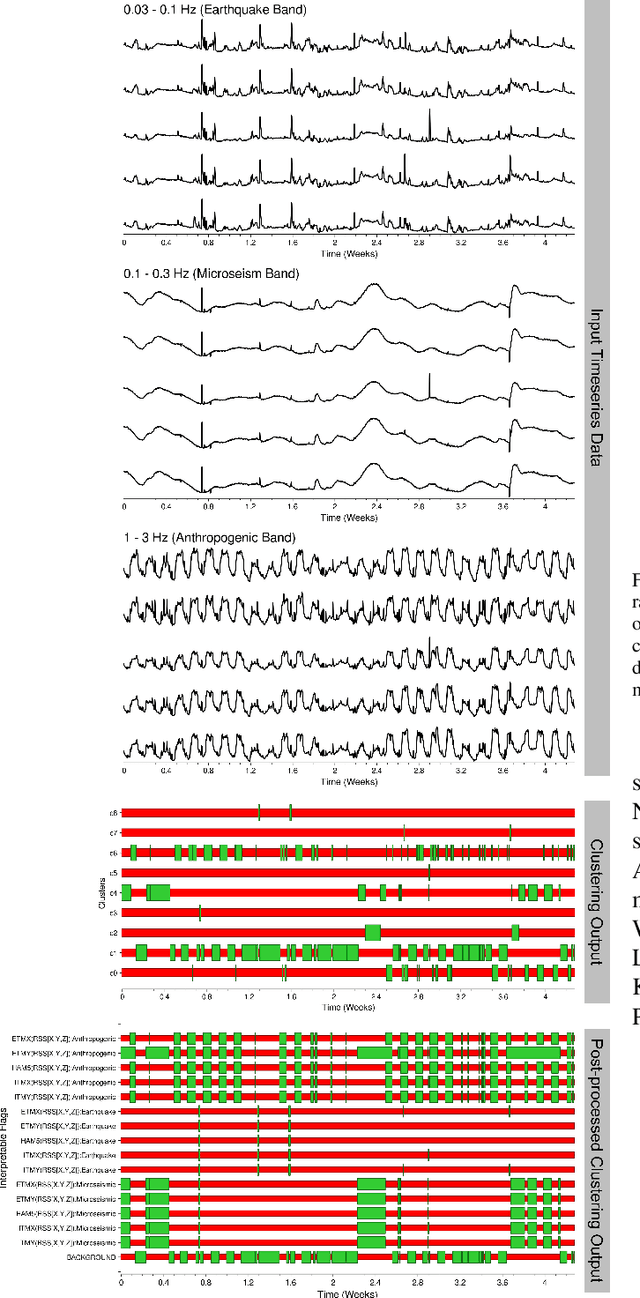
Gravitational-wave observatories like LIGO are large-scale, terrestrial instruments housed in infrastructure that spans a multi-kilometer geographic area and which must be actively controlled to maintain operational stability for long observation periods. Despite exquisite seismic isolation, they remain susceptible to seismic noise and other terrestrial disturbances that can couple undesirable vibrations into the instrumental infrastructure, potentially leading to control instabilities or noise artifacts in the detector output. It is, therefore, critical to characterize the seismic state of these observatories to identify a set of temporal patterns that can inform the detector operators in day-to-day monitoring and diagnostics. On a day-to-day basis, the operators monitor several seismically relevant data streams to diagnose operational instabilities and sources of noise using some simple empirically-determined thresholds. It can be untenable for a human operator to monitor multiple data streams in this manual fashion and thus a distillation of these data-streams into a more human-friendly format is sought. In this paper, we present an end-to-end machine learning pipeline for features-based multivariate time series clustering to achieve this goal and to provide actionable insights to the detector operators by correlating found clusters with events of interest in the detector.