 Add to Chrome
 Add to Firefox
 Add to Edge
Multimodal Optical Imaging Platform for Quantitative Burn Assessment
Nov 19, 2025
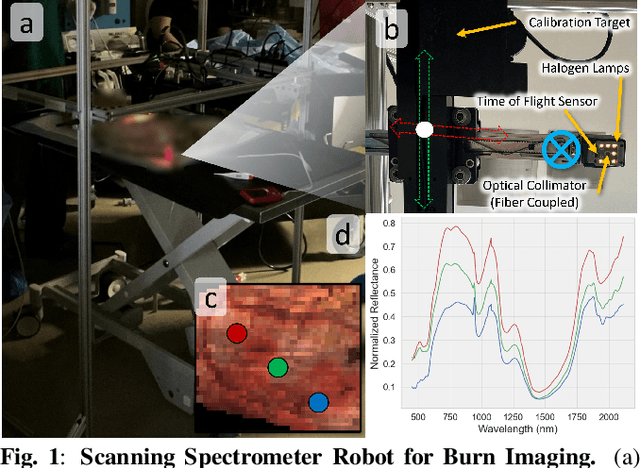
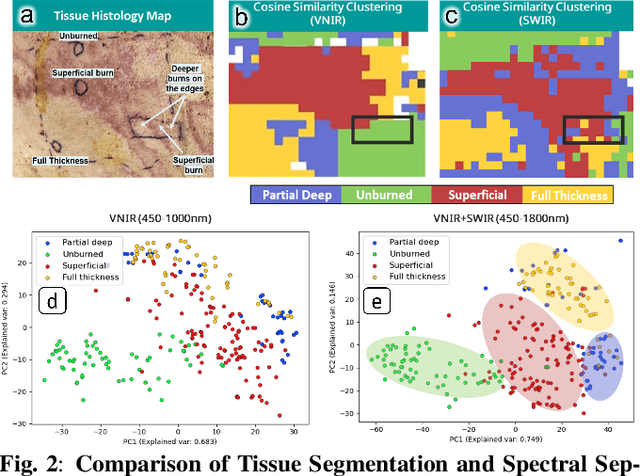
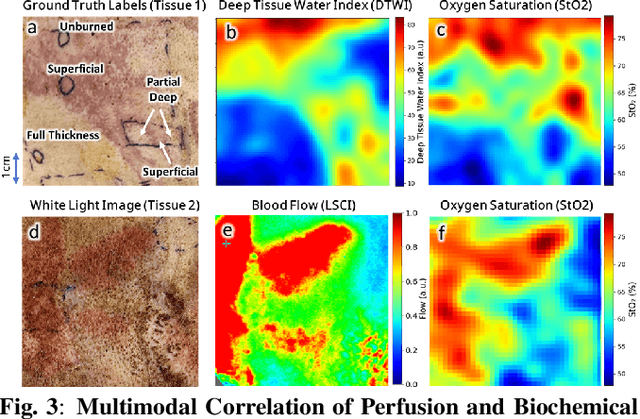
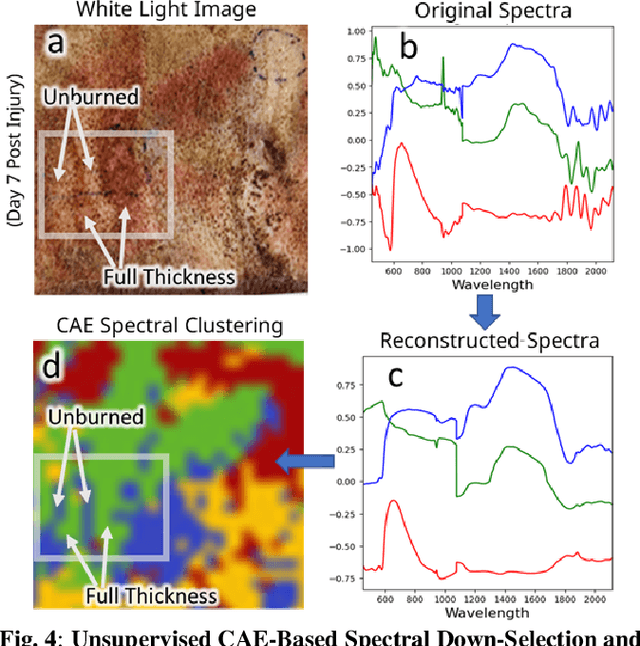
Accurate assessment of burn severity at injury onset remains a major clinical challenge due to the lack of objective methods for detecting subsurface tissue damage. This limitation is critical in battlefield and mass-casualty settings, where rapid and reliable evaluation of burn depth is essential for triage and surgical decision-making. We present a multimodal optical imaging framework that establishes the foundation for a compact, low-size, weight, and power (low-SWaP) field-deployable device for quantitative burn assessment. The system integrates broadband hyperspectral imaging (VSWIR, 400 -- 2100 nm) with laser speckle contrast imaging to jointly evaluate biochemical composition and microvascular perfusion. Using short-wave infrared (SWIR, >1000 nm) wavelengths, we developed and validated novel deep-tissue parameters linked to water, lipid, and collagen absorption features that enhance burn-tissue separability and burn severity classification. We implemented and validated unsupervised learning methods for spectral feature extraction, band down-selection, and clustering against histology, establishing a foundation for a rugged, data-driven device for early quantitative burn evaluation in austere environments.

Multivariate Time Series Clustering for Environmental State Characterization of Ground-Based Gravitational-Wave Detectors
Dec 13, 2024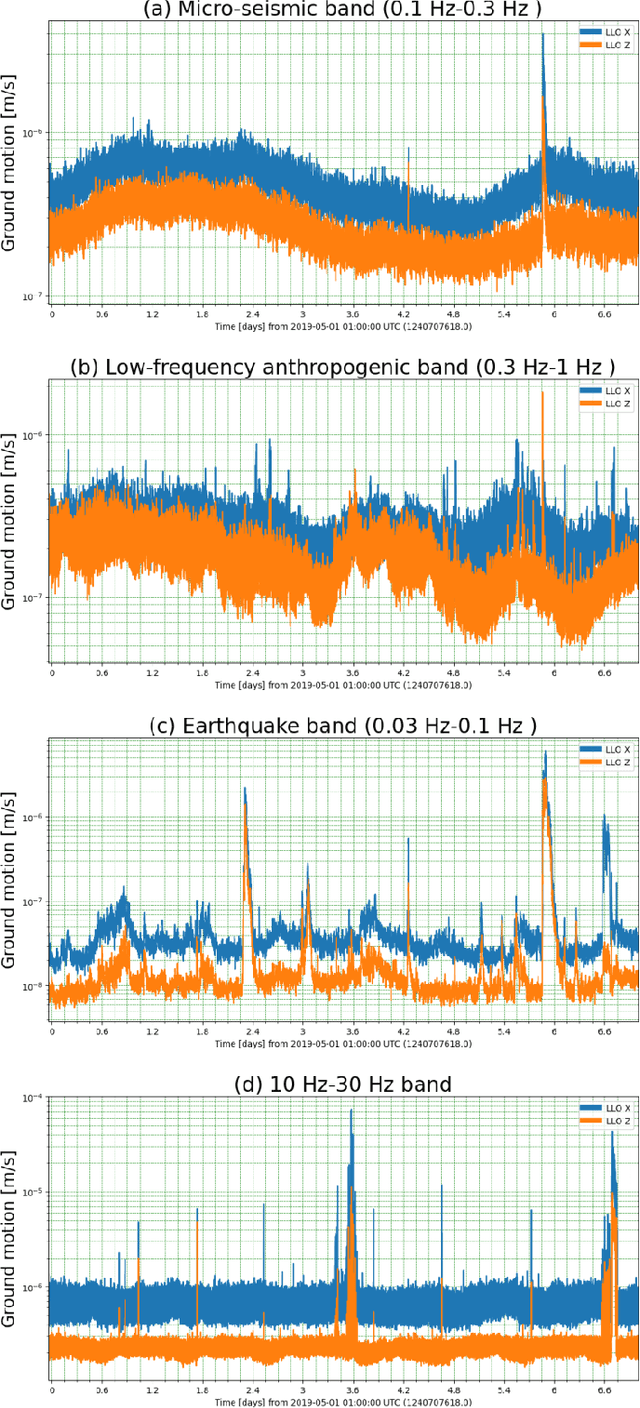
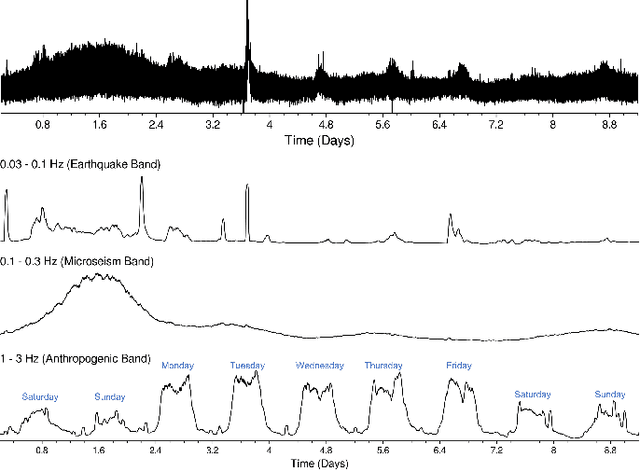
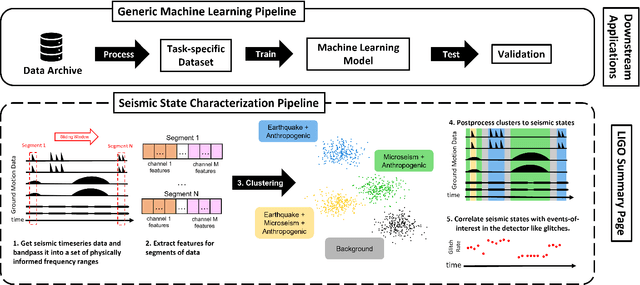
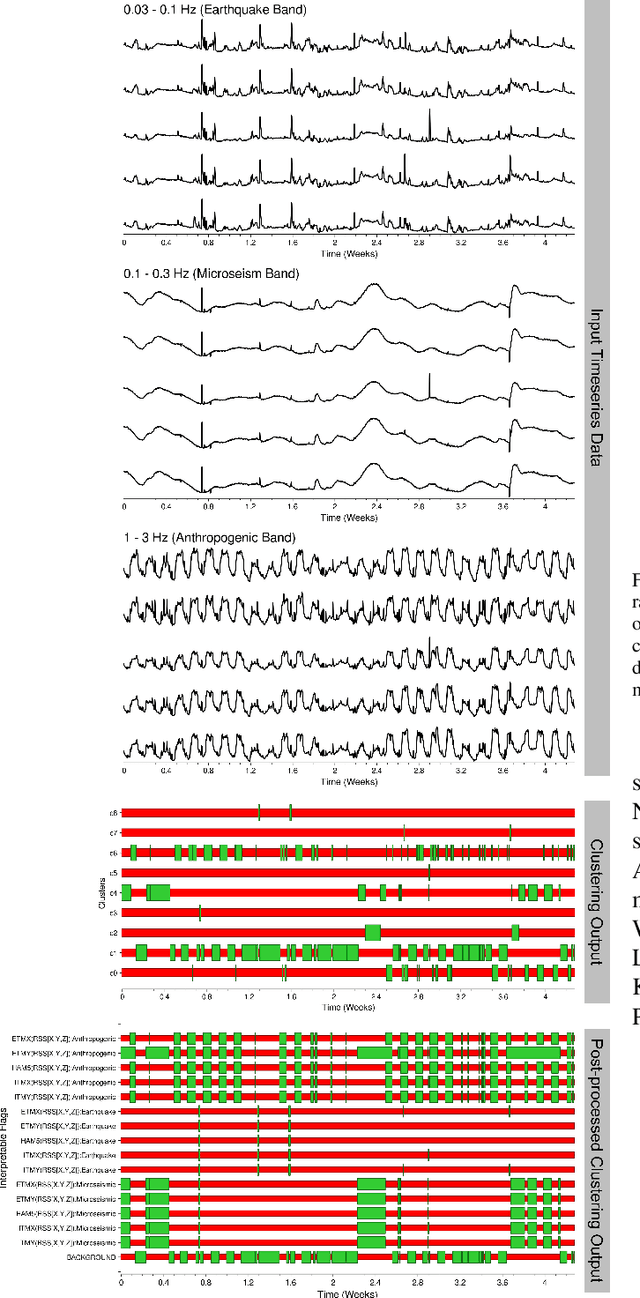
Gravitational-wave observatories like LIGO are large-scale, terrestrial instruments housed in infrastructure that spans a multi-kilometer geographic area and which must be actively controlled to maintain operational stability for long observation periods. Despite exquisite seismic isolation, they remain susceptible to seismic noise and other terrestrial disturbances that can couple undesirable vibrations into the instrumental infrastructure, potentially leading to control instabilities or noise artifacts in the detector output. It is, therefore, critical to characterize the seismic state of these observatories to identify a set of temporal patterns that can inform the detector operators in day-to-day monitoring and diagnostics. On a day-to-day basis, the operators monitor several seismically relevant data streams to diagnose operational instabilities and sources of noise using some simple empirically-determined thresholds. It can be untenable for a human operator to monitor multiple data streams in this manual fashion and thus a distillation of these data-streams into a more human-friendly format is sought. In this paper, we present an end-to-end machine learning pipeline for features-based multivariate time series clustering to achieve this goal and to provide actionable insights to the detector operators by correlating found clusters with events of interest in the detector.