 Add to Chrome
 Add to Firefox
 Add to Edge
A Temporal Planning Framework for Disruption Aware Dynamic Route Optimization in Heterogeneous Railway Systems
Jun 12, 2026
Efficient route optimization play a vital role in ensuring both safety and punctuality in railway operations. It is very crucial particularly in heterogeneous multi-gauge railway networks with varying train speed, stopping pattern, infrastructure compatibility constraints increase coordination complexity. In single-track systems these challenges are further intensify due to all trains to share the same track and requires frequent track switching.Stochastic disruptions events including blocked tracks, blocked trains, engine failure and speed slowdowns introduces additional unpredictability in operations and deviate the timetable. However, existing studies predominantly focuses on high-level timetabling, omitting operational details such as track switching coordination. As a result leaving decision to human operators, increasing safety risks into railway operations. This study proposes a framework based on temporal planning for dynamic route optimization and disruption management in heterogeneous railway systems. The framework formulates railway operations as a temporal planning problem using PDDL 2.1 with explicitly modeling gauge compatibility constraints and diverse disruption scenarios. It generates conflict-free timestamped operational plans specifying both optimized schedules and executable action sequences. To evaluate the proposed framework, we developed a benchmark problem set with 200 instances using up to 1,000 track points and 120 trains. Two state-of-the-art temporal planners and a plan validator were employed to assessed the framework. The experimental results demonstrate that the framework effectively generates temporal operational plans for heterogeneous railway systems and handles multi-gauge constraints, disruptions, and reduces dependence on manual decision making.

Optimizing Deep Learning for Skin Cancer Classification: A Computationally Efficient CNN with Minimal Accuracy Trade-Off
May 27, 2025
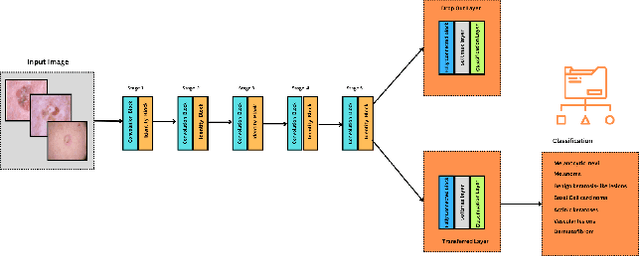

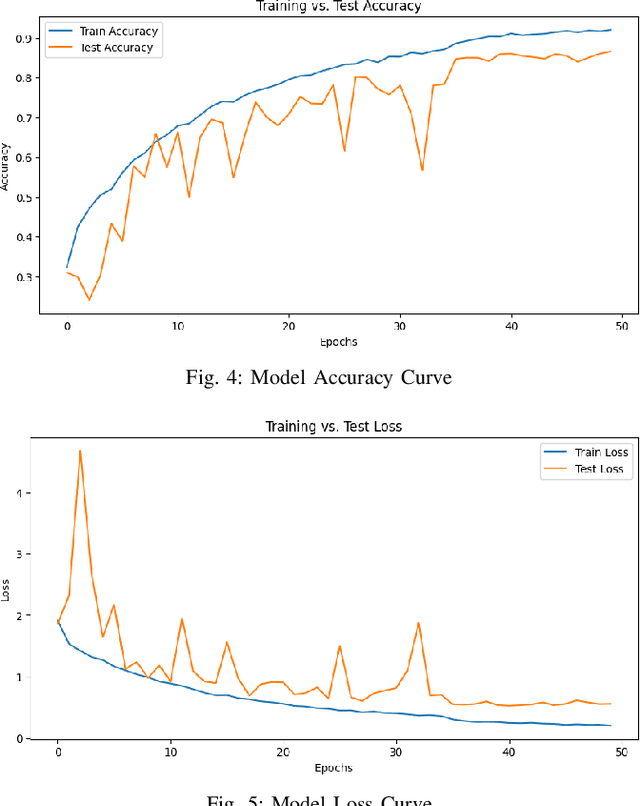
The rapid advancement of deep learning in medical image analysis has greatly enhanced the accuracy of skin cancer classification. However, current state-of-the-art models, especially those based on transfer learning like ResNet50, come with significant computational overhead, rendering them impractical for deployment in resource-constrained environments. This study proposes a custom CNN model that achieves a 96.7\% reduction in parameters (from 23.9 million in ResNet50 to 692,000) while maintaining a classification accuracy deviation of less than 0.022\%. Our empirical analysis of the HAM10000 dataset reveals that although transfer learning models provide a marginal accuracy improvement of approximately 0.022\%, they result in a staggering 13,216.76\% increase in FLOPs, considerably raising computational costs and inference latency. In contrast, our lightweight CNN architecture, which encompasses only 30.04 million FLOPs compared to ResNet50's 4.00 billion, significantly reduces energy consumption, memory footprint, and inference time. These findings underscore the trade-off between the complexity of deep models and their real-world feasibility, positioning our optimized CNN as a practical solution for mobile and edge-based skin cancer diagnostics.