 Add to Chrome
 Add to Firefox
 Add to Edge
Deep learning estimation of the spectral density of functional time series on large domains
Jan 01, 2026
We derive an estimator of the spectral density of a functional time series that is the output of a multilayer perceptron neural network. The estimator is motivated by difficulties with the computation of existing spectral density estimators for time series of functions defined on very large grids that arise, for example, in climate compute models and medical scans. Existing estimators use autocovariance kernels represented as large $G \times G$ matrices, where $G$ is the number of grid points on which the functions are evaluated. In many recent applications, functions are defined on 2D and 3D domains, and $G$ can be of the order $G \sim 10^5$, making the evaluation of the autocovariance kernels computationally intensive or even impossible. We use the theory of spectral functional principal components to derive our deep learning estimator and prove that it is a universal approximator to the spectral density under general assumptions. Our estimator can be trained without computing the autocovariance kernels and it can be parallelized to provide the estimates much faster than existing approaches. We validate its performance by simulations and an application to fMRI images.

Two new approaches to multiple canonical correlation analysis for repeated measures data
Oct 06, 2025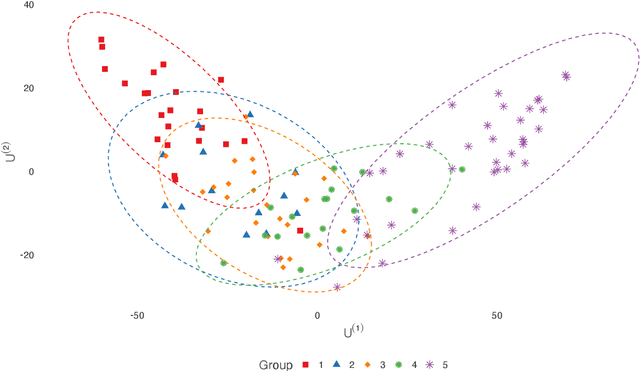

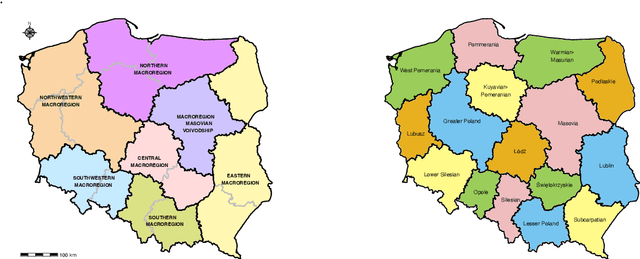
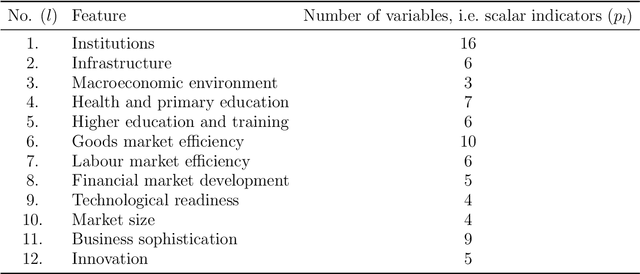
In classical canonical correlation analysis (CCA), the goal is to determine the linear transformations of two random vectors into two new random variables that are most strongly correlated. Canonical variables are pairs of these new random variables, while canonical correlations are correlations between these pairs. In this paper, we propose and study two generalizations of this classical method: (1) Instead of two random vectors we study more complex data structures that appear in important applications. In these structures, there are $L$ features, each described by $p_l$ scalars, $1 \le l \le L$. We observe $n$ such objects over $T$ time points. We derive a suitable analog of the CCA for such data. Our approach relies on embeddings into Reproducing Kernel Hilbert Spaces, and covers several related data structures as well. (2) We develop an analogous approach for multidimensional random processes. In this case, the experimental units are multivariate continuous, square-integrable functions over a given interval. These functions are modeled as elements of a Hilbert space, so in this case, we define the multiple functional canonical correlation analysis, MFCCA. We justify our approaches by their application to two data sets and suitable large sample theory. We derive consistency rates for the related transformation and correlation estimators, and show that it is possible to relax two common assumptions on the compactness of the underlying cross-covariance operators and the independence of the data.