 Add to Chrome
 Add to Firefox
 Add to Edge
When AI and Experts Agree on Error: Intrinsic Ambiguity in Dermatoscopic Images
Apr 01, 2026
The integration of artificial intelligence (AI), particularly Convolutional Neural Networks (CNNs), into dermatological diagnosis demonstrates substantial clinical potential. While existing literature predominantly benchmarks algorithmic performance against human experts, our study adopts a novel perspective by investigating the intrinsic complexity of dermatoscopic images. Through rigorous experimentation with multiple CNN architectures, we isolated a subset of images systematically misclassified across all models-a phenomenon statistically proven to exceed random chance. To determine if these failures stem from algorithmic biases or inherent visual ambiguity, expert dermatologists independently evaluated these challenging cases alongside a control group. The results revealed a collapse in human diagnostic performance on the AI-misclassified images. First, agreement with ground-truth labels plummeted, with Cohen's kappa dropping to a mere 0.08 for the difficult images, compared to a 0.61 for the control group. Second, we observed a severe deterioration in expert consensus; inter-rater reliability among physicians fell from moderate concordance (Fleiss kappa = 0.456) on control images to only modest agreement (Fleiss kappa = 0.275) on difficult cases. We identified image quality as a primary driver of these dual systematic failures. To promote transparency and reproducibility, all data, code, and trained models have been made publicly available

Boosting House Price Estimations with Multi-Head Gated Attention
May 13, 2024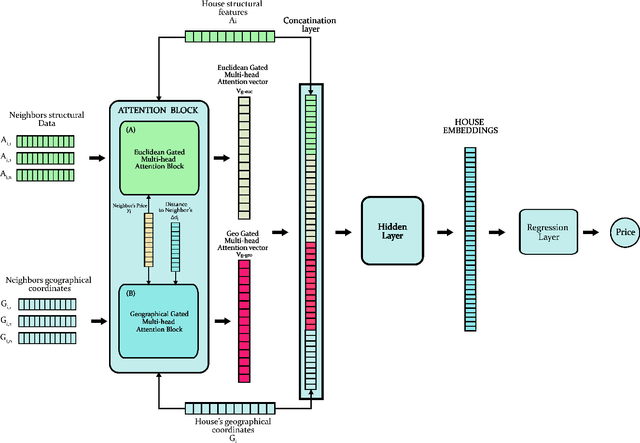

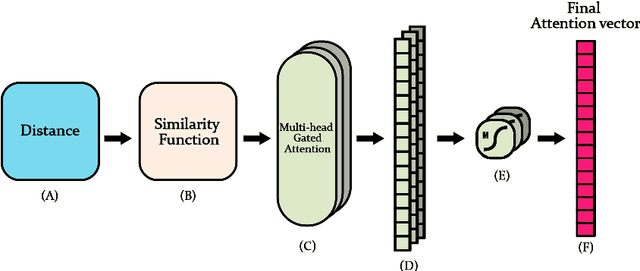
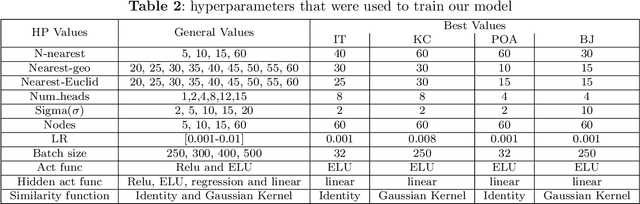
Evaluating house prices is crucial for various stakeholders, including homeowners, investors, and policymakers. However, traditional spatial interpolation methods have limitations in capturing the complex spatial relationships that affect property values. To address these challenges, we have developed a new method called Multi-Head Gated Attention for spatial interpolation. Our approach builds upon attention-based interpolation models and incorporates multiple attention heads and gating mechanisms to capture spatial dependencies and contextual information better. Importantly, our model produces embeddings that reduce the dimensionality of the data, enabling simpler models like linear regression to outperform complex ensembling models. We conducted extensive experiments to compare our model with baseline methods and the original attention-based interpolation model. The results show a significant improvement in the accuracy of house price predictions, validating the effectiveness of our approach. This research advances the field of spatial interpolation and provides a robust tool for more precise house price evaluation. Our GitHub repository.contains the data and code for all datasets, which are available for researchers and practitioners interested in replicating or building upon our work.
Insights into Classifying and Mitigating LLMs' Hallucinations
Nov 14, 2023The widespread adoption of large language models (LLMs) across diverse AI applications is proof of the outstanding achievements obtained in several tasks, such as text mining, text generation, and question answering. However, LLMs are not exempt from drawbacks. One of the most concerning aspects regards the emerging problematic phenomena known as "Hallucinations". They manifest in text generation systems, particularly in question-answering systems reliant on LLMs, potentially resulting in false or misleading information propagation. This paper delves into the underlying causes of AI hallucination and elucidates its significance in artificial intelligence. In particular, Hallucination classification is tackled over several tasks (Machine Translation, Question and Answer, Dialog Systems, Summarisation Systems, Knowledge Graph with LLMs, and Visual Question Answer). Additionally, we explore potential strategies to mitigate hallucinations, aiming to enhance the overall reliability of LLMs. Our research addresses this critical issue within the HeReFaNMi (Health-Related Fake News Mitigation) project, generously supported by NGI Search, dedicated to combating Health-Related Fake News dissemination on the Internet. This endeavour represents a concerted effort to safeguard the integrity of information dissemination in an age of evolving AI technologies.