 Add to Chrome
 Add to Firefox
 Add to Edge
RodEpil: A Video Dataset of Laboratory Rodents for Seizure Detection and Benchmark Evaluation
Nov 14, 2025
We introduce a curated video dataset of laboratory rodents for automatic detection of convulsive events. The dataset contains short (10~s) top-down and side-view video clips of individual rodents, labeled at clip level as normal activity or seizure. It includes 10,101 negative samples and 2,952 positive samples collected from 19 subjects. We describe the data curation, annotation protocol and preprocessing pipeline, and report baseline experiments using a transformer-based video classifier (TimeSformer). Experiments employ five-fold cross-validation with strict subject-wise partitioning to prevent data leakage (no subject appears in more than one fold). Results show that the TimeSformer architecture enables discrimination between seizure and normal activity with an average F1-score of 97%. The dataset and baseline code are publicly released to support reproducible research on non-invasive, video-based monitoring in preclinical epilepsy research. RodEpil Dataset access - DOI: 10.5281/zenodo.17601357

Glioma subtype classification from histopathological images using in-domain and out-of-domain transfer learning: An experimental study
Sep 29, 2023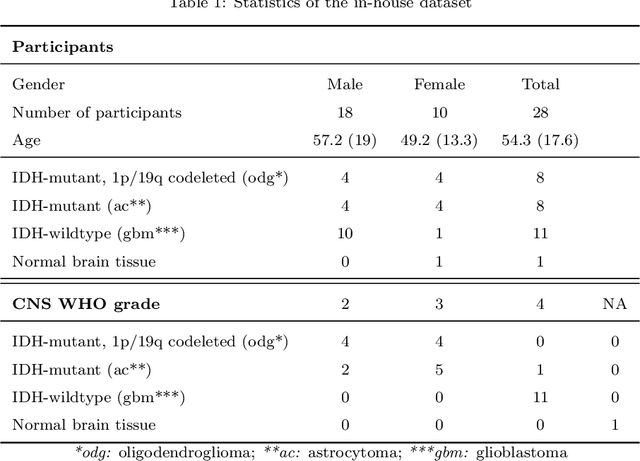
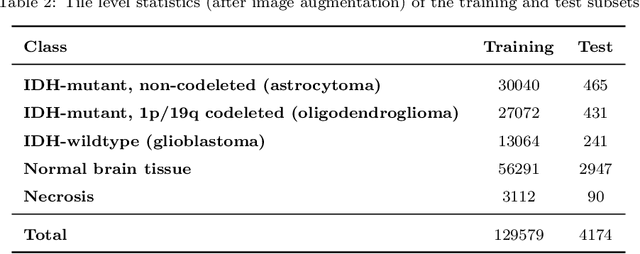
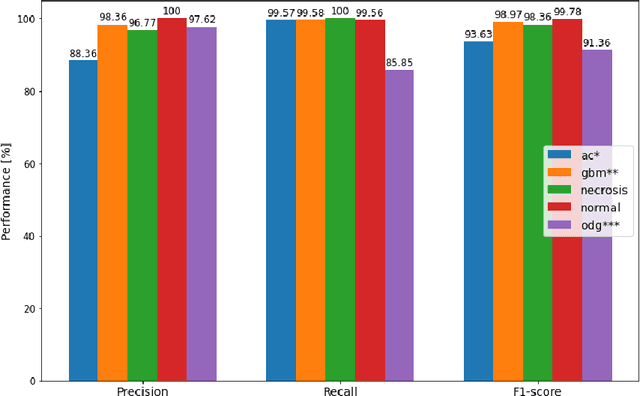
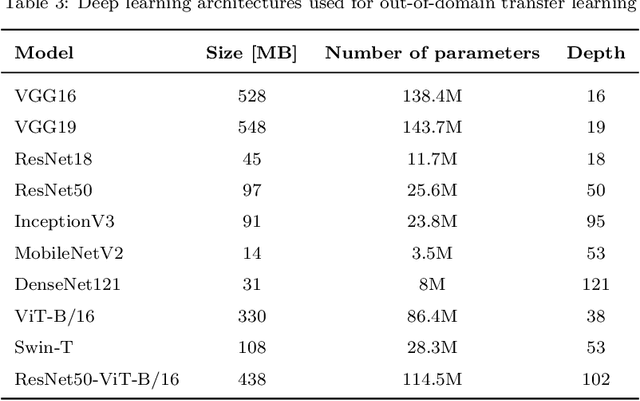
We provide in this paper a comprehensive comparison of various transfer learning strategies and deep learning architectures for computer-aided classification of adult-type diffuse gliomas. We evaluate the generalizability of out-of-domain ImageNet representations for a target domain of histopathological images, and study the impact of in-domain adaptation using self-supervised and multi-task learning approaches for pretraining the models using the medium-to-large scale datasets of histopathological images. A semi-supervised learning approach is furthermore proposed, where the fine-tuned models are utilized to predict the labels of unannotated regions of the whole slide images (WSI). The models are subsequently retrained using the ground-truth labels and weak labels determined in the previous step, providing superior performance in comparison to standard in-domain transfer learning with balanced accuracy of 96.91% and F1-score 97.07%, and minimizing the pathologist's efforts for annotation. Finally, we provide a visualization tool working at WSI level which generates heatmaps that highlight tumor areas; thus, providing insights to pathologists concerning the most informative parts of the WSI.