 Add to Chrome
 Add to Firefox
 Add to Edge
CoM$^3$eT: A foundation model for medical image analysis through federated, multidimensional context integration
Aug 17, 2026
Medical foundation models improve generalization when training AI models with limited labeled data, but remain confined to a single specialty, such as pathology or radiology, and to either sparse or dense outputs, such as classification or segmentation. Here, we present CoM$^3$eT (Co-representation Multidimensional Multitask Medical Transformer), a medical vision foundation model that unifies pathology and radiology, sparse and dense predictions, and two- and higher-dimensional inputs by modeling multidimensional context with attention. CoM$^3$eT outperformed other medical foundation models in an open competition spanning five tomographic, four whole-specimen, and three two-dimensional datasets, covering sparse and dense prediction tasks as well as report generation. When adapted across diverse clinical applications, training fewer than 2.5% of parameters achieved performance comparable to full fine-tuning, enabling research without access to high-performance GPU clusters. Applied to federated learning across hospitals, this approach achieved performance comparable to pooled-data training over internet connections and with consumer-grade hardware.

Multi-Organ Cancer Classification and Survival Analysis
Dec 02, 2016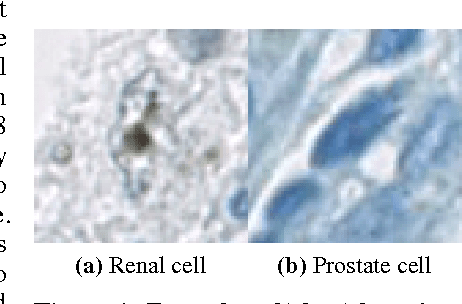

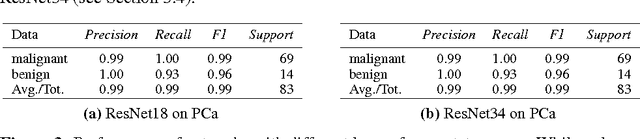
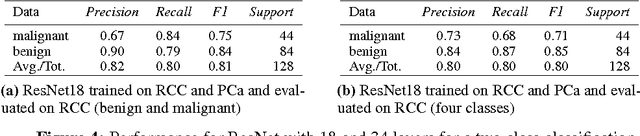
Accurate and robust cell nuclei classification is the cornerstone for a wider range of tasks in digital and Computational Pathology. However, most machine learning systems require extensive labeling from expert pathologists for each individual problem at hand, with no or limited abilities for knowledge transfer between datasets and organ sites. In this paper we implement and evaluate a variety of deep neural network models and model ensembles for nuclei classification in renal cell cancer (RCC) and prostate cancer (PCa). We propose a convolutional neural network system based on residual learning which significantly improves over the state-of-the-art in cell nuclei classification. Finally, we show that the combination of tissue types during training increases not only classification accuracy but also overall survival analysis.