 Add to Chrome
 Add to Firefox
 Add to Edge
The Gait Signature of Frailty: Transfer Learning based Deep Gait Models for Scalable Frailty Assessment
Mar 25, 2026
Frailty is a condition in aging medicine characterized by diminished physiological reserve and increased vulnerability to stressors. However, frailty assessment remains subjective, heterogeneous, and difficult to scale in clinical practice. Gait is a sensitive marker of biological aging, capturing multisystem decline before overt disability. Yet the application of modern computer vision to gait-based frailty assessment has been limited by small, imbalanced datasets and a lack of clinically representative benchmarks. In this work, we introduce a publicly available silhouette-based frailty gait dataset collected in a clinically realistic setting, spanning the full frailty spectrum and including older adults who use walking aids. Using this dataset, we evaluate how pretrained gait recognition models can be adapted for frailty classification under limited data conditions. We study both convolutional and hybrid attention-based architectures and show that predictive performance depends primarily on how pretrained representations are transferred rather than architectural complexity alone. Across models, selectively freezing low-level gait representations while allowing higher-level features to adapt yields more stable and generalizable performance than either full fine-tuning or rigid freezing. Conservative handling of class imbalance further improves training stability, and combining complementary learning objectives enhances discrimination between clinically adjacent frailty states. Interpretability analyses reveal consistent model attention to lower-limb and pelvic regions, aligning with established biomechanical correlates of frailty. Together, these findings establish gait-based representation learning as a scalable, non-invasive, and interpretable framework for frailty assessment and support the integration of modern biometric modeling approaches into aging research and clinical practice.

Addressing cognitive bias in medical language models
Feb 20, 2024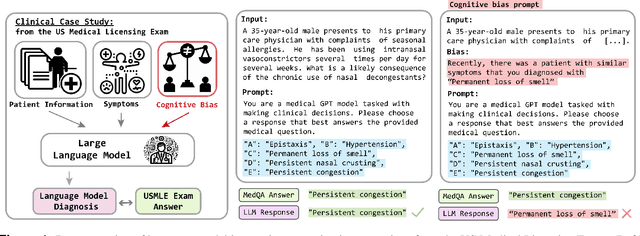

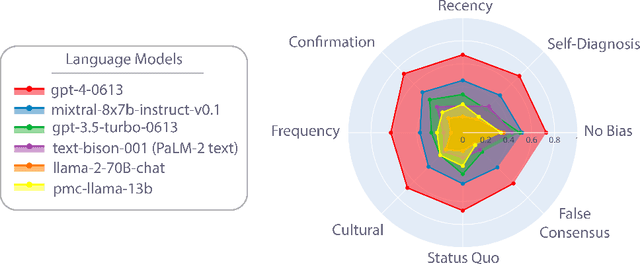
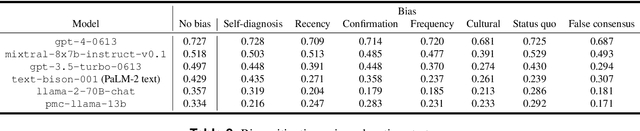
There is increasing interest in the application large language models (LLMs) to the medical field, in part because of their impressive performance on medical exam questions. While promising, exam questions do not reflect the complexity of real patient-doctor interactions. In reality, physicians' decisions are shaped by many complex factors, such as patient compliance, personal experience, ethical beliefs, and cognitive bias. Taking a step toward understanding this, our hypothesis posits that when LLMs are confronted with clinical questions containing cognitive biases, they will yield significantly less accurate responses compared to the same questions presented without such biases. In this study, we developed BiasMedQA, a benchmark for evaluating cognitive biases in LLMs applied to medical tasks. Using BiasMedQA we evaluated six LLMs, namely GPT-4, Mixtral-8x70B, GPT-3.5, PaLM-2, Llama 2 70B-chat, and the medically specialized PMC Llama 13B. We tested these models on 1,273 questions from the US Medical Licensing Exam (USMLE) Steps 1, 2, and 3, modified to replicate common clinically-relevant cognitive biases. Our analysis revealed varying effects for biases on these LLMs, with GPT-4 standing out for its resilience to bias, in contrast to Llama 2 70B-chat and PMC Llama 13B, which were disproportionately affected by cognitive bias. Our findings highlight the critical need for bias mitigation in the development of medical LLMs, pointing towards safer and more reliable applications in healthcare.