 Add to Chrome
 Add to Firefox
 Add to Edge
Agent-Driven Corpus Linguistics: A Framework for Autonomous Linguistic Discovery
Apr 08, 2026
Corpus linguistics has traditionally relied on human researchers to formulate hypotheses, construct queries, and interpret results - a process demanding specialized technical skills and considerable time. We propose Agent-Driven Corpus Linguistics, an approach in which a large language model (LLM), connected to a corpus query engine via a structured tool-use interface, takes over the investigative cycle: generating hypotheses, querying the corpus, interpreting results, and refining analysis across multiple rounds. The human researcher sets direction and evaluates final output. Unlike unconstrained LLM generation, every finding is anchored in verifiable corpus evidence. We treat this not as a replacement for the corpus-based/corpus-driven distinction but as a complementary dimension: it concerns who conducts the inquiry, not the epistemological relationship between theory and data. We demonstrate the framework by linking an LLM agent to a CQP-indexed Gutenberg corpus (5 million tokens) via the Model Context Protocol (MCP). Given only "investigate English intensifiers," the agent identified a diachronic relay chain (so+ADJ > very > really), three pathways of semantic change (delexicalization, polarity fixation, metaphorical constraint), and register-sensitive distributions. A controlled baseline experiment shows that corpus grounding contributes quantification and falsifiability that the model cannot produce from training data alone. To test external validity, the agent replicated two published studies on the CLMET corpus (40 million tokens) - Claridge (2025) and De Smet (2013) - with close quantitative agreement. Agent-driven corpus research can thus produce empirically grounded findings at machine speed, lowering the technical barrier for a broader range of researchers.

A Brain-Inspired Perception-Decision Driving Model Based on Neural Pathway Anatomical Alignment
Feb 22, 2025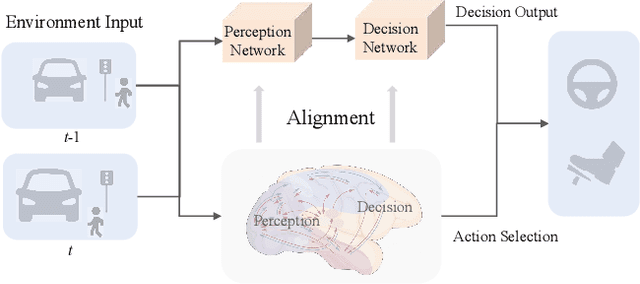
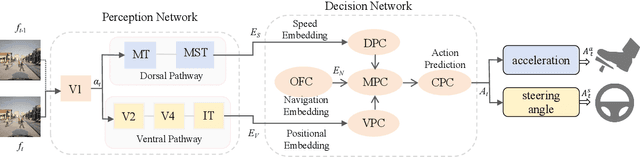
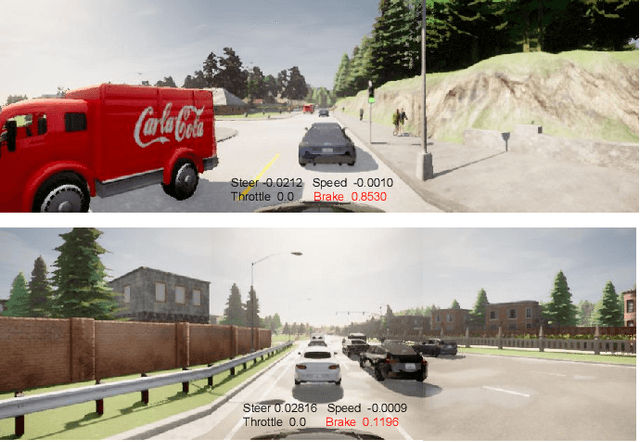
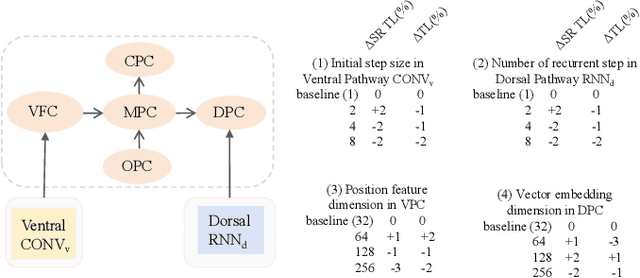
In the realm of autonomous driving, conventional approaches for vehicle perception and decision-making primarily rely on sensor input and rule-based algorithms. However, these methodologies often suffer from lack of interpretability and robustness, particularly in intricate traffic scenarios. To tackle this challenge, we propose a novel brain-inspired driving (BID) framework. Diverging from traditional methods, our approach harnesses brain-inspired perception technology to achieve more efficient and robust environmental perception. Additionally, it employs brain-inspired decision-making techniques to facilitate intelligent decision-making. The experimental results show that the performance has been significantly improved across various autonomous driving tasks and achieved the end-to-end autopilot successfully. This contribution not only advances interpretability and robustness but also offers fancy insights and methodologies for further advancing autonomous driving technology.
BAN: Neuroanatomical Aligning in Auditory Recognition between Artificial Neural Network and Human Cortex
Feb 21, 2025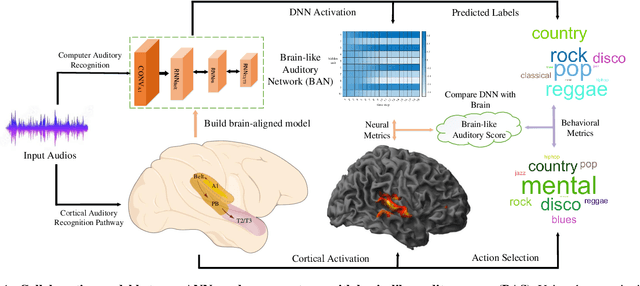
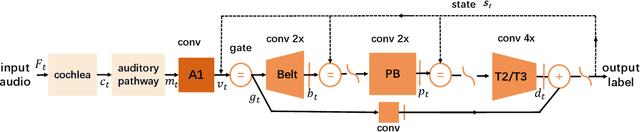
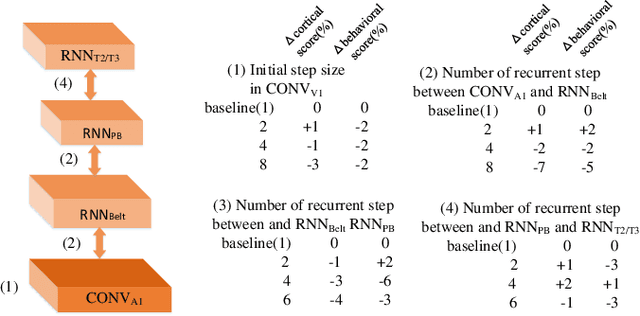
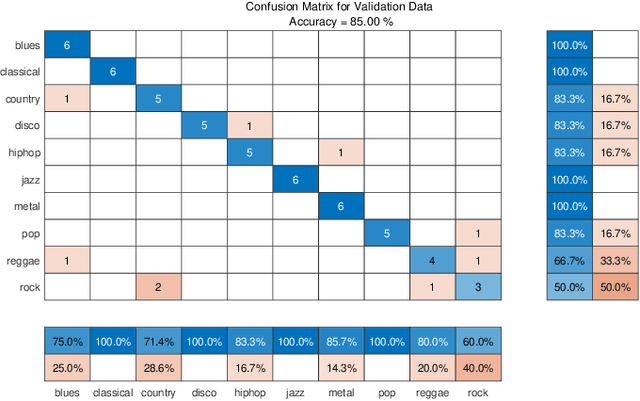
Drawing inspiration from neurosciences, artificial neural networks (ANNs) have evolved from shallow architectures to highly complex, deep structures, yielding exceptional performance in auditory recognition tasks. However, traditional ANNs often struggle to align with brain regions due to their excessive depth and lack of biologically realistic features, like recurrent connection. To address this, a brain-like auditory network (BAN) is introduced, which incorporates four neuroanatomically mapped areas and recurrent connection, guided by a novel metric called the brain-like auditory score (BAS). BAS serves as a benchmark for evaluating the similarity between BAN and human auditory recognition pathway. We further propose that specific areas in the cerebral cortex, mainly the middle and medial superior temporal (T2/T3) areas, correspond to the designed network structure, drawing parallels with the brain's auditory perception pathway. Our findings suggest that the neuroanatomical similarity in the cortex and auditory classification abilities of the ANN are well-aligned. In addition to delivering excellent performance on a music genre classification task, the BAN demonstrates a high BAS score. In conclusion, this study presents BAN as a recurrent, brain-inspired ANN, representing the first model that mirrors the cortical pathway of auditory recognition.