 Add to Chrome
 Add to Firefox
 Add to Edge
Memory for Autonomous LLM Agents:Mechanisms, Evaluation, and Emerging Frontiers
Mar 08, 2026
Large language model (LLM) agents increasingly operate in settings where a single context window is far too small to capture what has happened, what was learned, and what should not be repeated. Memory -- the ability to persist, organize, and selectively recall information across interactions -- is what turns a stateless text generator into a genuinely adaptive agent. This survey offers a structured account of how memory is designed, implemented, and evaluated in modern LLM-based agents, covering work from 2022 through early 2026. We formalize agent memory as a \emph{write--manage--read} loop tightly coupled with perception and action, then introduce a three-dimensional taxonomy spanning temporal scope, representational substrate, and control policy. Five mechanism families are examined in depth: context-resident compression, retrieval-augmented stores, reflective self-improvement, hierarchical virtual context, and policy-learned management. On the evaluation side, we trace the shift from static recall benchmarks to multi-session agentic tests that interleave memory with decision-making, analyzing four recent benchmarks that expose stubborn gaps in current systems. We also survey applications where memory is the differentiating factor -- personal assistants, coding agents, open-world games, scientific reasoning, and multi-agent teamwork -- and address the engineering realities of write-path filtering, contradiction handling, latency budgets, and privacy governance. The paper closes with open challenges: continual consolidation, causally grounded retrieval, trustworthy reflection, learned forgetting, and multimodal embodied memory.

OmniNova:A General Multimodal Agent Framework
Mar 25, 2025The integration of Large Language Models (LLMs) with specialized tools presents new opportunities for intelligent automation systems. However, orchestrating multiple LLM-driven agents to tackle complex tasks remains challenging due to coordination difficulties, inefficient resource utilization, and inconsistent information flow. We present OmniNova, a modular multi-agent automation framework that combines language models with specialized tools such as web search, crawling, and code execution capabilities. OmniNova introduces three key innovations: (1) a hierarchical multi-agent architecture with distinct coordinator, planner, supervisor, and specialist agents; (2) a dynamic task routing mechanism that optimizes agent deployment based on task complexity; and (3) a multi-layered LLM integration system that allocates appropriate models to different cognitive requirements. Our evaluations across 50 complex tasks in research, data analysis, and web interaction domains demonstrate that OmniNova outperforms existing frameworks in task completion rate (87\% vs. baseline 62\%), efficiency (41\% reduced token usage), and result quality (human evaluation score of 4.2/5 vs. baseline 3.1/5). We contribute both a theoretical framework for multi-agent system design and an open-source implementation that advances the state-of-the-art in LLM-based automation systems.
Deep Learning-Aided OFDM-Based Generalized Optical Quadrature Spatial Modulation
Jun 24, 2021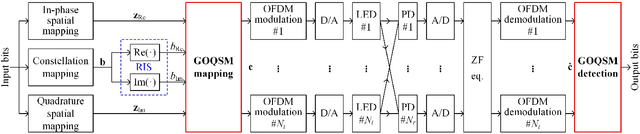
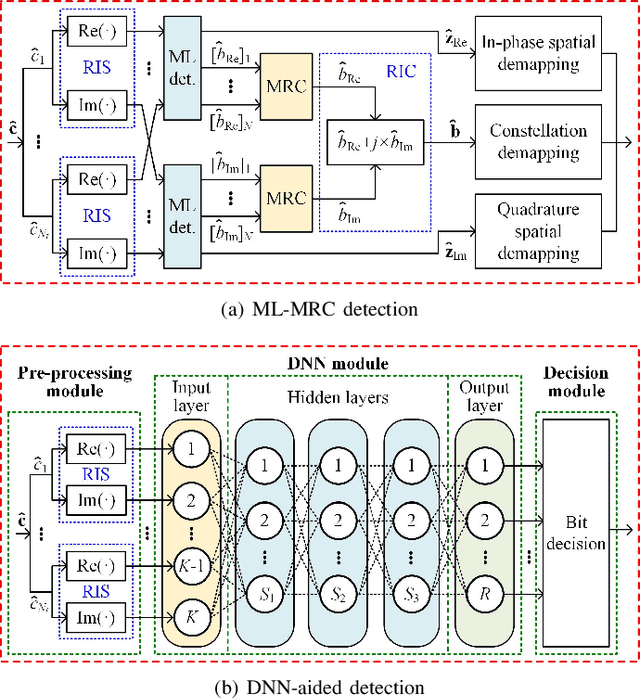
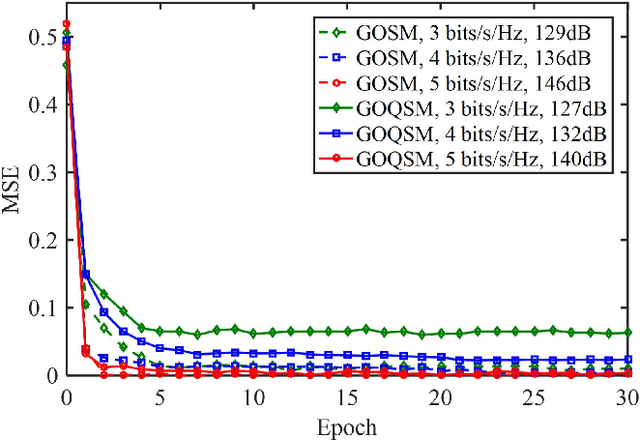
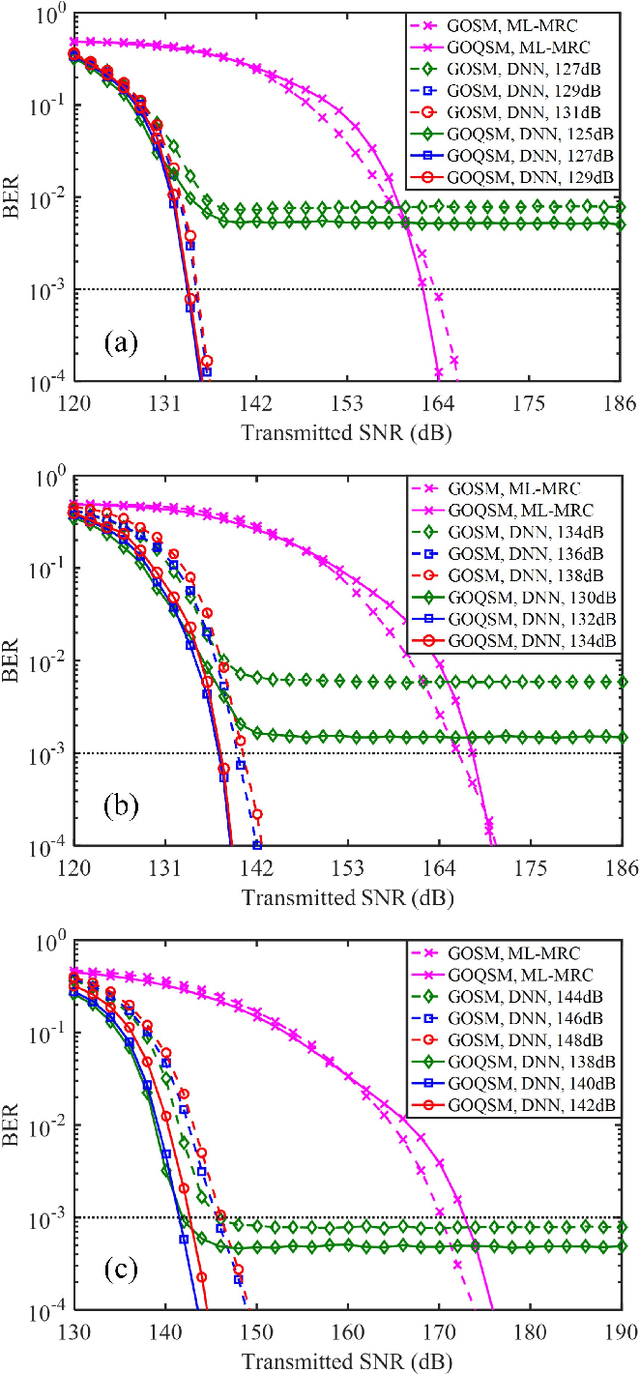
In this paper, we propose an orthogonal frequency division multiplexing (OFDM)-based generalized optical quadrature spatial modulation (GOQSM) technique for multiple-input multiple-output optical wireless communication (MIMO-OWC) systems. Considering the error propagation and noise amplification effects when applying maximum likelihood and maximum ratio combining (ML-MRC)-based detection, we further propose a deep neural network (DNN)-aided detection for OFDM-based GOQSM systems. The proposed DNN-aided detection scheme performs the GOQSM detection in a joint manner, which can efficiently eliminate the adverse effects of both error propagation and noise amplification. The obtained simulation results successfully verify the superiority of the deep learning-aided OFDM-based GOQSM technique for high-speed MIMO-OWC systems.