 Add to Chrome
 Add to Firefox
 Add to Edge
Keeping the Franka Emika Panda alive: a ROS 2 stack with a reliable position interface
Aug 20, 2026
This paper presents an open-source software stack that restores ROS 2 support for the Franka Emika Panda robot while resolving the long-standing unreliability of its external position control interface. We first analyze the root causes of unstable position control and show that the observed vibrations and protective stops arise from the timing of the external control loop and sampling jitter, rather than from limitations of the robot itself. Building on this analysis, we introduce an asynchronous hardware interface that decouples real-time communication from the ROS 2 control loop, a rate-matching mechanism for slower command sources, and a position-domain reference generation strategy that produces reliable, smooth position commands. Experimental validation shows that the proposed architecture reliably tracks velocity references by reducing motion artifacts introduced by the official implementation, and the stack is validated across motion planning, compliance control, position-controlled manipulation, and haptic teleoperation on two independent Panda platforms. By restoring a modern, reliable, and open ROS 2 ecosystem for the Panda, this work lowers the barrier to developing safe, responsive, and reproducible human-robot collaboration applications that integrate planning, perception, interaction, and shared autonomy. Code and videos are available on our website at https://sites.google.com/view/fer-ros2/.

A New Human-Likeness and Comfort Index for Robot Movements Along Prescribed Paths
Jul 09, 2026As human-robot interaction rapidly spreads in numerous fields, the subject of robot acceptance gains increasing importance. Visual similarity to the human body, as occurs for humanoids, is generally not enough to ensure acceptance in physical interaction, as acceptance directly links to comfort and ergonomics, which are measured in terms of the quality of the robot movement perceived by the human. This paper discusses the connection between comfort and similarity of the robot movement to the human one. By considering the kinematic characterization of human movement, this paper focuses on the time laws of such movements, wherein the end-effector path is prescribed. Based on the lognormality principle for modeling human movements, a human-likeness index is defined and used to provide an a priori characterization of trajectories. Such an index can be used to evaluate the performance of trajectory generation algorithms in producing human-like movements before they are actually executed. For validation purposes, 68 subjects are required to judge their comfort. The results of three experimental campaigns involving a physical interaction with a robot demonstrate a globally consistent trend between the preference in terms of perceived comfort and the distribution of the suggested human-likeness index.
Simplifying ROS2 controllers with a modular architecture for robot-agnostic reference generation
Jan 13, 2026This paper introduces a novel modular architecture for ROS2 that decouples the logic required to acquire, validate, and interpolate references from the control laws that track them. The design includes a dedicated component, named Reference Generator, that receives references, in the form of either single points or trajectories, from external nodes (e.g., planners), and writes single-point references at the controller's sampling period via the existing ros2_control chaining mechanism to downstream controllers. This separation removes duplicated reference-handling code from controllers and improves reusability across robot platforms. We implement two reference generators: one for handling joint-space references and one for Cartesian references, along with a set of new controllers (PD with gravity compensation, Cartesian pose, and admittance controllers) and validate the approach on simulated and real Universal Robots and Franka Emika manipulators. Results show that (i) references are tracked reliably in all tested scenarios, (ii) reference generators reduce duplicated reference-handling code across chained controllers to favor the construction and reuse of complex controller pipelines, and (iii) controller implementations remain focused only on control laws.
Improving dependability in robotized bolting operations
Nov 13, 2025Bolting operations are critical in industrial assembly and in the maintenance of scientific facilities, requiring high precision and robustness to faults. Although robotic solutions have the potential to improve operational safety and effectiveness, current systems still lack reliable autonomy and fault management capabilities. To address this gap, we propose a control framework for dependable robotized bolting tasks and instantiate it on a specific robotic system. The system features a control architecture ensuring accurate driving torque control and active compliance throughout the entire operation, enabling safe interaction even under fault conditions. By designing a multimodal human-robot interface (HRI) providing real-time visualization of relevant system information and supporting seamless transitions between automatic and manual control, we improve operator situation awareness and fault detection capabilities. A high-level supervisor (SV) coordinates the execution and manages transitions between control modes, ensuring consistency with the supervisory control (SVC) paradigm, while preserving the human operator's authority. The system is validated in a representative bolting operation involving pipe flange joining, under several fault conditions. The results demonstrate improved fault detection capabilities, enhanced operator situational awareness, and accurate and compliant execution of the bolting operation. However, they also reveal the limitations of relying on a single camera to achieve full situational awareness.
Augmenting Neural Networks-based Model Approximators in Robotic Force-tracking Tasks
Sep 10, 2025As robotics gains popularity, interaction control becomes crucial for ensuring force tracking in manipulator-based tasks. Typically, traditional interaction controllers either require extensive tuning, or demand expert knowledge of the environment, which is often impractical in real-world applications. This work proposes a novel control strategy leveraging Neural Networks (NNs) to enhance the force-tracking behavior of a Direct Force Controller (DFC). Unlike similar previous approaches, it accounts for the manipulator's tangential velocity, a critical factor in force exertion, especially during fast motions. The method employs an ensemble of feedforward NNs to predict contact forces, then exploits the prediction to solve an optimization problem and generate an optimal residual action, which is added to the DFC output and applied to an impedance controller. The proposed Velocity-augmented Artificial intelligence Interaction Controller for Ambiguous Models (VAICAM) is validated in the Gazebo simulator on a Franka Emika Panda robot. Against a vast set of trajectories, VAICAM achieves superior performance compared to two baseline controllers.
A ROS2-based software library for inverse dynamics computation
Apr 08, 2025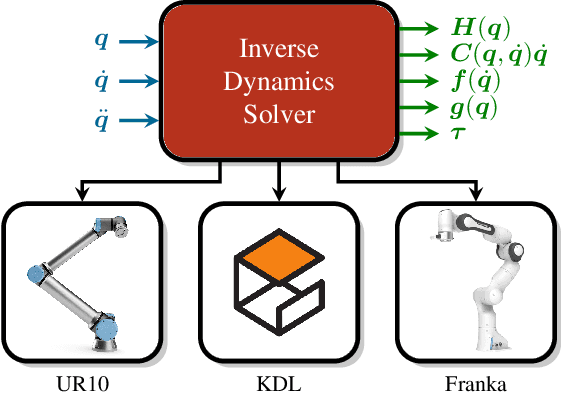
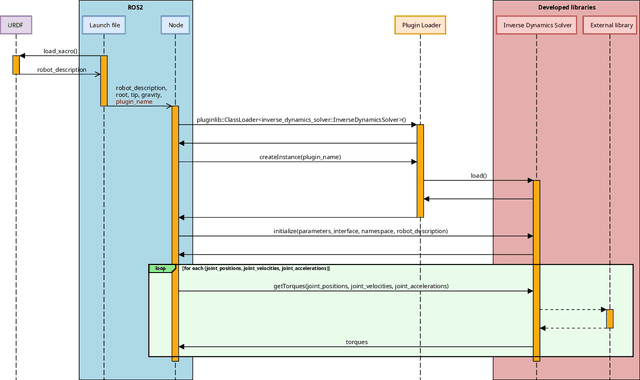
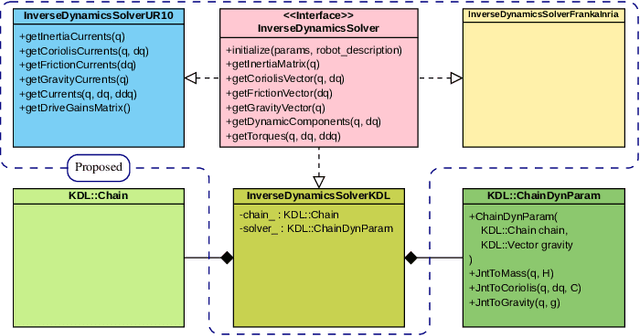
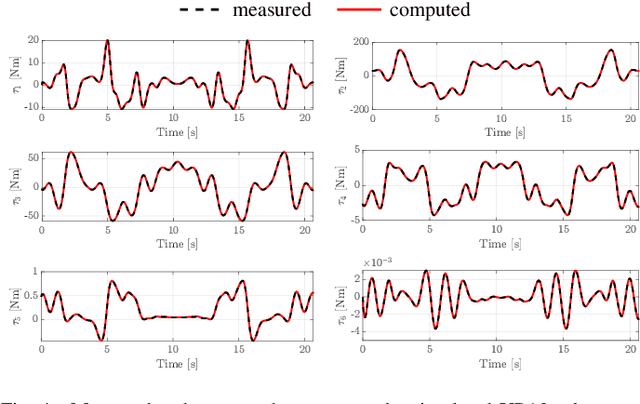
Inverse dynamics computation is a critical component in robot control, planning and simulation, enabling the calculation of joint torques required to achieve a desired motion. This paper presents a ROS2-based software library designed to solve the inverse dynamics problem for robotic systems. The library is built around an abstract class with three concrete implementations: one for simulated robots and two for real UR10 and Franka robots. This contribution aims to provide a flexible, extensible, robot-agnostic solution to inverse dynamics, suitable for both simulation and real-world scenarios involving planning and control applications. The related software is available at https://github.com/ros2-gbp/ros2-gbp-github-org/issues/732.
The Dynamic Model of the UR10 Robot and its ROS2 Integration
Feb 17, 2025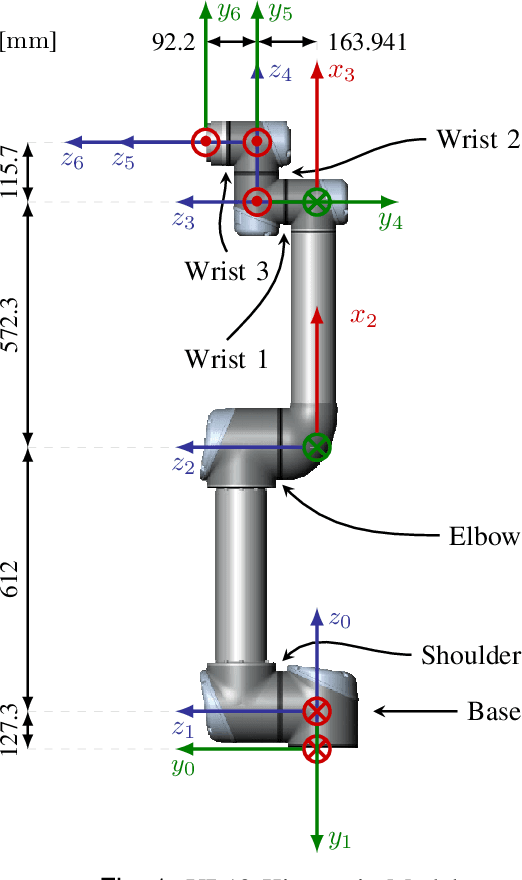
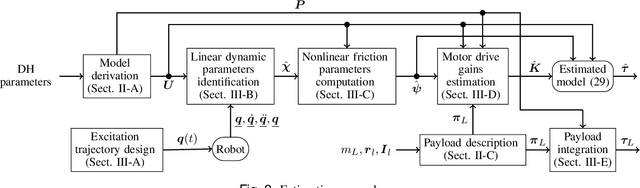
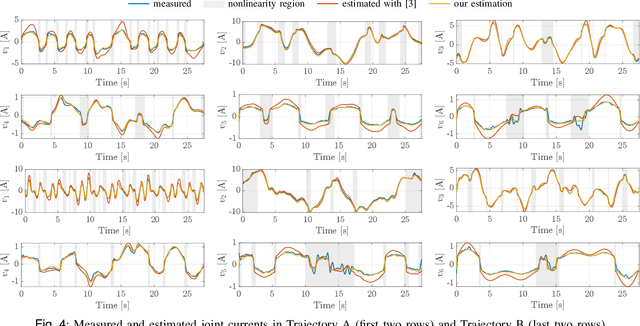
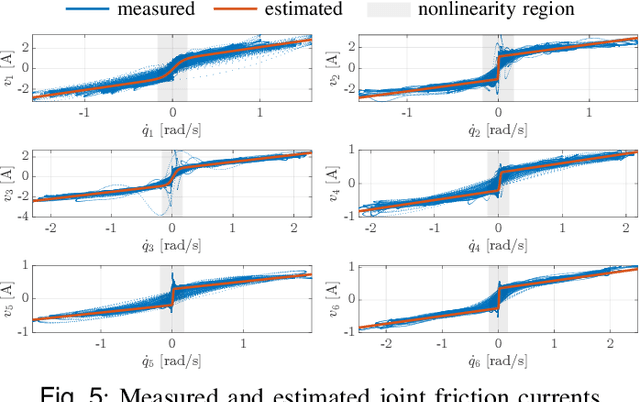
This paper presents the full dynamic model of the UR10 industrial robot. A triple-stage identification approach is adopted to estimate the manipulator's dynamic coefficients. First, linear parameters are computed using a standard linear regression algorithm. Subsequently, nonlinear friction parameters are estimated according to a sigmoidal model. Lastly, motor drive gains are devised to map estimated joint currents to torques. The overall identified model can be used for both control and planning purposes, as the accompanied ROS2 software can be easily reconfigured to account for a generic payload. The estimated robot model is experimentally validated against a set of exciting trajectories and compared to the state-of-the-art model for the same manipulator, achieving higher current prediction accuracy (up to a factor of 4.43) and more precise motor gains. The related software is available at https://codeocean.com/capsule/8515919/tree/v2.
On the role of Artificial Intelligence methods in modern force-controlled manufacturing robotic tasks
Sep 25, 2024
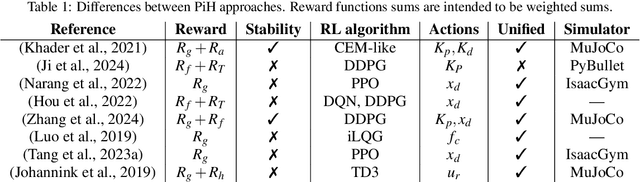
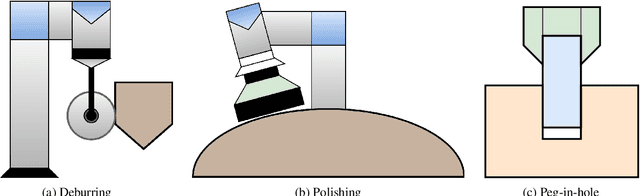
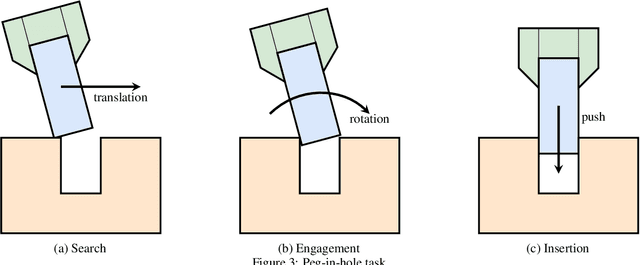
This position paper explores the integration of Artificial Intelligence (AI) into force-controlled robotic tasks within the scope of advanced manufacturing, a cornerstone of Industry 4.0. AI's role in enhancing robotic manipulators - key drivers in the Fourth Industrial Revolution - is rapidly leading to significant innovations in smart manufacturing. The objective of this article is to frame these innovations in practical force-controlled applications - e.g. deburring, polishing, and assembly tasks like peg-in-hole (PiH) - highlighting their necessity for maintaining high-quality production standards. By reporting on recent AI-based methodologies, this article contrasts them and identifies current challenges to be addressed in future research. The analysis concludes with a perspective on future research directions, emphasizing the need for common performance metrics to validate AI techniques, integration of various enhancements for performance optimization, and the importance of validating them in relevant scenarios. These future directions aim to provide consistency with already adopted approaches, so as to be compatible with manufacturing standards, increasing the relevance of AI-driven methods in both academic and industrial contexts.
Human-Robot Interface for Teleoperated Robotized Planetary Sample Collection and Assembly
Jun 13, 2024


As human space exploration evolves toward longer voyages farther from our home planet, in-situ resource utilization (ISRU) becomes increasingly important. Haptic teleoperations are one of the technologies by which such activities can be carried out remotely by humans, whose expertise is still necessary for complex activities. In order to perform precision tasks with effectiveness, the operator must experience ease of use and accuracy. The same features are demanded to reduce the complexity of the training procedures and the associated learning time for operators without a specific background in robotic teleoperations. Haptic teleoperation systems, that allow for a natural feeling of forces, need to cope with the trade-off between accurate movements and workspace extension. Clearly, both of them are required for typical ISRU tasks. In this work, we develop a new concept of operations and suitable human-robot interfaces to achieve sample collection and assembly with ease of use and accuracy. In the proposed operational concept, the teleoperation space is extended by executing automated trajectories, offline planned at the control station. In three different experimental scenarios, we validate the end-to-end system involving the control station and the robotic asset, by assessing the contribution of haptics to mission success, the system robustness to consistent delays, and the ease of training new operators.
Optimal Whole Body Trajectory Planning for Mobile Manipulators in Planetary Exploration and Construction
May 23, 2024Space robotics poses unique challenges arising from the limitation of energy and computational resources, and the complexity of the environment and employed platforms. At the control center, offline motion planning is fundamental in the computation of optimized trajectories accounting for the system's constraints. Smooth movements, collision and forbidden areas avoidance, target visibility and energy consumption are all important factors to consider to be able to generate feasible and optimal plans. When mobile manipulators (terrestrial, aerial) are employed, the base and the arm movements are often separately planned, ultimately resulting in sub-optimal solutions. We propose an Optimal Whole Body Planner (OptiWB) based on Discrete Dynamic Programming (DDP) and optimal interpolation. Kinematic redundancy is exploited for collision and forbidden areas avoidance, and to improve target illumination and visibility from onboard cameras. The planner, implemented in ROS (Robot Operating System), interfaces 3DROCS, a mission planner used in several programs of the European Space Agency (ESA) to support planetary exploration surface missions and part of the ExoMars Rover's planning software. The proposed approach is exercised on a simplified version of the Analog-1 Interact rover by ESA, a 7-DOFs robotic arm mounted on a four wheels non-holonomic platform.