 Add to Chrome
 Add to Firefox
 Add to Edge
Machine Learning Architectures for the Estimation of Predicted Occupancy Grids in Road Traffic
Dec 15, 2025
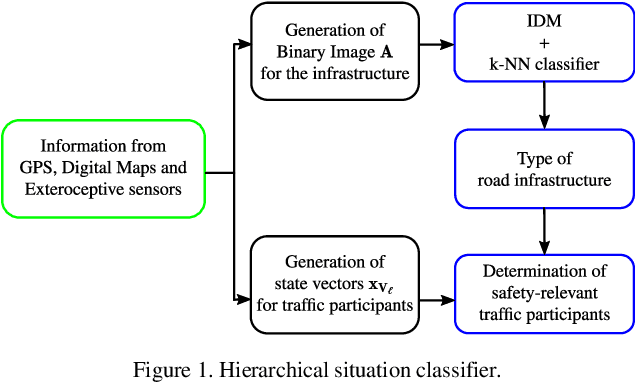
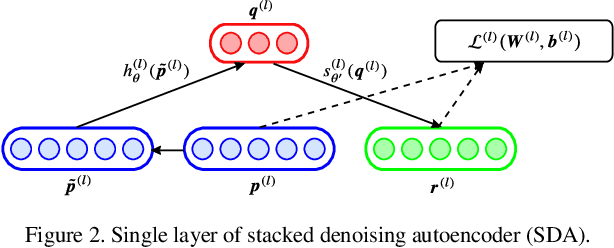
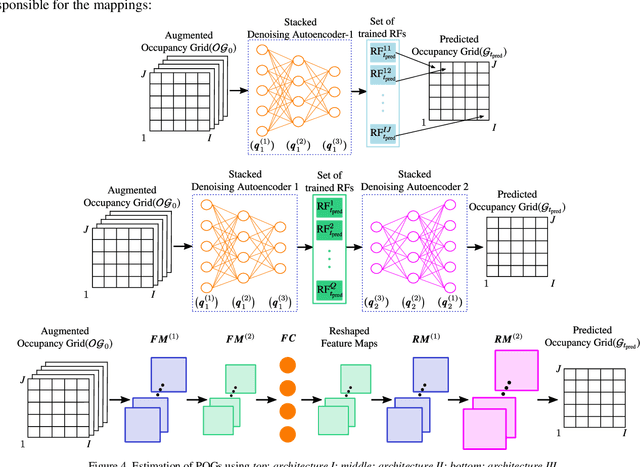
This paper introduces a novel machine learning architecture for an efficient estimation of the probabilistic space-time representation of complex traffic scenarios. A detailed representation of the future traffic scenario is of significant importance for autonomous driving and for all active safety systems. In order to predict the future space-time representation of the traffic scenario, first the type of traffic scenario is identified and then the machine learning algorithm maps the current state of the scenario to possible future states. The input to the machine learning algorithms is the current state representation of a traffic scenario, termed as the Augmented Occupancy Grid (AOG). The output is the probabilistic space-time representation which includes uncertainties regarding the behaviour of the traffic participants and is termed as the Predicted Occupancy Grid (POG). The novel architecture consists of two Stacked Denoising Autoencoders (SDAs) and a set of Random Forests. It is then compared with the other two existing architectures that comprise of SDAs and DeconvNet. The architectures are validated with the help of simulations and the comparisons are made both in terms of accuracy and computational time. Also, a brief overview on the applications of POGs in the field of active safety is presented.

Predicted-occupancy grids for vehicle safety applications based on autoencoders and the Random Forest algorithm
Dec 15, 2025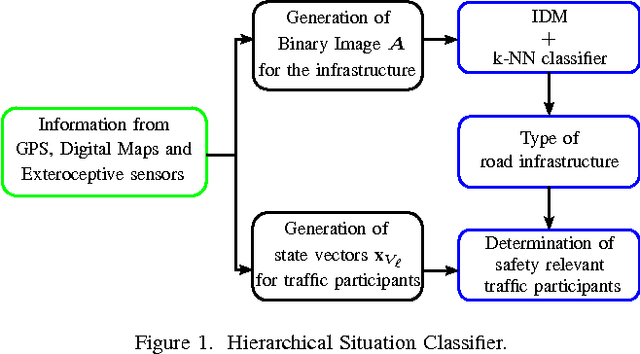
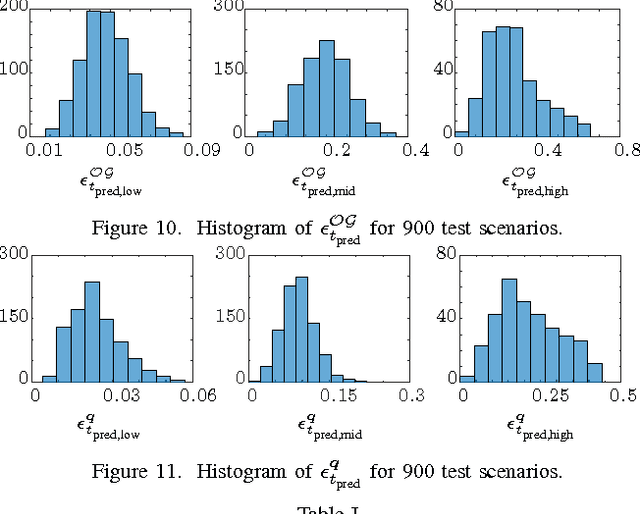
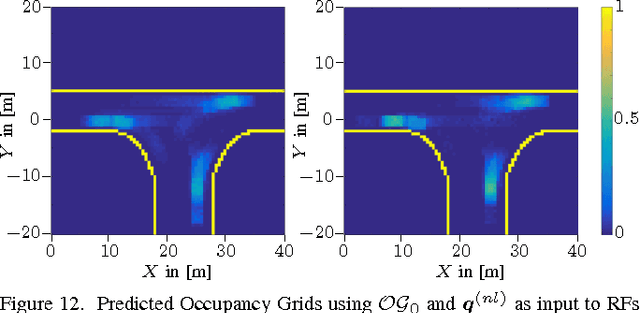
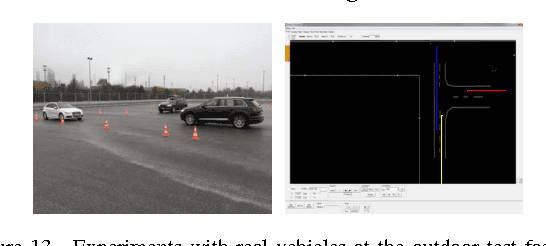
In this paper, a probabilistic space-time representation of complex traffic scenarios is predicted using machine learning algorithms. Such a representation is significant for all active vehicle safety applications especially when performing dynamic maneuvers in a complex traffic scenario. As a first step, a hierarchical situation classifier is used to distinguish the different types of traffic scenarios. This classifier is responsible for identifying the type of the road infrastructure and the safety-relevant traffic participants of the driving environment. With each class representing similar traffic scenarios, a set of Random Forests (RFs) is individually trained to predict the probabilistic space-time representation, which depicts the future behavior of traffic participants. This representation is termed as a Predicted-Occupancy Grid (POG). The input to the RFs is an Augmented Occupancy Grid (AOG). In order to increase the learning accuracy of the RFs and to perform better predictions, the AOG is reduced to low-dimensional features using a Stacked Denoising Autoencoder (SDA). The excellent performance of the proposed machine learning approach consisting of SDAs and RFs is demonstrated in simulations and in experiments with real vehicles. An application of POGs to estimate the criticality of traffic scenarios and to determine safe trajectories is also presented.
Probability Estimation for Predicted-Occupancy Grids in Vehicle Safety Applications Based on Machine Learning
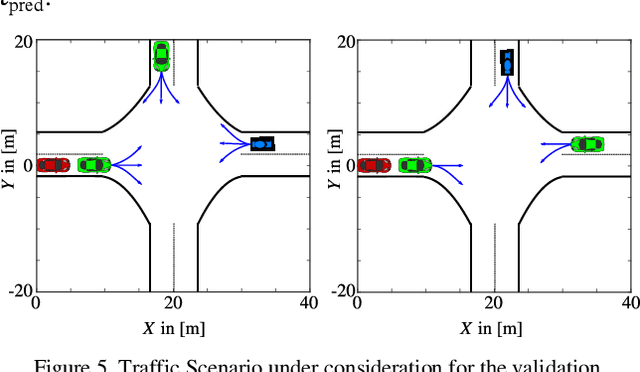
Dec 15, 2025This paper presents a method to predict the evolution of a complex traffic scenario with multiple objects. The current state of the scenario is assumed to be known from sensors and the prediction is taking into account various hypotheses about the behavior of traffic participants. This way, the uncertainties regarding the behavior of traffic participants can be modelled in detail. In the first part of this paper a model-based approach is presented to compute Predicted-Occupancy Grids (POG), which are introduced as a grid-based probabilistic representation of the future scenario hypotheses. However, due to the large number of possible trajectories for each traffic participant, the model-based approach comes with a very high computational load. Thus, a machine-learning approach is adopted for the computation of POGs. This work uses a novel grid-based representation of the current state of the traffic scenario and performs the mapping to POGs. This representation consists of augmented cells in an occupancy grid. The adopted machine-learning approach is based on the Random Forest algorithm. Simulations of traffic scenarios are performed to compare the machine-learning with the model-based approach. The results are promising and could enable the real-time computation of POGs for vehicle safety applications. With this detailed modelling of uncertainties, crucial components in vehicle safety systems like criticality estimation and trajectory planning can be improved.