 Add to Chrome
 Add to Firefox
 Add to Edge
A Resampling-Based Framework for Network Structure Learning in High-Dimensional Data
May 12, 2026
RSNet is an open-source R package that provides a resampling-based framework for robust and interpretable network inference, designed to address the limited-sample-size challenges common in high-dimensional data. It supports both the estimation of partial correlation networks modeled as Gaussian networks and conditional Gaussian Bayesian networks for mixed data types that combine continuous and discrete variables. The framework incorporates multiple resampling strategies, including bootstrap, subsampling, and cluster-based approaches, to accommodate both independent and correlated observations. To enhance interpretability, RSNet integrates graphlet-based topology analysis that captures higher-order connectivity and edge sign information, enabling single-node and subnetwork-level insights. Notably, RSNet is the first R package to efficiently construct signed graphlet degree vector matrices (GDVMs) in near-constant time for sparse networks, providing scalable analysis of higher-order network structure. Collectively, RSNet offers a versatile tool for statistically reliable and interpretable network inference in high-dimensional data.

Learning Bayesian Networks from Incomplete Databases
Feb 06, 2013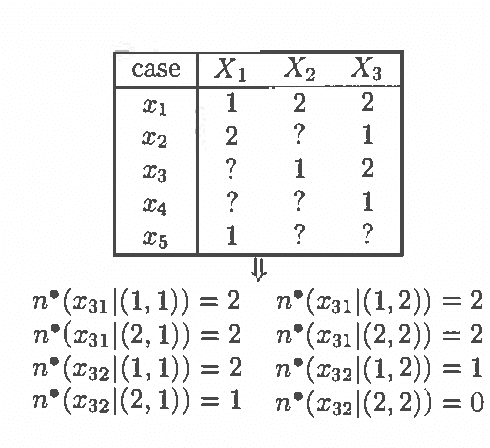
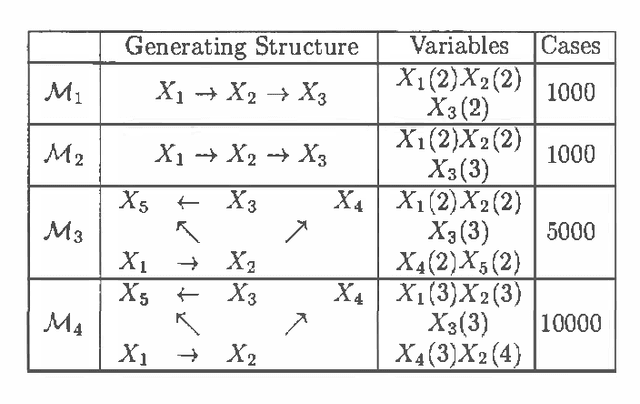
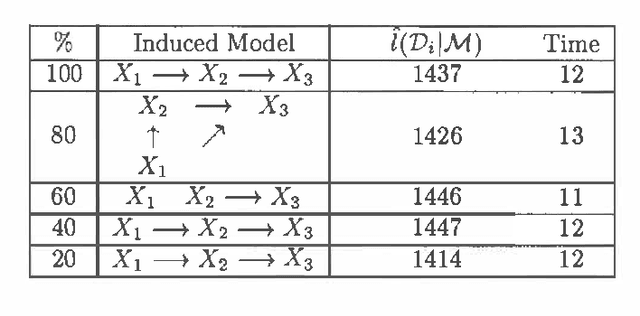
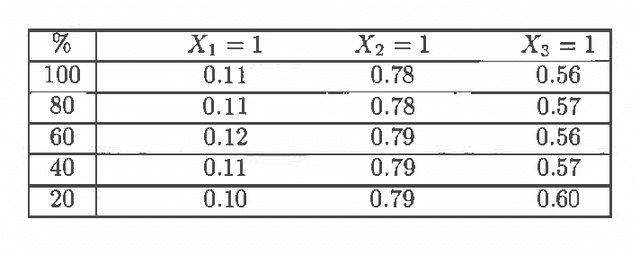
Bayesian approaches to learn the graphical structure of Bayesian Belief Networks (BBNs) from databases share the assumption that the database is complete, that is, no entry is reported as unknown. Attempts to relax this assumption involve the use of expensive iterative methods to discriminate among different structures. This paper introduces a deterministic method to learn the graphical structure of a BBN from a possibly incomplete database. Experimental evaluations show a significant robustness of this method and a remarkable independence of its execution time from the number of missing data.
Decision Theoretic Foundations of Graphical Model Selection
Jan 30, 2013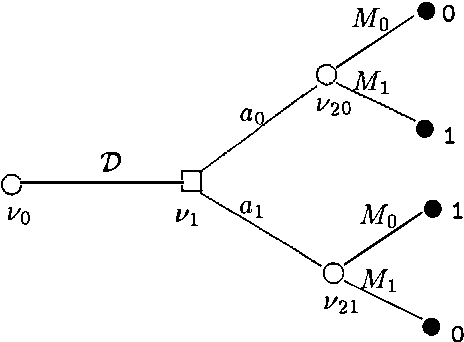
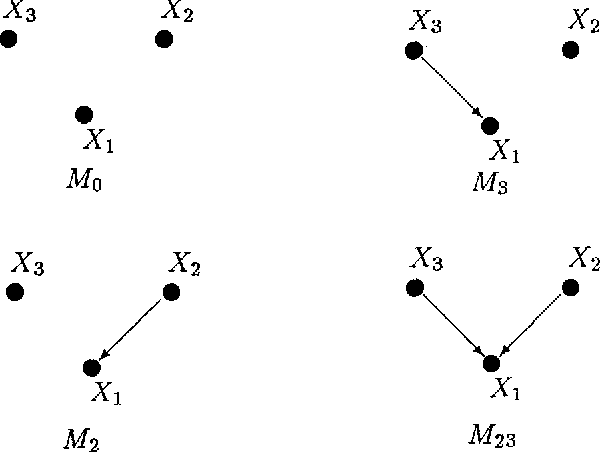
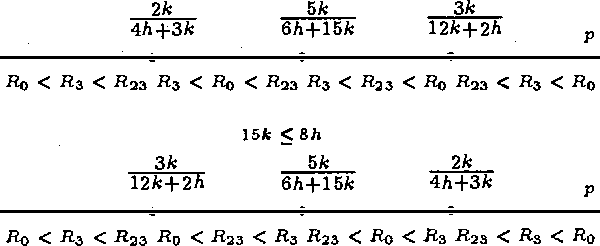

This paper describes a decision theoretic formulation of learning the graphical structure of a Bayesian Belief Network from data. This framework subsumes the standard Bayesian approach of choosing the model with the largest posterior probability as the solution of a decision problem with a 0-1 loss function and allows the use of more general loss functions able to trade-off the complexity of the selected model and the error of choosing an oversimplified model. A new class of loss functions, called disintegrable, is introduced, to allow the decision problem to match the decomposability of the graphical model. With this class of loss functions, the optimal solution to the decision problem can be found using an efficient bottom-up search strategy.