 Add to Chrome
 Add to Firefox
 Add to Edge
ExAI5G: A Logic-Based Explainable AI Framework for Intrusion Detection in 5G Networks
Apr 20, 2026
Intrusion detection systems (IDSs) for 5G networks must handle complex, high-volume traffic. Although opaque "black-box" models can achieve high accuracy, their lack of transparency hinders trust and effective operational response. We propose ExAI5G, a framework that prioritizes interpretability by integrating a Transformer-based deep learning IDS with logic-based explainable AI (XAI) techniques. The framework uses Integrated Gradients to attribute feature importance and extracts a surrogate decision tree to derive logical rules. We introduce a novel evaluation methodology for LLM-generated explanations, using a powerful evaluator LLM to assess actionability and measuring their semantic similarity and faithfulness. On a 5G IoT intrusion dataset, our system achieves 99.9\% accuracy and a 0.854 macro F1-score, demonstrating strong performance. More importantly, we extract 16 logical rules with 99.7\% fidelity, making the model's reasoning transparent. The evaluation demonstrates that modern LLMs can generate explanations that are both faithful and actionable, indicating that it is possible to build a trustworthy and effective IDS without compromising performance for the sake of marginal gains from an opaque model.

Autonomy and Intelligence in the Computing Continuum: Challenges, Enablers, and Future Directions for Orchestration
May 03, 2022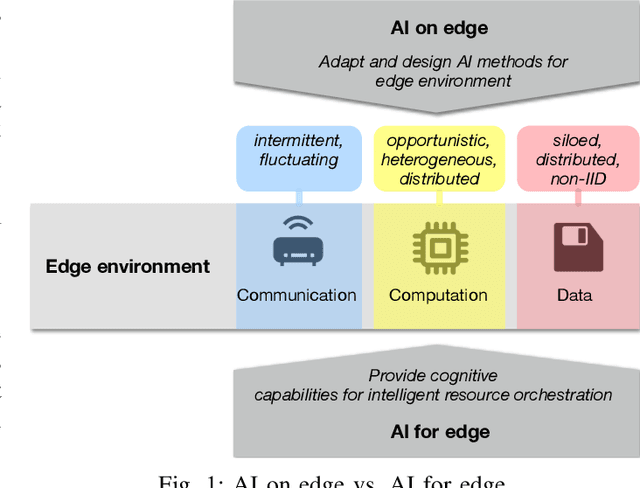
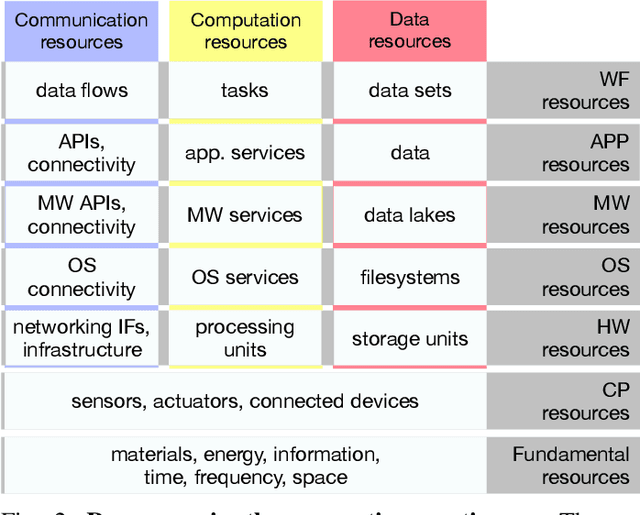
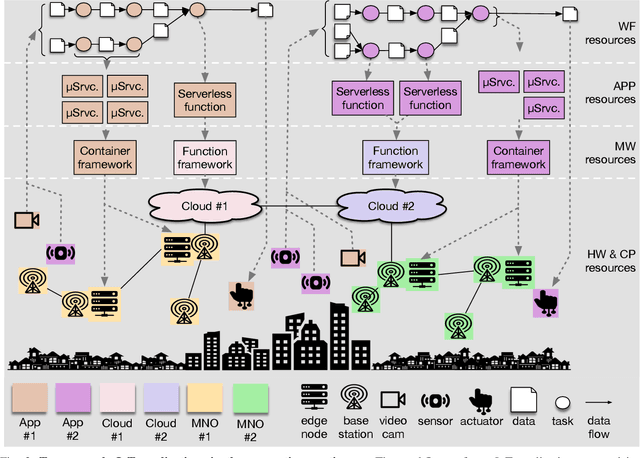
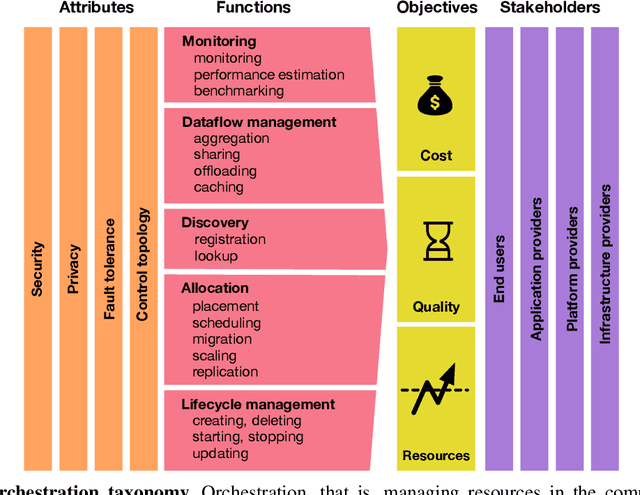
Future AI applications require performance, reliability and privacy that the existing, cloud-dependant system architectures cannot provide. In this article, we study orchestration in the device-edge-cloud continuum, and focus on AI for edge, that is, the AI methods used in resource orchestration. We claim that to support the constantly growing requirements of intelligent applications in the device-edge-cloud computing continuum, resource orchestration needs to embrace edge AI and emphasize local autonomy and intelligence. To justify the claim, we provide a general definition for continuum orchestration, and look at how current and emerging orchestration paradigms are suitable for the computing continuum. We describe certain major emerging research themes that may affect future orchestration, and provide an early vision of an orchestration paradigm that embraces those research themes. Finally, we survey current key edge AI methods and look at how they may contribute into fulfilling the vision of future continuum orchestration.