 Add to Chrome
 Add to Firefox
 Add to Edge
TwinLoop: Simulation-in-the-Loop Digital Twins for Online Multi-Agent Reinforcement Learning
Apr 08, 2026
Decentralised online learning enables runtime adaptation in cyber-physical multi-agent systems, but when operating conditions change, learned policies often require substantial trial-and-error interaction before recovering performance. To address this, we propose TwinLoop, a simulation-in-the-loop digital twin framework for online multi-agent reinforcement learning. When a context shift occurs, the digital twin is triggered to reconstruct the current system state, initialise from the latest agent policies, and perform accelerated policy improvement with simulation what-if analysis before synchronising updated parameters back to the agents in the physical system. We evaluate TwinLoop in a vehicular edge computing task-offloading scenario with changing workload and infrastructure conditions. The results suggest that digital twins can improve post-shift adaptation efficiency and reduce reliance on costly online trial-and-error.

On the Use of Interpretable Machine Learning for the Management of Data Quality
Jul 29, 2020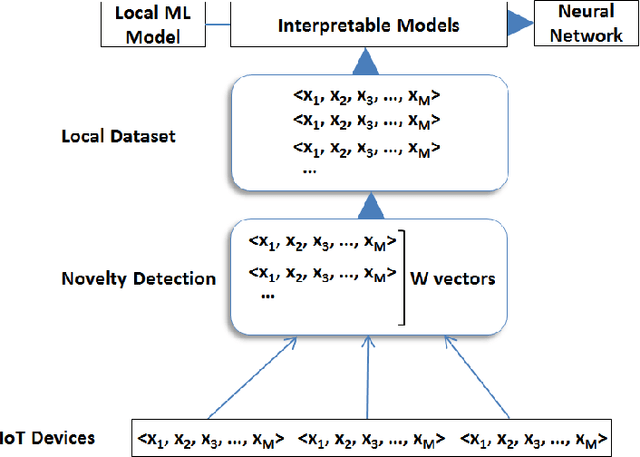
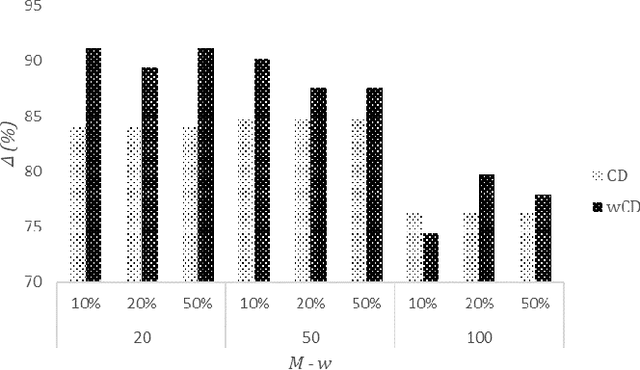
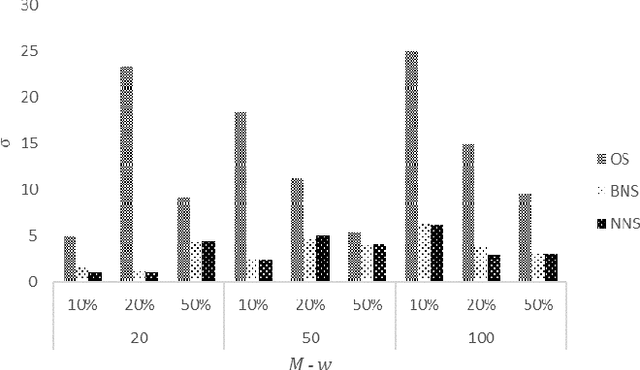
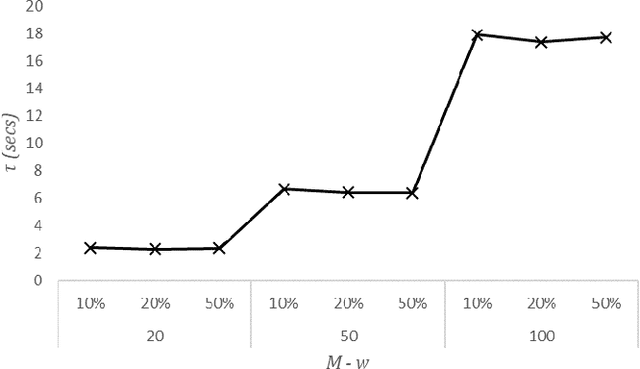
Data quality is a significant issue for any application that requests for analytics to support decision making. It becomes very important when we focus on Internet of Things (IoT) where numerous devices can interact to exchange and process data. IoT devices are connected to Edge Computing (EC) nodes to report the collected data, thus, we have to secure data quality not only at the IoT but also at the edge of the network. In this paper, we focus on the specific problem and propose the use of interpretable machine learning to deliver the features that are important to be based for any data processing activity. Our aim is to secure data quality, at least, for those features that are detected as significant in the collected datasets. We have to notice that the selected features depict the highest correlation with the remaining in every dataset, thus, they can be adopted for dimensionality reduction. We focus on multiple methodologies for having interpretability in our learning models and adopt an ensemble scheme for the final decision. Our scheme is capable of timely retrieving the final result and efficiently select the appropriate features. We evaluate our model through extensive simulations and present numerical results. Our aim is to reveal its performance under various experimental scenarios that we create varying a set of parameters adopted in our mechanism.