 Add to Chrome
 Add to Firefox
 Add to Edge
FrequencyFormer: A Co-Designed Sensor-to-Processor Pipeline for Frequency-Domain Vision Transformer Inference
Jun 17, 2026
Deploying vision transformers (ViTs) on sensor-edge systems is limited not only by on-device compute, but also by the energy and bandwidth required to transmit high-dimensional image data from the sensor to the processor. While in-sensor and near-sensor computing reduce this cost through early feature extraction, existing methods often provide only modest compression. We observe that the frequency domain provides a naturally compact representation of visual information and can be exploited at the sensor level to reduce sensor-to-processor data movement. Building on this insight, we present FrequencyFormer, a co-designed sensor-to-processor pipeline for efficient ViT inference. FrequencyFormer includes: (1) a multi-scale DCT tokenizer that compresses a 224x224 image into compact frequency-domain tokens, achieving up to 128x reduction in off-chip data volume with modest accuracy loss; (2) a LUT-based near-sensor hardware implementation that leverages fixed DCT coefficients for multiplier-free, energy- and area-efficient tokenization; and (3) a modified MIPI-based low-power communication architecture that further reduces transfer energy. FrequencyFormer serves as a drop-in replacement for standard ViT patch embedding and remains compatible with pretrained backbones across classification, detection, and segmentation tasks. The pipeline achieves 28.8 TOPS/W, reduces communication energy by 230x, and lowers total sensor-side energy by 2.22x, demonstrating frequency-domain tokenization as a scalable foundation for in-sensor ViT deployment.

Ablation Study of Block Size, Weight Precision, and Scale Precision in NVFP4 Inference for Low-Power Edge-Efficient Neural Networks
Jun 03, 2026Energy-efficient edge inference requires reducing arithmetic cost, memory traffic, and hardware overhead. This paper presents an ablation-focused study of NVFP4 LUT-based inference for edge-efficient neural networks. The proposed NVLUT framework combines 4-bit NVFP4 activations, two-level scaling, LUT-based mantissa computation, voltage-scaled storage, and selective ECC protection. Multiplication is decomposed into sign, exponent, and mantissa paths, where sign uses XOR logic, exponent uses integer addition, and mantissa multiplication is replaced by compact LUT access. NVFP4 activations use FP4 data with an FP8 block scale and an FP32 tensor scale. Across six edge-efficient models, block-size ablation shows that B = 16 offers a practical accuracy/storage trade-off, requiring only 4.5078 bits per input for N = 4096. Weight-precision ablation shows that FP8 and FP16 weights provide only modest gains over FP4 weights under the same NVFP4 activation path. Compared with pure unscaled FP4, NVFP4 without retraining recovers substantial accuracy by restoring activation dynamic range, while NVFP4 with retraining achieves the best accuracy across models. Hardware analysis shows that NVLUT achieves up to 26.85x energy reduction over traditional LUTs with ECC plus voltage scaling and up to 22.85x under mixed-voltage operation. Area is reduced by up to 2.21x and 1.52x, respectively. These results demonstrate that NVFP4 two-level scaling with selective reliability protection enables robust, low-energy edge inference.
A Convolutional Neural Network Based Approach to Recognize Bangla Spoken Digits from Speech Signal
Nov 12, 2021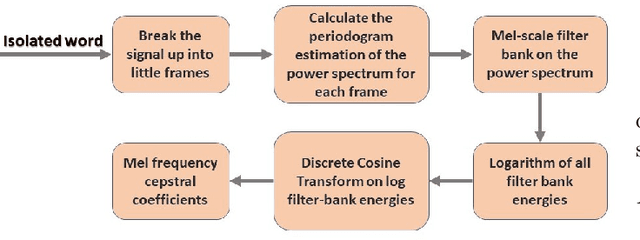
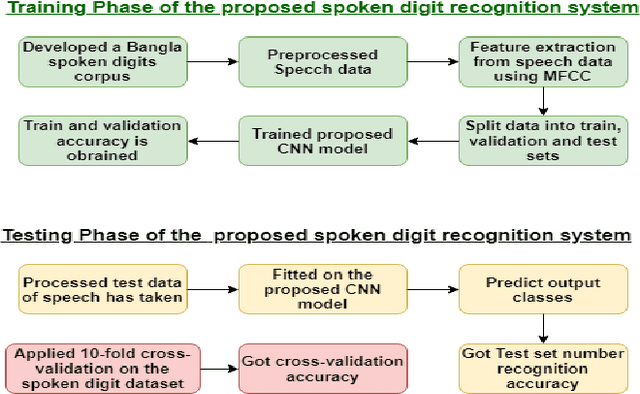
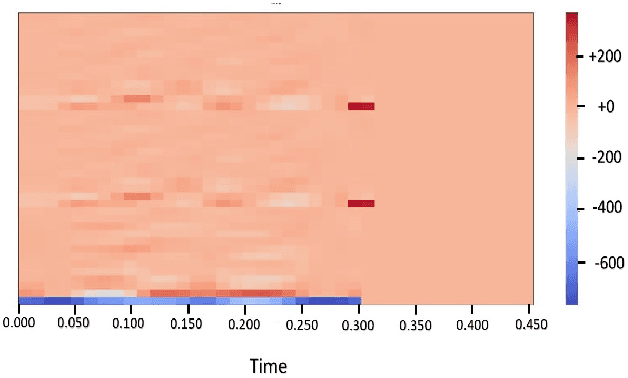
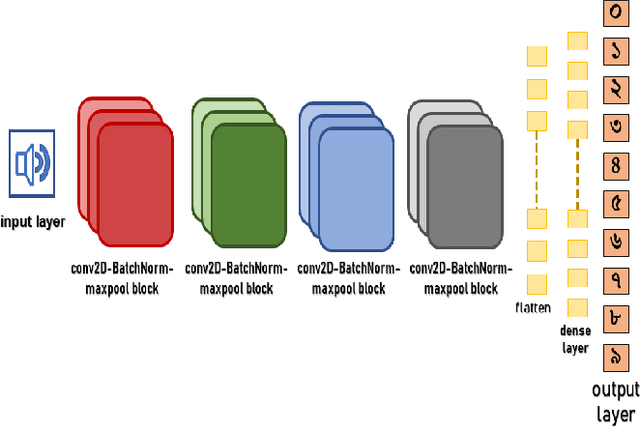
Speech recognition is a technique that converts human speech signals into text or words or in any form that can be easily understood by computers or other machines. There have been a few studies on Bangla digit recognition systems, the majority of which used small datasets with few variations in genders, ages, dialects, and other variables. Audio recordings of Bangladeshi people of various genders, ages, and dialects were used to create a large speech dataset of spoken '0-9' Bangla digits in this study. Here, 400 noisy and noise-free samples per digit have been recorded for creating the dataset. Mel Frequency Cepstrum Coefficients (MFCCs) have been utilized for extracting meaningful features from the raw speech data. Then, to detect Bangla numeral digits, Convolutional Neural Networks (CNNs) were utilized. The suggested technique recognizes '0-9' Bangla spoken digits with 97.1% accuracy throughout the whole dataset. The efficiency of the model was also assessed using 10-fold crossvalidation, which yielded a 96.7% accuracy.
Bangla Natural Language Processing: A Comprehensive Review of Classical, Machine Learning, and Deep Learning Based Methods
Jun 08, 2021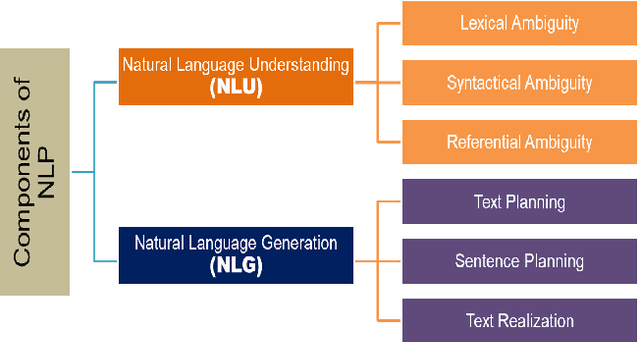
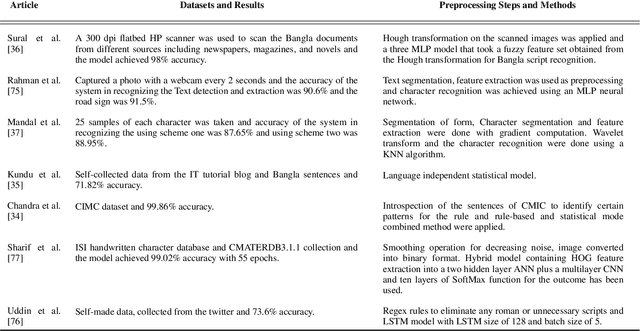
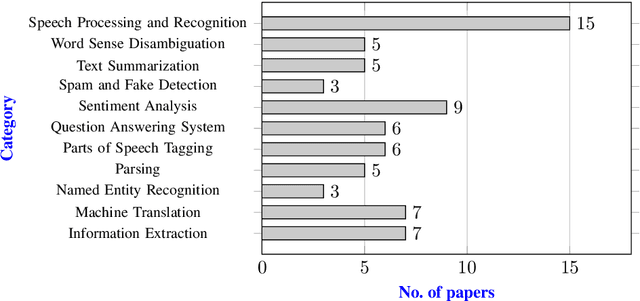
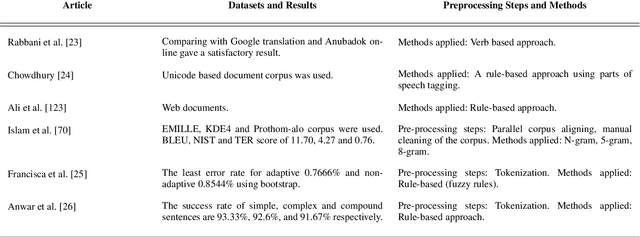
The Bangla language is the seventh most spoken language, with 265 million native and non-native speakers worldwide. However, English is the predominant language for online resources and technical knowledge, journals, and documentation. Consequently, many Bangla-speaking people, who have limited command of English, face hurdles to utilize English resources. To bridge the gap between limited support and increasing demand, researchers conducted many experiments and developed valuable tools and techniques to create and process Bangla language materials. Many efforts are also ongoing to make it easy to use the Bangla language in the online and technical domains. There are some review papers to understand the past, previous, and future Bangla Natural Language Processing (BNLP) trends. The studies are mainly concentrated on the specific domains of BNLP, such as sentiment analysis, speech recognition, optical character recognition, and text summarization. There is an apparent scarcity of resources that contain a comprehensive study of the recent BNLP tools and methods. Therefore, in this paper, we present a thorough review of 71 BNLP research papers and categorize them into 11 categories, namely Information Extraction, Machine Translation, Named Entity Recognition, Parsing, Parts of Speech Tagging, Question Answering System, Sentiment Analysis, Spam and Fake Detection, Text Summarization, Word Sense Disambiguation, and Speech Processing and Recognition. We study articles published between 1999 to 2021, and 50% of the papers were published after 2015. We discuss Classical, Machine Learning and Deep Learning approaches with different datasets while addressing the limitations and current and future trends of the BNLP.
Recent Advances in Deep Learning Techniques for Face Recognition
Mar 18, 2021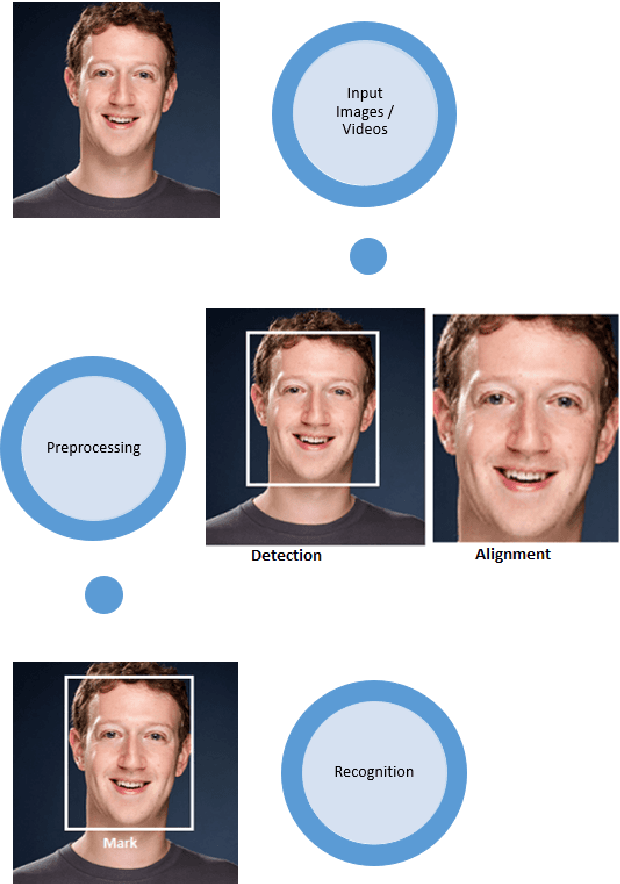
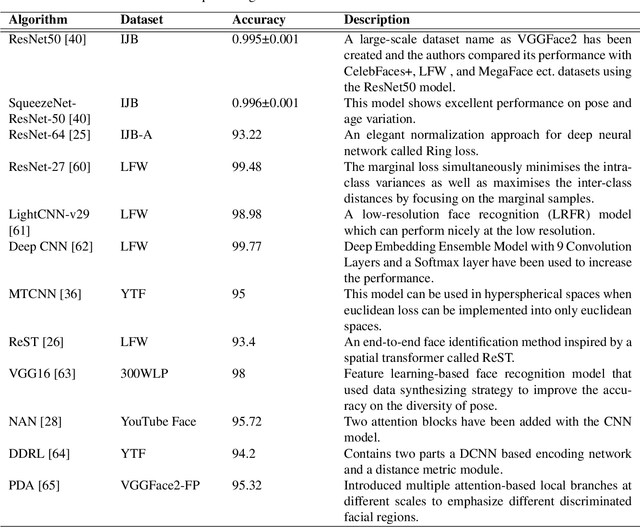
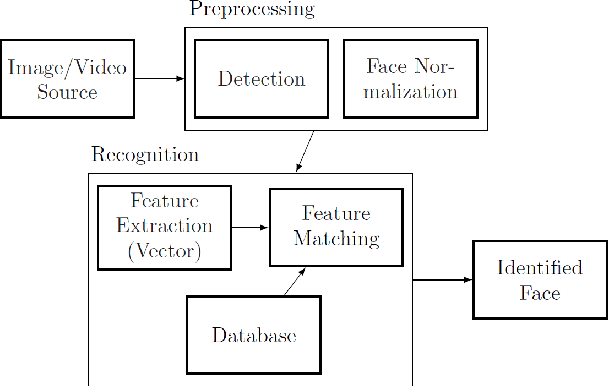
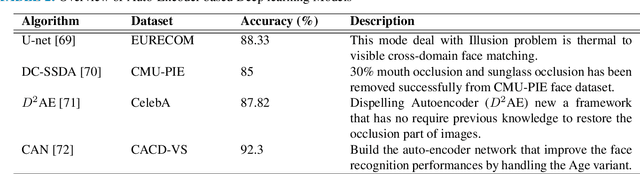
In recent years, researchers have proposed many deep learning (DL) methods for various tasks, and particularly face recognition (FR) made an enormous leap using these techniques. Deep FR systems benefit from the hierarchical architecture of the DL methods to learn discriminative face representation. Therefore, DL techniques significantly improve state-of-the-art performance on FR systems and encourage diverse and efficient real-world applications. In this paper, we present a comprehensive analysis of various FR systems that leverage the different types of DL techniques, and for the study, we summarize 168 recent contributions from this area. We discuss the papers related to different algorithms, architectures, loss functions, activation functions, datasets, challenges, improvement ideas, current and future trends of DL-based FR systems. We provide a detailed discussion of various DL methods to understand the current state-of-the-art, and then we discuss various activation and loss functions for the methods. Additionally, we summarize different datasets used widely for FR tasks and discuss challenges related to illumination, expression, pose variations, and occlusion. Finally, we discuss improvement ideas, current and future trends of FR tasks.