 Add to Chrome
 Add to Firefox
 Add to Edge
Low-Cost System for Automatic Recognition of Driving Pattern in Assessing Interurban Mobility using Geo-Information
Apr 16, 2026
Mobility in urban and interurban areas, mainly by cars, is a day-to-day activity of many people. However, some of its main drawbacks are traffic jams and accidents. Newly made vehicles have pre-installed driving evaluation systems, which can prevent accidents. However, most cars on our roads do not have driver assessment systems. In this paper, we propose an approach for recognising driving styles and enabling drivers to reach safer and more efficient driving. The system consists of two physical sensors connected to a device node with a display and a speaker. An artificial neural network (ANN) is included in the node, which analyses the data from the sensors, and then recognises the driving style. When an abnormal driving pattern is detected, the speaker will play a warning message. The prototype was assembled and tested using an interurban road, in particular on a conventional road with three driving styles. The gathered data were used to train and validate the ANN. Results, in terms of accuracy, indicate that better accuracy is obtained when the velocity, position (latitude and longitude), time, and turning speed for the 3-axis are used, offering an average accuracy of 83%. If the classification is performed considering just two driving styles, normal and aggressive, then the accuracy reaches 92%. When the geo-information and time data are included, the main novelty of this paper, the classification accuracy is improved by 13%.
* 18 pages, 10 figures, 3 tables

MLDAS: Machine Learning Dynamic Algorithm Selection for Software-Defined Networking Security
Apr 16, 2026Network security is a critical concern in the digital landscape of today, with users demanding secure browsing experiences and protection of their personal data. This study explores the dynamic integration of Machine Learning (ML) algorithms with Software-Defined Networking (SDN) controllers to enhance network security through adaptive decision mechanisms. The proposed approach enables the system to dynamically choose the most suitable ML algorithm based on the characteristics of the observed network traffic. This work examines the role of Intrusion Detection Systems (IDS) as a fundamental component of secure communication networks and discusses the limitations of SDN-based attack detection mechanisms. The proposed framework uses adaptive model selection to maintain reliable intrusion detection under varying network conditions. The study highlights the importance of analyzing traffic-type-based metrics to define effective classification rules and enhance the performance of ML models. Additionally, it addresses the risks of overfitting and underfitting, underscoring the critical role of hyperparameter tuning in optimizing model accuracy and generalization. The central contribution of this work is an automated mechanism that adaptively selects the most suitable ML algorithm according to real-time network conditions, prioritizing detection robustness and operational feasibility within SDN environments.
* 22 pages, 15 figures, 12 tables
Text Data Integration
Mar 28, 2026Data comes in many forms. From a shallow perspective, they can be viewed as being either in structured (e.g., as a relation, as key-value pairs) or unstructured (e.g., text, image) formats. So far, machines have been fairly good at processing and reasoning over structured data that follows a precise schema. However, the heterogeneity of data poses a significant challenge on how well diverse categories of data can be meaningfully stored and processed. Data Integration, a crucial part of the data engineering pipeline, addresses this by combining disparate data sources and providing unified data access to end-users. Until now, most data integration systems have leaned on only combining structured data sources. Nevertheless, unstructured data (a.k.a. free text) also contains a plethora of knowledge waiting to be utilized. Thus, in this chapter, we firstly make the case for the integration of textual data, to later present its challenges, state of the art and open problems.
Applications of Singular Entropy to Signals and Singular Smoothness to Images
Dec 09, 2025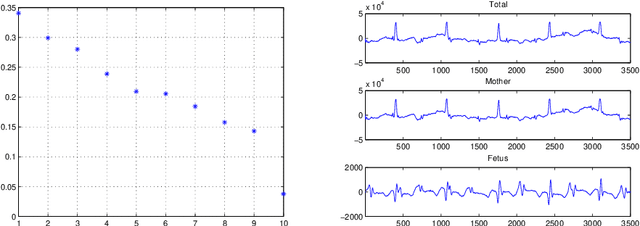
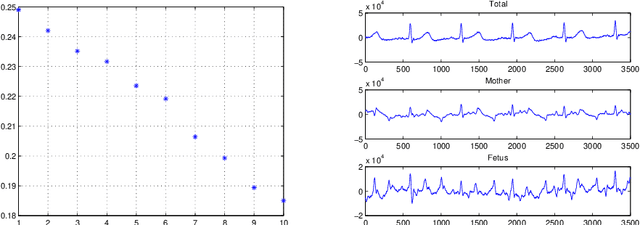
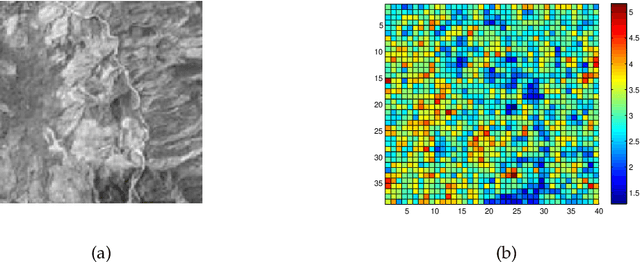
This paper explores signal and image analysis by using the Singular Value Decomposition (SVD) and its extension, the Generalized Singular Value Decomposition (GSVD). A key strength of SVD lies in its ability to separate information into orthogonal subspaces. While SVD is a well-established tool in ECG analysis, particularly for source separation, this work proposes a refined method for selecting a threshold to distinguish between maternal and fetal components more effectively. In the first part of the paper, the focus is onmedical signal analysis,where the concepts of Energy Gap Variation (EGV) and Singular Energy are introduced to isolate fetal and maternal ECG signals, improving the known ones. Furthermore, the approach is significantly enhanced by the application of GSVD, which provides additional discriminative power for more accurate signal separation. The second part introduces a novel technique called Singular Smoothness, developed for image analysis. This method incorporates Singular Entropy and the Frobenius normto evaluate information density, and is applied to the detection of natural anomalies such asmountain fractures and burned forest regions. Numerical experiments are presented to demonstrate the effectiveness of the proposed approaches.