 Add to Chrome
 Add to Firefox
 Add to Edge
Towards an AI-based Early Warning System for Bridge Scour
Aug 22, 2022
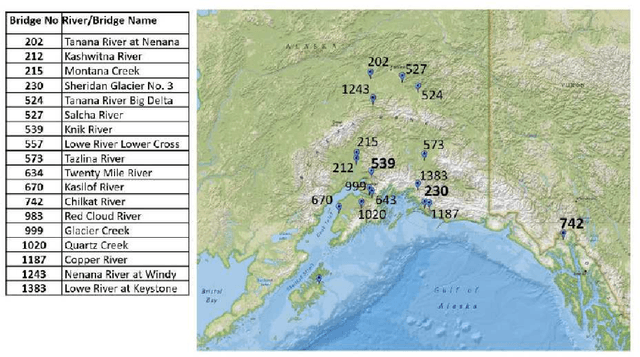
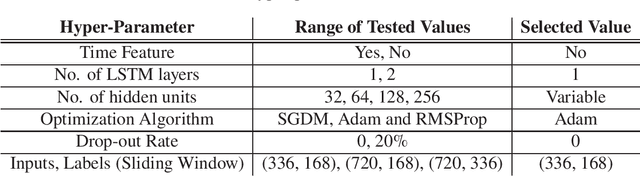
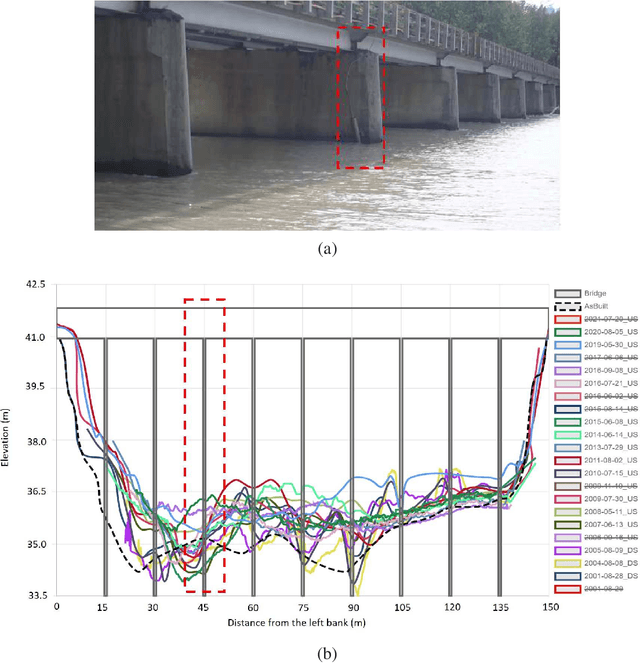

Scour is the number one cause of bridge failure in many parts of the world. Considering the lack of reliability in existing empirical equations for scour depth estimation and the complexity and uncertainty of scour as a physical phenomenon, it is essential to develop more reliable solutions for scour risk assessment. This study introduces a novel AI approach for early forecast of scour based on real-time monitoring data obtained from sonar and stage sensors installed at bridge piers. Long-short Term Memory networks (LSTMs), a prominent Deep Learning algorithm successfully used for time-series forecasting in other fields, were developed and trained using river stage and bed elevation readings for more than 11 years obtained from Alaska scour monitoring program. The capability of the AI models in scour prediction is shown for three case-study bridges. Results show that LSTMs can capture the temporal and seasonal patterns of both flow and river bed variations around bridge piers, through cycles of scour and filling and can provide reasonable predictions of upcoming scour depth as early as seven days in advance. It is expected that the proposed solution can be implemented by transportation authorities for development of emerging AI-based early warning systems, enabling superior bridge scour management.

Alternative Blockmodelling
Jul 27, 2019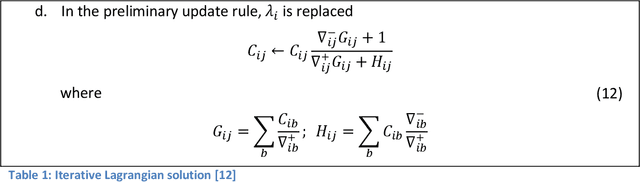
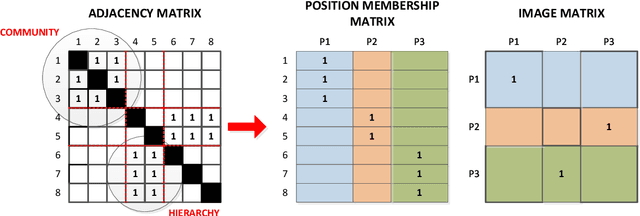
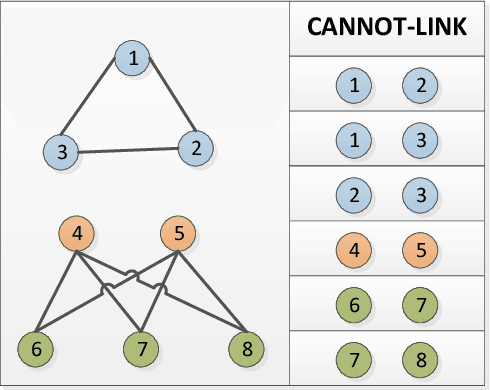
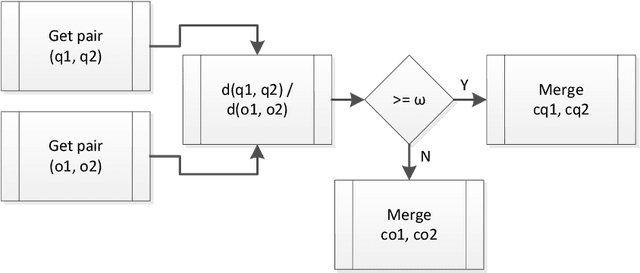
Many approaches have been proposed to discover clusters within networks. Community finding field encompasses approaches which try to discover clusters where nodes are tightly related within them but loosely related with nodes of other clusters. However, a community network configuration is not the only possible latent structure in a graph. Core-periphery and hierarchical network configurations are valid structures to discover in a relational dataset. On the other hand, a network is not completely explained by only knowing the membership of each node. A high level view of the inter-cluster relationships is needed. Blockmodelling techniques deal with these two issues. Firstly, blockmodelling allows finding any network configuration besides to the well-known community structure. Secondly, blockmodelling is a summary representation of a network which regards not only membership of nodes but also relations between clusters. Finally, a unique summary representation of a network is unlikely. Networks might hide more than one blockmodel. Therefore, our proposed problem aims to discover a secondary blockmodel representation of a network that is of good quality and dissimilar with respect to a given blockmodel. Our methodology is presented through two approaches, (a) inclusion of cannot-link constraints and (b) dissimilarity between image matrices. Both approaches are based on non-negative matrix factorisation NMF which fits the blockmodelling representation. The evaluation of these two approaches regards quality and dissimilarity of the discovered alternative blockmodel as these are the requirements of the problem.