 Add to Chrome
 Add to Firefox
 Add to Edge
OSS: Open Suturing Skills Vision-Based Assessment Challenge 2024-2025
May 21, 2026
Achieving high levels of surgical skill through effective training is essential for optimal patient outcomes. Automated, data-driven skill assessment holds significant potential to improve surgical training. While machine learning-based methods are increasingly popular for assessing skills in minimally invasive surgery, their application to open surgery remains limited. We present the results of a dedicated MICCAI challenge designed to benchmark and advance vision-based skill assessment in open surgery. The challenge dataset comprises videos of an open suturing training task recorded with a static GoPro camera in a dry-lab setting, with instrument trajectories available in addition to the primary video modality. The OSS Challenge was hosted over two consecutive years, comprising two and three independent tasks, respectively: (1) classifying skill level into four classes, (2) predicting the full Objective Structured Assessment of Technical Skills across eight categories, and (3) tracking hands and surgical tools. Participants submitted diverse solutions including deep learning-based video models, tracking-driven methods, and hybrid approaches. General-purpose spatiotemporal video models consistently achieved the strongest performance, though conceptually diverse approaches reached competitive levels when well-executed. Predicting fine-grained OSATS scores remains challenging but benefits substantially from increased training data. Keypoint tracking proves difficult given frequent occlusions and out-of-frame instances, limiting current applicability for motion-based skill analysis. This work benchmarks innovative and diverse solutions for surgical skill assessment, highlighting both the promise and current limitations of video-based evaluation in open surgery and identifying critical directions for advancing automated skill assessment toward clinical impact.

Anxolotl, an Anxiety Companion App -- Stress Detection
Jan 03, 2023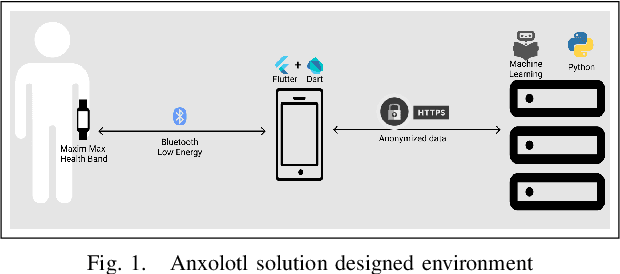
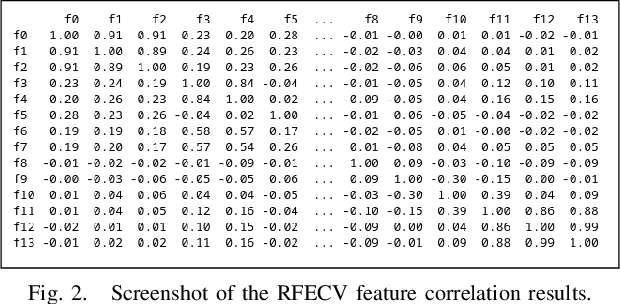
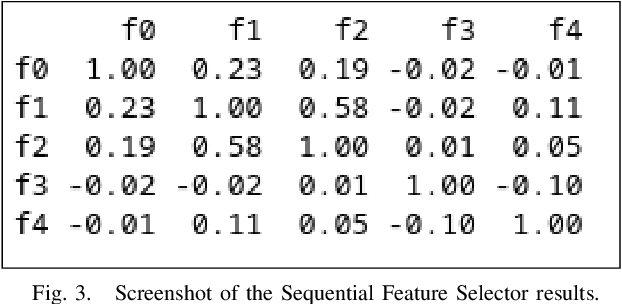
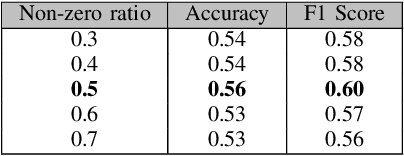
Stress has a great effect on people's lives that can not be understated. While it can be good, since it helps humans to adapt to new and different situations, it can also be harmful when not dealt with properly, leading to chronic stress. The objective of this paper is developing a stress monitoring solution, that can be used in real life, while being able to tackle this challenge in a positive way. The SMILE data set was provided to team Anxolotl, and all it was needed was to develop a robust model. We developed a supervised learning model for classification in Python, presenting the final result of 64.1% in accuracy and a f1-score of 54.96%. The resulting solution stood the robustness test, presenting low variation between runs, which was a major point for it's possible integration in the Anxolotl app in the future.