 Add to Chrome
 Add to Firefox
 Add to Edge
Actuator Reality Shaping for Zero-Shot Sim-to-Real Robot Learning
Jul 02, 2026
Sim-to-real transfer in robot learning is often limited by discrepancies between the ideal actuator dynamics assumed during policy training and the nonlinear, hardware-dependent behavior of physical motors. While conventional approaches attempt to bridge this gap by increasing simulator fidelity through system identification, domain randomization, or learned actuator models, we introduce an alternative paradigm: actuator reality shaping. Instead of modifying the simulator to match the real world, our method shapes the closed-loop behavior of physical actuators to match the idealized second-order reference dynamics used in simulation. By equipping each joint with a two-degree-of-freedom feedforward--feedback controller, we decouple reference-response shaping from robust stabilization, thereby providing a standardized actuator interface for reinforcement learning policies. As a result, policies trained only with the prescribed reference model can be deployed zero-shot on real hardware without task-level fine-tuning or learned actuator models. We validate the approach on a single-joint high-gear-ratio servo under external loads and a 7-DOF robotic arm reaching task, where actuator reality shaping substantially reduces sim-to-real tracking error and improves zero-shot task performance compared with standard servo-control and representative real-to-sim-to-real baselines. We further demonstrate zero-shot transfer on a wheeled-legged robot driving over a slope and a humanoid robot walking, suggesting that actuator reality shaping can serve as a reusable interface for robot learning across diverse hardware platforms.

Goal-Conditioned Terminal Value Estimation for Real-time and Multi-task Model Predictive Control
Oct 07, 2024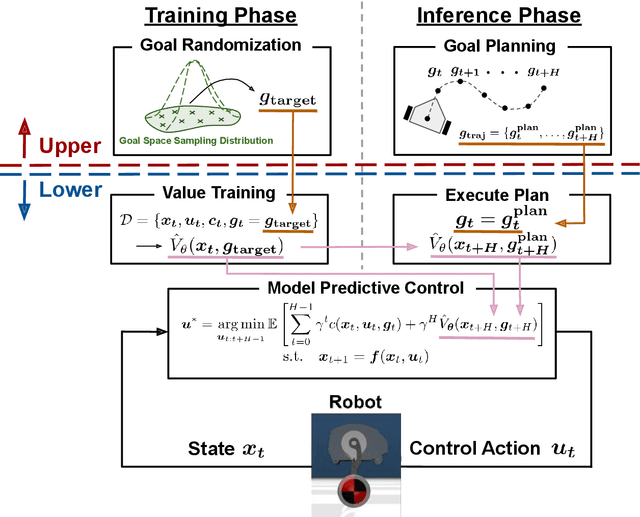
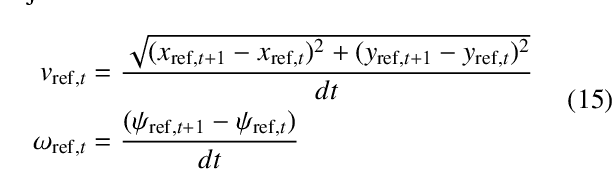
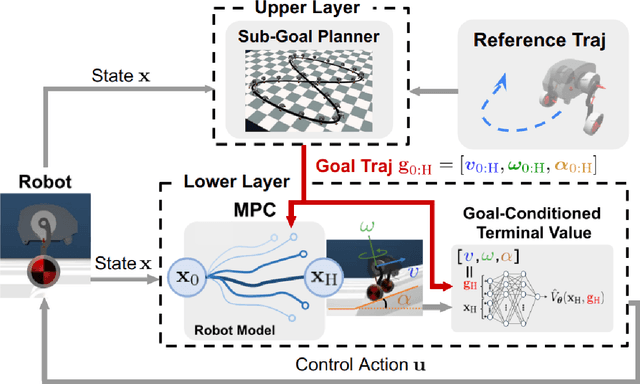
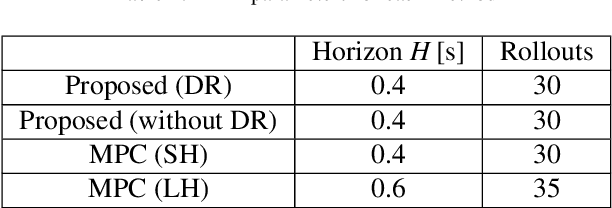
While MPC enables nonlinear feedback control by solving an optimal control problem at each timestep, the computational burden tends to be significantly large, making it difficult to optimize a policy within the control period. To address this issue, one possible approach is to utilize terminal value learning to reduce computational costs. However, the learned value cannot be used for other tasks in situations where the task dynamically changes in the original MPC setup. In this study, we develop an MPC framework with goal-conditioned terminal value learning to achieve multitask policy optimization while reducing computational time. Furthermore, by using a hierarchical control structure that allows the upper-level trajectory planner to output appropriate goal-conditioned trajectories, we demonstrate that a robot model is able to generate diverse motions. We evaluate the proposed method on a bipedal inverted pendulum robot model and confirm that combining goal-conditioned terminal value learning with an upper-level trajectory planner enables real-time control; thus, the robot successfully tracks a target trajectory on sloped terrain.
Efficient Reuse of Previous Experiences to Improve Policies in Real Environment
May 10, 2014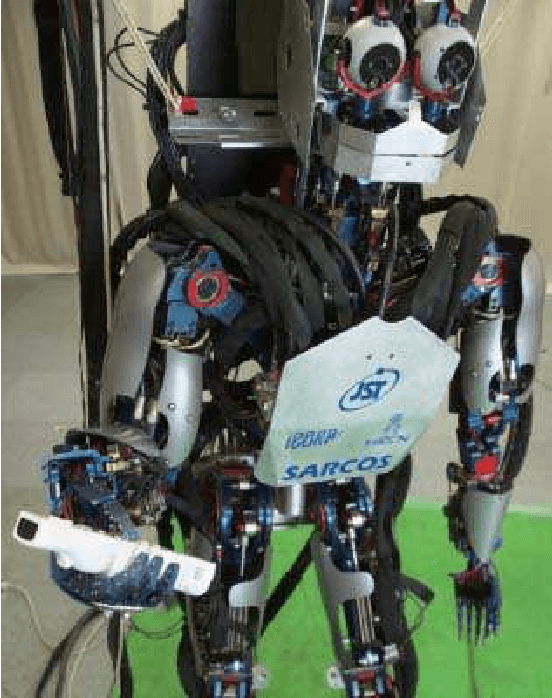
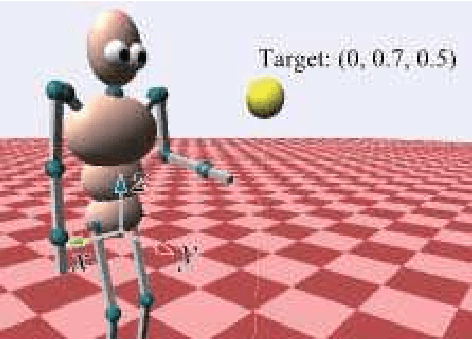
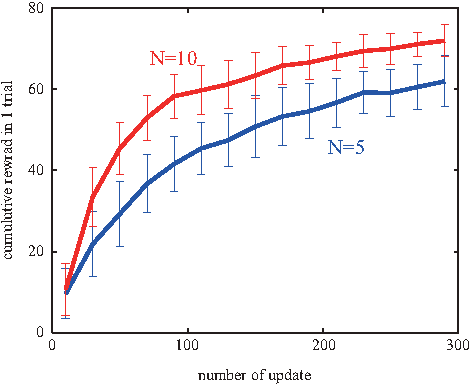
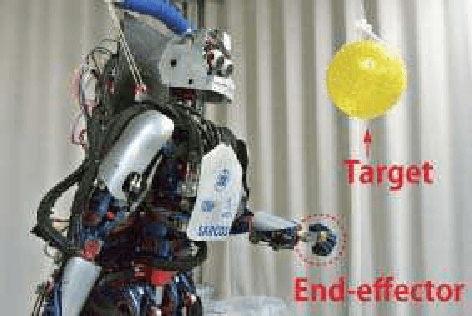
In this study, we show that a movement policy can be improved efficiently using the previous experiences of a real robot. Reinforcement Learning (RL) is becoming a popular approach to acquire a nonlinear optimal policy through trial and error. However, it is considered very difficult to apply RL to real robot control since it usually requires many learning trials. Such trials cannot be executed in real environments because unrealistic time is necessary and the real system's durability is limited. Therefore, in this study, instead of executing many learning trials, we propose to use a recently developed RL algorithm, importance-weighted PGPE, by which the robot can efficiently reuse previously sampled data to improve it's policy parameters. We apply importance-weighted PGPE to CB-i, our real humanoid robot, and show that it can learn a target reaching movement and a cart-pole swing up movement in a real environment without using any prior knowledge of the task or any carefully designed initial trajectory.