 Add to Chrome
 Add to Firefox
 Add to Edge
Fast Sun-aligned Outdoor Scene Relighting based on TensoRF
Nov 07, 2023
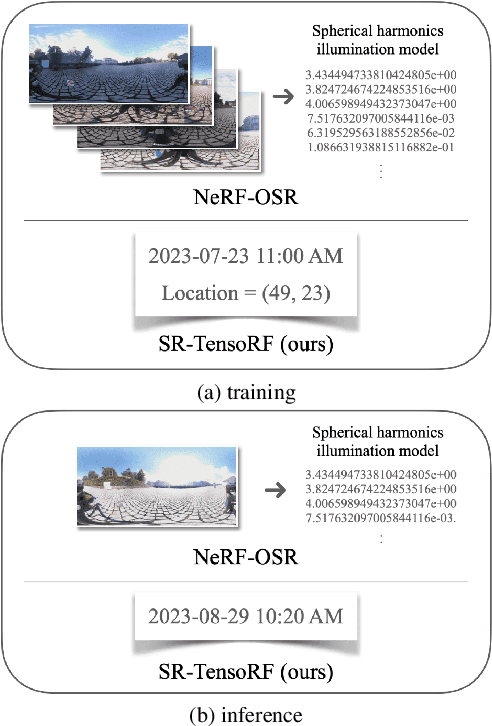
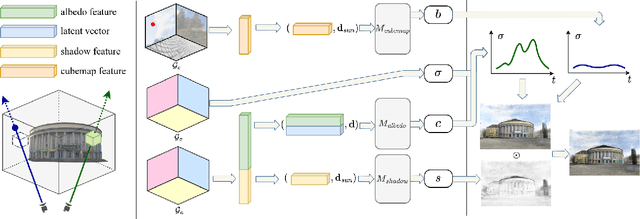
In this work, we introduce our method of outdoor scene relighting for Neural Radiance Fields (NeRF) named Sun-aligned Relighting TensoRF (SR-TensoRF). SR-TensoRF offers a lightweight and rapid pipeline aligned with the sun, thereby achieving a simplified workflow that eliminates the need for environment maps. Our sun-alignment strategy is motivated by the insight that shadows, unlike viewpoint-dependent albedo, are determined by light direction. We directly use the sun direction as an input during shadow generation, simplifying the requirements of the inference process significantly. Moreover, SR-TensoRF leverages the training efficiency of TensoRF by incorporating our proposed cubemap concept, resulting in notable acceleration in both training and rendering processes compared to existing methods.

SHOT: Suppressing the Hessian along the Optimization Trajectory for Gradient-Based Meta-Learning
Oct 04, 2023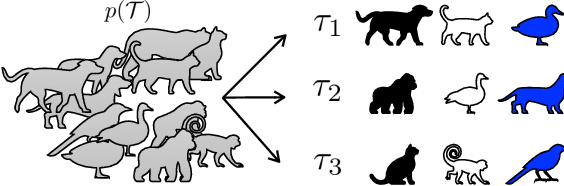


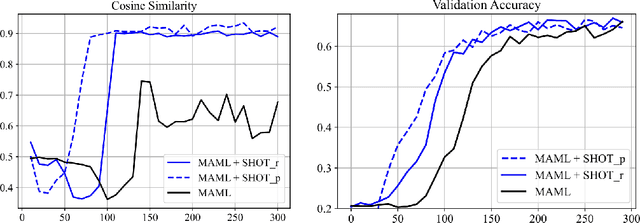
In this paper, we hypothesize that gradient-based meta-learning (GBML) implicitly suppresses the Hessian along the optimization trajectory in the inner loop. Based on this hypothesis, we introduce an algorithm called SHOT (Suppressing the Hessian along the Optimization Trajectory) that minimizes the distance between the parameters of the target and reference models to suppress the Hessian in the inner loop. Despite dealing with high-order terms, SHOT does not increase the computational complexity of the baseline model much. It is agnostic to both the algorithm and architecture used in GBML, making it highly versatile and applicable to any GBML baseline. To validate the effectiveness of SHOT, we conduct empirical tests on standard few-shot learning tasks and qualitatively analyze its dynamics. We confirm our hypothesis empirically and demonstrate that SHOT outperforms the corresponding baseline. Code is available at: https://github.com/JunHoo-Lee/SHOT
NICE: CVPR 2023 Challenge on Zero-shot Image Captioning
Sep 11, 2023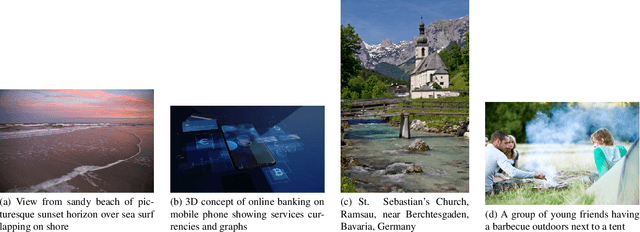
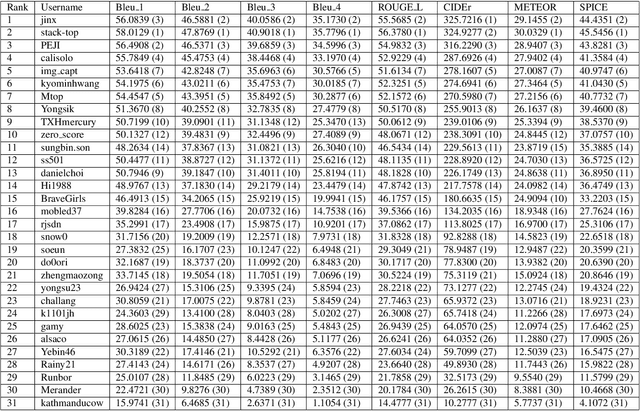
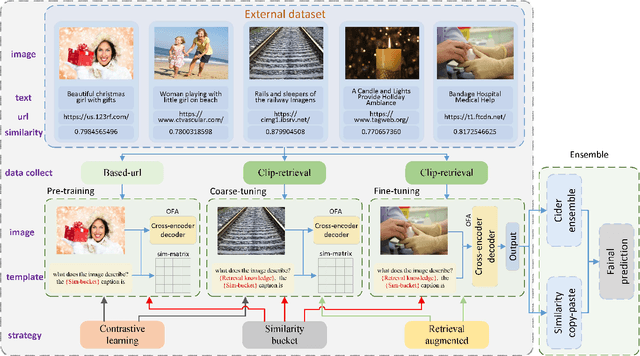
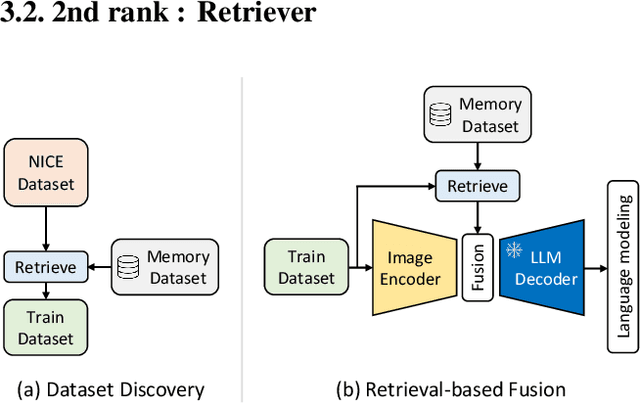
In this report, we introduce NICE (New frontiers for zero-shot Image Captioning Evaluation) project and share the results and outcomes of 2023 challenge. This project is designed to challenge the computer vision community to develop robust image captioning models that advance the state-of-the-art both in terms of accuracy and fairness. Through the challenge, the image captioning models were tested using a new evaluation dataset that includes a large variety of visual concepts from many domains. There was no specific training data provided for the challenge, and therefore the challenge entries were required to adapt to new types of image descriptions that had not been seen during training. This report includes information on the newly proposed NICE dataset, evaluation methods, challenge results, and technical details of top-ranking entries. We expect that the outcomes of the challenge will contribute to the improvement of AI models on various vision-language tasks.
ConcatPlexer: Additional Dim1 Batching for Faster ViTs
Aug 22, 2023Transformers have demonstrated tremendous success not only in the natural language processing (NLP) domain but also the field of computer vision, igniting various creative approaches and applications. Yet, the superior performance and modeling flexibility of transformers came with a severe increase in computation costs, and hence several works have proposed methods to reduce this burden. Inspired by a cost-cutting method originally proposed for language models, Data Multiplexing (DataMUX), we propose a novel approach for efficient visual recognition that employs additional dim1 batching (i.e., concatenation) that greatly improves the throughput with little compromise in the accuracy. We first introduce a naive adaptation of DataMux for vision models, Image Multiplexer, and devise novel components to overcome its weaknesses, rendering our final model, ConcatPlexer, at the sweet spot between inference speed and accuracy. The ConcatPlexer was trained on ImageNet1K and CIFAR100 dataset and it achieved 23.5% less GFLOPs than ViT-B/16 with 69.5% and 83.4% validation accuracy, respectively.
Advancing Beyond Identification: Multi-bit Watermark for Language Models
Aug 01, 2023


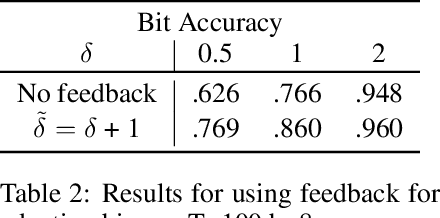
This study aims to proactively tackle misuse of large language models beyond identification of machine-generated text. While existing methods focus on detection, some malicious misuses demand tracing the adversary user for counteracting them. To address this, we propose "Multi-bit Watermark through Color-listing" (COLOR), embedding traceable multi-bit information during language model generation. Leveraging the benefits of zero-bit watermarking (Kirchenbauer et al., 2023a), COLOR enables extraction without model access, on-the-fly embedding, and maintains text quality, while allowing zero-bit detection all at the same time. Preliminary experiments demonstrates successful embedding of 32-bit messages with 91.9% accuracy in moderate-length texts ($\sim$500 tokens). This work advances strategies to counter language model misuse effectively.
FlipNeRF: Flipped Reflection Rays for Few-shot Novel View Synthesis
Jul 16, 2023Neural Radiance Field (NeRF) has been a mainstream in novel view synthesis with its remarkable quality of rendered images and simple architecture. Although NeRF has been developed in various directions improving continuously its performance, the necessity of a dense set of multi-view images still exists as a stumbling block to progress for practical application. In this work, we propose FlipNeRF, a novel regularization method for few-shot novel view synthesis by utilizing our proposed flipped reflection rays. The flipped reflection rays are explicitly derived from the input ray directions and estimated normal vectors, and play a role of effective additional training rays while enabling to estimate more accurate surface normals and learn the 3D geometry effectively. Since the surface normal and the scene depth are both derived from the estimated densities along a ray, the accurate surface normal leads to more exact depth estimation, which is a key factor for few-shot novel view synthesis. Furthermore, with our proposed Uncertainty-aware Emptiness Loss and Bottleneck Feature Consistency Loss, FlipNeRF is able to estimate more reliable outputs with reducing floating artifacts effectively across the different scene structures, and enhance the feature-level consistency between the pair of the rays cast toward the photo-consistent pixels without any additional feature extractor, respectively. Our FlipNeRF achieves the SOTA performance on the multiple benchmarks across all the scenarios.
AADiff: Audio-Aligned Video Synthesis with Text-to-Image Diffusion
May 06, 2023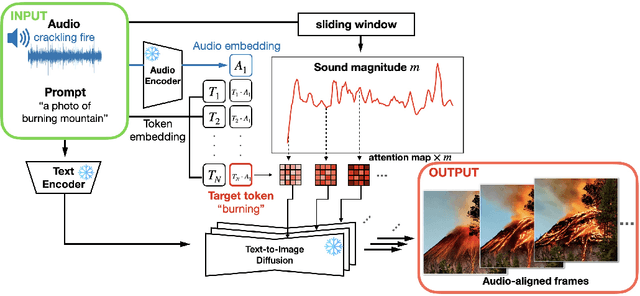
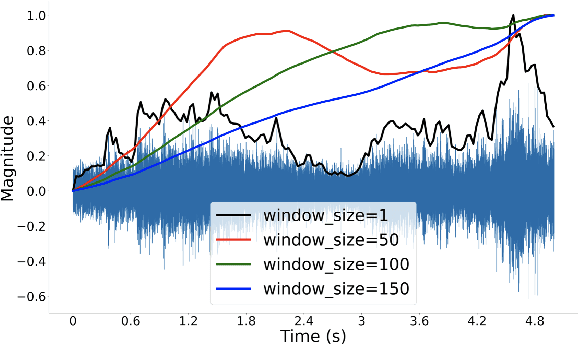
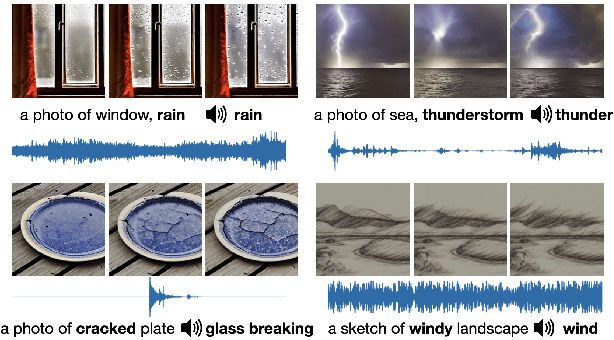
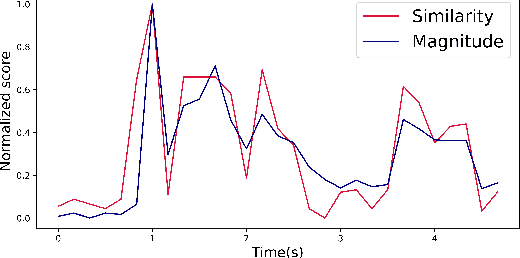
Recent advances in diffusion models have showcased promising results in the text-to-video (T2V) synthesis task. However, as these T2V models solely employ text as the guidance, they tend to struggle in modeling detailed temporal dynamics. In this paper, we introduce a novel T2V framework that additionally employ audio signals to control the temporal dynamics, empowering an off-the-shelf T2I diffusion to generate audio-aligned videos. We propose audio-based regional editing and signal smoothing to strike a good balance between the two contradicting desiderata of video synthesis, i.e., temporal flexibility and coherence. We empirically demonstrate the effectiveness of our method through experiments, and further present practical applications for contents creation.
Robust Natural Language Watermarking through Invariant Features
May 03, 2023Recent years have witnessed a proliferation of valuable original natural language contents found in subscription-based media outlets, web novel platforms, and outputs of large language models. Without proper security measures, however, these contents are susceptible to illegal piracy and potential misuse. This calls for a secure watermarking system to guarantee copyright protection through leakage tracing or ownership identification. To effectively combat piracy and protect copyrights, a watermarking framework should be able not only to embed adequate bits of information but also extract the watermarks in a robust manner despite possible corruption. In this work, we explore ways to advance both payload and robustness by following a well-known proposition from image watermarking and identify features in natural language that are invariant to minor corruption. Through a systematic analysis of the possible sources of errors, we further propose a corruption-resistant infill model. Our full method improves upon the previous work on robustness by +16.8% point on average on four datasets, three corruption types, and two corruption ratios. Code available at https://github.com/bangawayoo/nlp-watermarking.
Active Semi-Supervised Learning by Exploring Per-Sample Uncertainty and Consistency
Mar 15, 2023Active Learning (AL) and Semi-supervised Learning are two techniques that have been studied to reduce the high cost of deep learning by using a small amount of labeled data and a large amount of unlabeled data. To improve the accuracy of models at a lower cost, we propose a method called Active Semi-supervised Learning (ASSL), which combines AL and SSL. To maximize the synergy between AL and SSL, we focused on the differences between ASSL and AL. ASSL involves more dynamic model updates than AL due to the use of unlabeled data in the training process, resulting in the temporal instability of the predicted probabilities of the unlabeled data. This makes it difficult to determine the true uncertainty of the unlabeled data in ASSL. To address this, we adopted techniques such as exponential moving average (EMA) and upper confidence bound (UCB) used in reinforcement learning. Additionally, we analyzed the effect of label noise on unsupervised learning by using weak and strong augmentation pairs to address datainconsistency. By considering both uncertainty and datainconsistency, we acquired data samples that were used in the proposed ASSL method. Our experiments showed that ASSL achieved about 5.3 times higher computational efficiency than SSL while achieving the same performance, and it outperformed the state-of-the-art AL method.
MDPose: Real-Time Multi-Person Pose Estimation via Mixture Density Model
Feb 17, 2023One of the major challenges in multi-person pose estimation is instance-aware keypoint estimation. Previous methods address this problem by leveraging an off-the-shelf detector, heuristic post-grouping process or explicit instance identification process, hindering further improvements in the inference speed which is an important factor for practical applications. From the statistical point of view, those additional processes for identifying instances are necessary to bypass learning the high-dimensional joint distribution of human keypoints, which is a critical factor for another major challenge, the occlusion scenario. In this work, we propose a novel framework of single-stage instance-aware pose estimation by modeling the joint distribution of human keypoints with a mixture density model, termed as MDPose. Our MDPose estimates the distribution of human keypoints' coordinates using a mixture density model with an instance-aware keypoint head consisting simply of 8 convolutional layers. It is trained by minimizing the negative log-likelihood of the ground truth keypoints. Also, we propose a simple yet effective training strategy, Random Keypoint Grouping (RKG), which significantly alleviates the underflow problem leading to successful learning of relations between keypoints. On OCHuman dataset, which consists of images with highly occluded people, our MDPose achieves state-of-the-art performance by successfully learning the high-dimensional joint distribution of human keypoints. Furthermore, our MDPose shows significant improvement in inference speed with a competitive accuracy on MS COCO, a widely-used human keypoint dataset, thanks to the proposed much simpler single-stage pipeline.