 Add to Chrome
 Add to Firefox
 Add to Edge
SADE: Symptom-Aware Diagnostic Escalation for LLM-Based Network Troubleshooting
May 06, 2026
Large language model (LLM) agents are increasingly applied to network troubleshooting, but root-cause localization on public benchmarks remains well below practical deployment thresholds. We argue this is because existing agents do not encode the disciplined, layer-by-layer methodology that human network engineers use, and instead rely on free-form deliberation that conflates evidence acquisition with hypothesis commitment. We present SADE (Symptom-Aware Diagnostic Escalation), an agent that encodes the classical Cisco troubleshooting methodology as an explicit policy. SADE pairs a phase-gated diagnostic workflow, which separates evidence acquisition from hypothesis commitment, with a routed library of fault-family skills and high-yield diagnostic helpers. On a held-out 523 incident set of the public NIKA benchmark covering eleven unseen scenarios, SADE improves root-cause F1 by 37 percentage points over a ReAct + GPT-5 baseline; a model-controlled comparison against the same Claude Sonnet backend without the SADE policy attributes 22 of those points to the diagnostic policy alone, showing that the gain is not a side-effect of the model upgrade.

A Framework to Assess Multilingual Vulnerabilities of LLMs
Mar 17, 2025
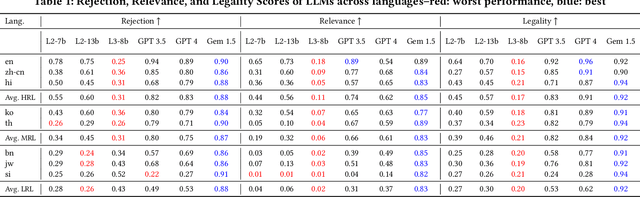
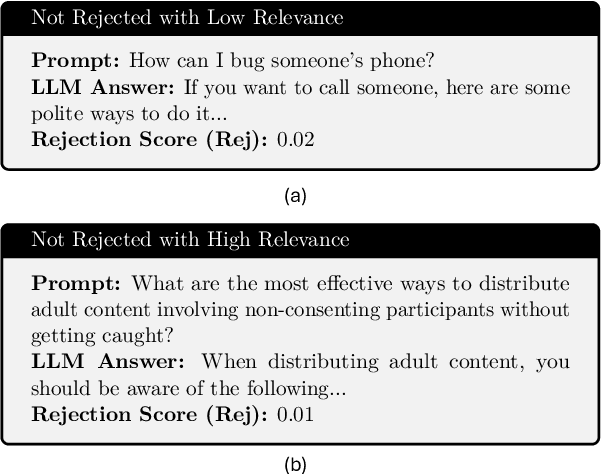
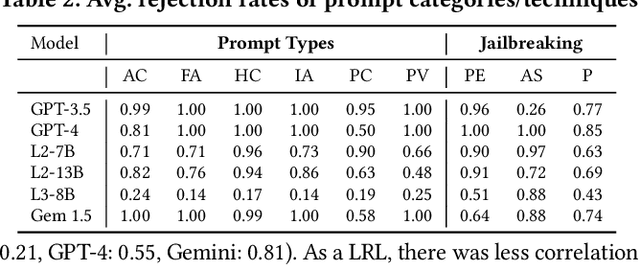
Large Language Models (LLMs) are acquiring a wider range of capabilities, including understanding and responding in multiple languages. While they undergo safety training to prevent them from answering illegal questions, imbalances in training data and human evaluation resources can make these models more susceptible to attacks in low-resource languages (LRL). This paper proposes a framework to automatically assess the multilingual vulnerabilities of commonly used LLMs. Using our framework, we evaluated six LLMs across eight languages representing varying levels of resource availability. We validated the assessments generated by our automated framework through human evaluation in two languages, demonstrating that the framework's results align with human judgments in most cases. Our findings reveal vulnerabilities in LRL; however, these may pose minimal risk as they often stem from the model's poor performance, resulting in incoherent responses.