 Add to Chrome
 Add to Firefox
 Add to Edge
AI Advocate: Educational Path to Transform Squads to the Future
May 05, 2026
This paper analyzes the strategic education process aimed at transitioning traditional software development squads into hybrid structures centered on collaborative work between humans and Artificial Intelligence (AI). In a context where human-AI collaboration can significantly increase productivity, this study explores how the upskilling of XPTO professionals, referred to as AI Advocates, acts as a catalyst for cultural and technical transformation. The objective is to present an experience report on the education and enablement process of AI Advocates within a private Brazilian technology company, highlighting key lessons learned and identified challenges.

Toward Effective AI Governance: A Review of Principles
May 29, 2025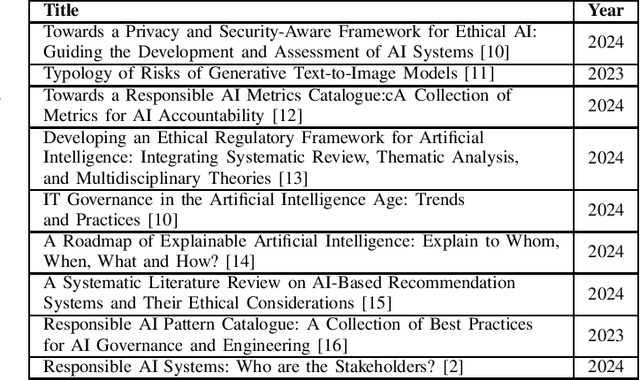
Artificial Intelligence (AI) governance is the practice of establishing frameworks, policies, and procedures to ensure the responsible, ethical, and safe development and deployment of AI systems. Although AI governance is a core pillar of Responsible AI, current literature still lacks synthesis across such governance frameworks and practices. Objective: To identify which frameworks, principles, mechanisms, and stakeholder roles are emphasized in secondary literature on AI governance. Method: We conducted a rapid tertiary review of nine peer-reviewed secondary studies from IEEE and ACM (20202024), using structured inclusion criteria and thematic semantic synthesis. Results: The most cited frameworks include the EU AI Act and NIST RMF; transparency and accountability are the most common principles. Few reviews detail actionable governance mechanisms or stakeholder strategies. Conclusion: The review consolidates key directions in AI governance and highlights gaps in empirical validation and inclusivity. Findings inform both academic inquiry and practical adoption in organizations.