 Add to Chrome
 Add to Firefox
 Add to Edge
Extrapolation in Statistical Learning with Extreme Value Theory
May 03, 2026
Extreme value theory provides rigorous theory and statistical tools for extrapolation in machine learning, particularly in settings where traditional methods struggle due to data scarcity in the tails. A broad range of tasks benefit from these advances, including regression and classification beyond the training data, extreme quantile regression, supervised and unsupervised dimension reduction, generative artificial intelligence and anomaly detection. This review synthesizes recent developments in these fields at the intersection of statistical learning and extreme value theory, with a focus on principled methods based on asymptotically motivated representations of the tail of univariate and multivariate distributions. We consider different theoretical frameworks for both asymptotically dependent and independent data and discuss how they translate into efficient statistical methods for extrapolation to extreme regions. By addressing both theoretical and practical aspects, we offer a comprehensive overview of the state-of-the-art in this quickly evolving field, and identify promising directions for future research.

Achievable distributional robustness when the robust risk is only partially identified
Feb 04, 2025In safety-critical applications, machine learning models should generalize well under worst-case distribution shifts, that is, have a small robust risk. Invariance-based algorithms can provably take advantage of structural assumptions on the shifts when the training distributions are heterogeneous enough to identify the robust risk. However, in practice, such identifiability conditions are rarely satisfied -- a scenario so far underexplored in the theoretical literature. In this paper, we aim to fill the gap and propose to study the more general setting when the robust risk is only partially identifiable. In particular, we introduce the worst-case robust risk as a new measure of robustness that is always well-defined regardless of identifiability. Its minimum corresponds to an algorithm-independent (population) minimax quantity that measures the best achievable robustness under partial identifiability. While these concepts can be defined more broadly, in this paper we introduce and derive them explicitly for a linear model for concreteness of the presentation. First, we show that existing robustness methods are provably suboptimal in the partially identifiable case. We then evaluate these methods and the minimizer of the (empirical) worst-case robust risk on real-world gene expression data and find a similar trend: the test error of existing robustness methods grows increasingly suboptimal as the fraction of data from unseen environments increases, whereas accounting for partial identifiability allows for better generalization.
Boosted Control Functions
Oct 09, 2023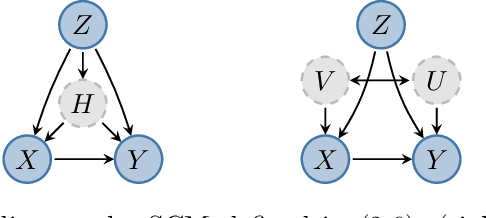
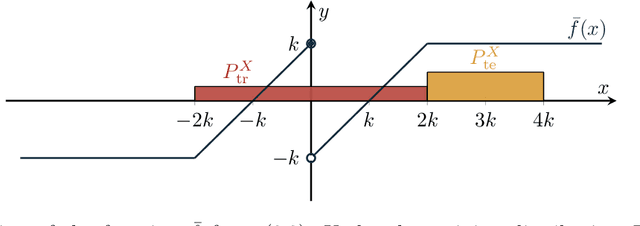
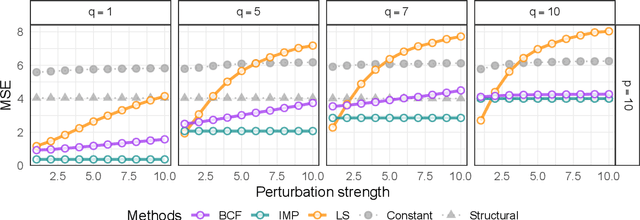
Modern machine learning methods and the availability of large-scale data opened the door to accurately predict target quantities from large sets of covariates. However, existing prediction methods can perform poorly when the training and testing data are different, especially in the presence of hidden confounding. While hidden confounding is well studied for causal effect estimation (e.g., instrumental variables), this is not the case for prediction tasks. This work aims to bridge this gap by addressing predictions under different training and testing distributions in the presence of unobserved confounding. In particular, we establish a novel connection between the field of distribution generalization from machine learning, and simultaneous equation models and control function from econometrics. Central to our contribution are simultaneous equation models for distribution generalization (SIMDGs) which describe the data-generating process under a set of distributional shifts. Within this framework, we propose a strong notion of invariance for a predictive model and compare it with existing (weaker) versions. Building on the control function approach from instrumental variable regression, we propose the boosted control function (BCF) as a target of inference and prove its ability to successfully predict even in intervened versions of the underlying SIMDG. We provide necessary and sufficient conditions for identifying the BCF and show that it is worst-case optimal. We introduce the ControlTwicing algorithm to estimate the BCF and analyze its predictive performance on simulated and real world data.