 Add to Chrome
 Add to Firefox
 Add to Edge
Toward Scalable Early Cancer Detection: Evaluating EHR-Based Predictive Models Against Traditional Screening Criteria
Nov 14, 2025
Current cancer screening guidelines cover only a few cancer types and rely on narrowly defined criteria such as age or a single risk factor like smoking history, to identify high-risk individuals. Predictive models using electronic health records (EHRs), which capture large-scale longitudinal patient-level health information, may provide a more effective tool for identifying high-risk groups by detecting subtle prediagnostic signals of cancer. Recent advances in large language and foundation models have further expanded this potential, yet evidence remains limited on how useful HER-based models are compared with traditional risk factors currently used in screening guidelines. We systematically evaluated the clinical utility of EHR-based predictive models against traditional risk factors, including gene mutations and family history of cancer, for identifying high-risk individuals across eight major cancers (breast, lung, colorectal, prostate, ovarian, liver, pancreatic, and stomach), using data from the All of Us Research Program, which integrates EHR, genomic, and survey data from over 865,000 participants. Even with a baseline modeling approach, EHR-based models achieved a 3- to 6-fold higher enrichment of true cancer cases among individuals identified as high risk compared with traditional risk factors alone, whether used as a standalone or complementary tool. The EHR foundation model, a state-of-the-art approach trained on comprehensive patient trajectories, further improved predictive performance across 26 cancer types, demonstrating the clinical potential of EHR-based predictive modeling to support more precise and scalable early detection strategies.

Large Language Models for Granularized Barrett's Esophagus Diagnosis Classification
Aug 16, 2023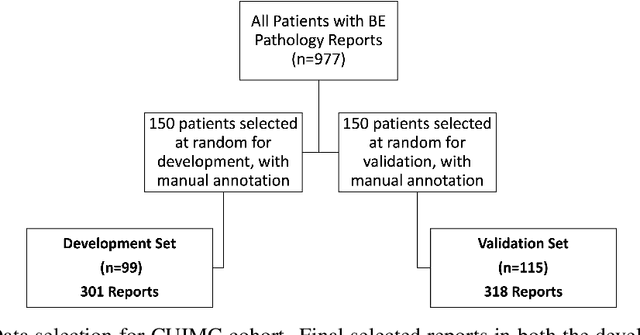
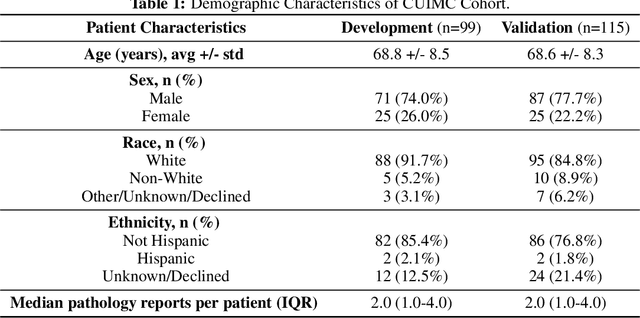
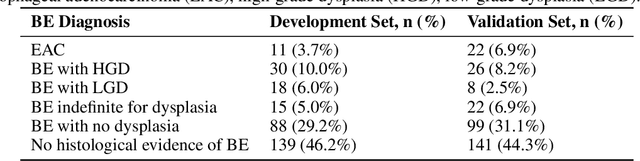

Diagnostic codes for Barrett's esophagus (BE), a precursor to esophageal cancer, lack granularity and precision for many research or clinical use cases. Laborious manual chart review is required to extract key diagnostic phenotypes from BE pathology reports. We developed a generalizable transformer-based method to automate data extraction. Using pathology reports from Columbia University Irving Medical Center with gastroenterologist-annotated targets, we performed binary dysplasia classification as well as granularized multi-class BE-related diagnosis classification. We utilized two clinically pre-trained large language models, with best model performance comparable to a highly tailored rule-based system developed using the same data. Binary dysplasia extraction achieves 0.964 F1-score, while the multi-class model achieves 0.911 F1-score. Our method is generalizable and faster to implement as compared to a tailored rule-based approach.