 Add to Chrome
 Add to Firefox
 Add to Edge
Text Corpora as Concept Fields: Black-Box Hallucination and Novelty Measurement
May 06, 2026
We introduce the **Concept Field** of a text corpus: a local drift field with pointwise uncertainty, estimated in sentence-embedding space from the deltas between consecutive sentences. Given a candidate sentence transition, we score its agreement with the field by $ζ$, the mean absolute z-distance between the observed delta and the field's local Gaussian estimate. The score is black-box (no model internals), corpus-attributable (every score traces to nearby corpus sentences), and admits a direct probabilistic reading. We support the computation with the introduction of a **Vector Sequence Database (VSDB)** that stores embeddings together with sequence-position and next-delta metadata. We evaluate this approach on two large-scale settings: hallucination-style groundedness detection over the U.S. Code of Federal Regulations, and novelty detection over Project Gutenberg. Using controlled LLM-generated rewrites, Concept Fields achieve strong selective classification performance under a grounded / ungrounded / unsure triage policy, which unlike retrieval-centric baselines have similar coverage-risk behavior across both domains, supporting a probability-based interpretation that transfers across domains. We also sketch how divergence and curl of the Concept Field, computed on dense clusters, surface qualitatively meaningful semantic patterns (logic sources, sinks, and implicit topics), which we offer as hypothesis-generating rather than as a quantitative result. Concept Fields provide a fast, lightweight, and interpretable signal for groundedness and novelty, complementary to LLM-as-judge and white-box detectors.

Harmonic LLMs are Trustworthy
Apr 30, 2024We introduce an intuitive method to test the robustness (stability and explainability) of any black-box LLM in real-time, based upon the local deviation from harmoniticity, denoted as $\gamma$. To the best of our knowledge this is the first completely model-agnostic and unsupervised method of measuring the robustness of any given response from an LLM, based upon the model itself conforming to a purely mathematical standard. We conduct human annotation experiments to show the positive correlation of $\gamma$ with false or misleading answers, and demonstrate that following the gradient of $\gamma$ in stochastic gradient ascent efficiently exposes adversarial prompts. Measuring $\gamma$ across thousands of queries in popular LLMs (GPT-4, ChatGPT, Claude-2.1, Mixtral-8x7B, Smaug-72B, Llama2-7B, and MPT-7B) allows us to estimate the liklihood of wrong or hallucinatory answers automatically and quantitatively rank the reliability of these models in various objective domains (Web QA, TruthfulQA, and Programming QA). Across all models and domains tested, human ratings confirm that $\gamma \to 0$ indicates trustworthiness, and the low-$\gamma$ leaders among these models are GPT-4, ChatGPT, and Smaug-72B.
Harmonic Machine Learning Models are Robust
Apr 29, 2024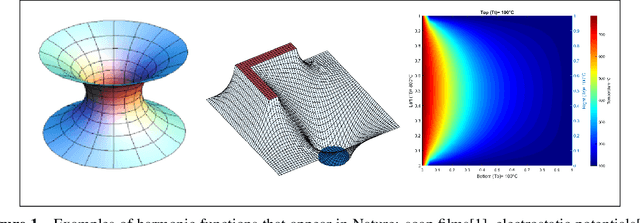
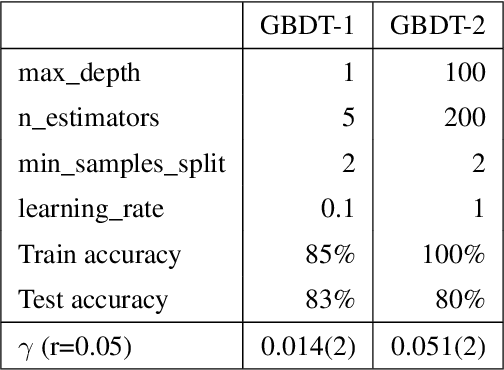
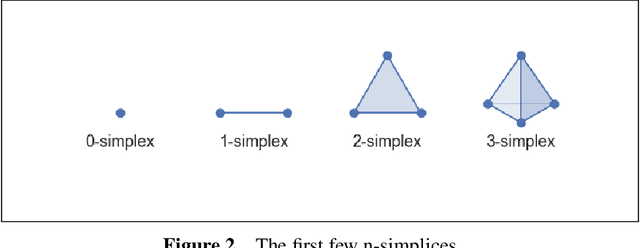

We introduce Harmonic Robustness, a powerful and intuitive method to test the robustness of any machine-learning model either during training or in black-box real-time inference monitoring without ground-truth labels. It is based on functional deviation from the harmonic mean value property, indicating instability and lack of explainability. We show implementation examples in low-dimensional trees and feedforward NNs, where the method reliably identifies overfitting, as well as in more complex high-dimensional models such as ResNet-50 and Vision Transformer where it efficiently measures adversarial vulnerability across image classes.