 Add to Chrome
 Add to Firefox
 Add to Edge
The Social Cost of an AI Teammate: How an Artificial Teammate Reshapes Human-Human Communication in Small-Team Decision-Making
Jul 29, 2026
Conversational AI is increasingly positioned as a teammate rather than a tool, yet we know little about how its presence reshapes communication among the humans on the team. We examined sociocognitive communication dynamics in team decision-making using Group Communication Analysis (GCA), team surveys, and lexical analyses of team discourse. Teams completed a high-stakes moral-dilemma decision task in a randomized controlled study: 16 teams of two students plus an AI teammate, and 17 all-human teams of three. Across six GCA dimensions and survey outcomes, we find that the AI teammate was the single most talkative and self-cohesive member of every treatment team, yet its contributions carried the least new information and the lowest density. The presence of AI also reshaped communication amongst humans. In AI-human teams, human teammates showed lower responsivity and social impact toward one another and reported lower levels of belonging and status. Greater AI dominance in the conversation was associated with students feeling less valued as team members. Additionally, this social cost is immediate and present at baseline; it does not emerge over the course of the conversation. Drawing on these results, we discuss a research agenda extending to voice-based and longitudinal settings.

TRAIL: A Platform for Configurable Human--AI Teaming Experiments
Jul 13, 2026An AI teammate's design properties (personality, communication style, when it speaks) can shape a team's trust, coordination, and decisions. Studying this rigorously demands infrastructure no existing tool provides: reproducible configuration of an AI teammate embedded in instrumented, real-time collaboration sustained over time. We present the Team Research and AI Integration Lab (TRAIL), a web platform that makes the AI teammate a configurable, reproducible design object, pairing a Big Five persona with a selective-participation message pipeline, dual memory, chained longitudinal experiments, and export-ready analytics. In a real six-session classroom deployment (about 51 students), TRAIL sustained longitudinal chaining, held the AI to a stable minority of the conversation, and enabled export-driven AI-human text-similarity analysis. A single blind persona change produced a design-consistent double dissociation: a cognitive-scaffolding agent drew stronger contribution ratings and closer linguistic alignment; a socially-supportive agent, a warmer team climate and lower over-reliance.
Personalities at Play: Probing Alignment in AI Teammates
Feb 28, 2026Collaborative problem solving and learning are shaped by who or what is on the team. As large language models (LLMs) increasingly function as collaborators rather than tools, a key question is whether AI teammates can be aligned to express personality in predictable ways that matter for interaction and learning. We investigate AI personality alignment through a three-lens evaluation framework spanning self-perception (standardized self-report), behavioral expression (team dialogue), and reflective expression (memory construction). We first administered the Big Five Inventory (BFI-44) to LLM-based teammates across four providers (GPT-4o, Claude-3.7 Sonnet, Gemini-2.5 Pro, Grok-3), 32 high/low trait configurations, and multiple prompting strategies. LLMs produced sharply differentiated Big Five profiles, but prompt semantic richness added little beyond simple trait assignment, while provider differences and baseline "default" personalities were substantial. Role framing also mattered: several models refused the assessment without context, yet complied when framed as a collaborative teammate. We then simulated AI participation in authentic team transcripts using high-trait personas and analyzed both generated utterances and structured long-term memories with LIWC-22. Personality signals in conversation were generally subtle and most detectable for Extraversion, whereas memory representations amplified trait-specific signals, especially for Neuroticism, Conscientiousness, and Agreeableness; Openness remained difficult to elicit robustly. Together, results suggest that AI personality is measurable but multi-layered and context-dependent, and that evaluating personality-aligned AI teammates requires attention to memory and system-level design, not conversation-only behavior.
Measuring Inclusion in Interaction: Inclusion Analytics for Human-AI Collaborative Learning
Feb 09, 2026Inclusion, equity, and access are widely valued in AI and education, yet are often assessed through coarse sample descriptors or post-hoc self-reports that miss how inclusion is shaped moment by moment in collaborative problem solving (CPS). In this proof-of-concept paper, we introduce inclusion analytics, a discourse-based framework for examining inclusion as a dynamic, interactional process in CPS. We conceptualize inclusion along three complementary dimensions -- participation equity, affective climate, and epistemic equity -- and demonstrate how these constructs can be made analytically visible using scalable, interaction-level measures. Using both simulated conversations and empirical data from human-AI teaming experiments, we illustrate how inclusion analytics can surface patterns of participation, relational dynamics, and idea uptake that remain invisible to aggregate or post-hoc evaluations. This work represents an initial step toward process-oriented approaches to measuring inclusion in human-AI collaborative learning environments.
The AI Collaborator: Bridging Human-AI Interaction in Educational and Professional Settings
May 16, 2024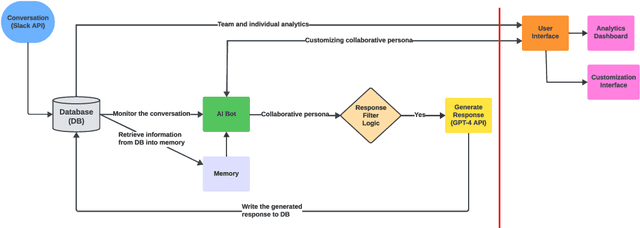
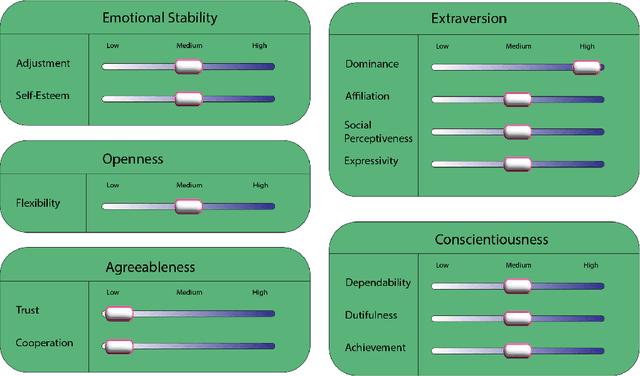
AI Collaborator, powered by OpenAI's GPT-4, is a groundbreaking tool designed for human-AI collaboration research. Its standout feature is the ability for researchers to create customized AI personas for diverse experimental setups using a user-friendly interface. This functionality is essential for simulating various interpersonal dynamics in team settings. AI Collaborator excels in mimicking different team behaviors, enabled by its advanced memory system and a sophisticated personality framework. Researchers can tailor AI personas along a spectrum from dominant to cooperative, enhancing the study of their impact on team processes. The tool's modular design facilitates integration with digital platforms like Slack, making it versatile for various research scenarios. AI Collaborator is thus a crucial resource for exploring human-AI team dynamics more profoundly.
Greater than the sum of its parts: The role of minority and majority status in collaborative problem-solving communication
Mar 07, 2024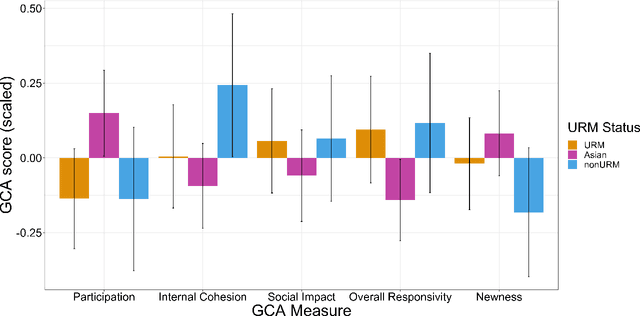
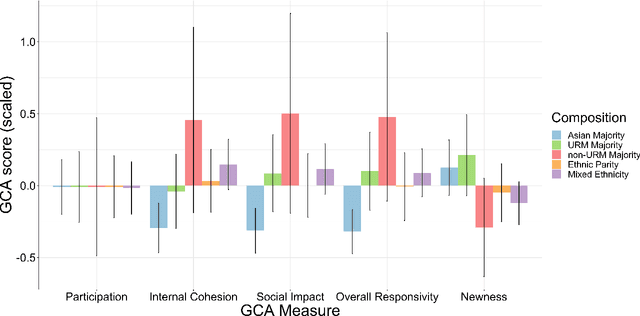
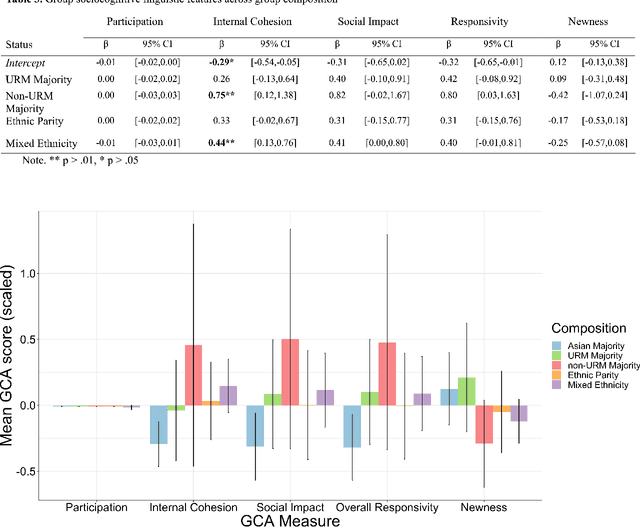
Collaborative problem-solving (CPS) is a vital skill used both in the workplace and in educational environments. CPS is useful in tackling increasingly complex global, economic, and political issues and is considered a central 21st century skill. The increasingly connected global community presents a fruitful opportunity for creative and collaborative problem-solving interactions and solutions that involve diverse perspectives. Unfortunately, women and underrepresented minorities (URMs) often face obstacles during collaborative interactions that hinder their key participation in these problem-solving conversations. Here, we explored the communication patterns of minority and non-minority individuals working together in a CPS task. Group Communication Analysis (GCA), a temporally-sensitive computational linguistic tool, was used to examine how URM status impacts individuals' sociocognitive linguistic patterns. Results show differences across racial/ethnic groups in key sociocognitive features that indicate fruitful collaborative interactions. We also investigated how the groups' racial/ethnic composition impacts both individual and group communication patterns. In general, individuals in more demographically diverse groups displayed more productive communication behaviors than individuals who were in majority-dominated groups. We discuss the implications of individual and group diversity on communication patterns that emerge during CPS and how these patterns can impact collaborative outcomes.
Catalyzing Equity in STEM Teams: Harnessing Generative AI for Inclusion and Diversity
Jan 08, 2024Collaboration is key to STEM, where multidisciplinary team research can solve complex problems. However, inequality in STEM fields hinders their full potential, due to persistent psychological barriers in underrepresented students' experience. This paper documents teamwork in STEM and explores the transformative potential of computational modeling and generative AI in promoting STEM-team diversity and inclusion. Leveraging generative AI, this paper outlines two primary areas for advancing diversity, equity, and inclusion. First, formalizing collaboration assessment with inclusive analytics can capture fine-grained learner behavior. Second, adaptive, personalized AI systems can support diversity and inclusion in STEM teams. Four policy recommendations highlight AI's capacity: formalized collaborative skill assessment, inclusive analytics, funding for socio-cognitive research, human-AI teaming for inclusion training. Researchers, educators, policymakers can build an equitable STEM ecosystem. This roadmap advances AI-enhanced collaboration, offering a vision for the future of STEM where diverse voices are actively encouraged and heard within collaborative scientific endeavors.