 Add to Chrome
 Add to Firefox
 Add to Edge
Physics Is All You Need? A Case Study in Physicist-Supervised AI Development of Scientific Software
May 28, 2026
Are AI agents tools, co-authors, or researchers? We present a quantified case study ($N=1$): a physicist supervising an AI coding agent (Claude Code, Sonnet and Opus models) over 12 work days and 57 sessions to build CLAX-PT, a differentiable one-loop perturbation theory module in JAX. We documented and classified 15 supervision events by intervention level. The agent resolved ten autonomously by iterating against oracle tests. Two more by the physicist's domain knowledge. The three it could not -- all evaded oracle detection -- share a common property: the agent treated symptom reduction as root-cause resolution. It spent 33 of the 57 sessions adjusting coefficients within a code architecture that could not represent the target physics, and could not re-evaluate its CLASS-PT branch choice even when prompted to reconsider; only an injected physics concept (anisotropic BAO damping) triggered the redesign. Separately, the agent committed a calibrated correction that passed all oracle tests but corresponded to no quantity in the theory, predicting wrong values at any other cosmology. The fudge factor was caught and replaced within the same session. Three supervision practices proved critical for catching what oracle tests missed: testing at diverse parameter points beyond the fiducial calibration; shared changelogs that surfaced stalled exploration across sessions; and an explicit rule against unphysical numerical patches. In this case, supervision design, not model capability, determined whether the agent's output was trustworthy. Closing the gap would require agents that propose architectural alternatives rather than optimize within a given structure, and distinguish predictive adequacy from explanatory correctness -- capabilities not exhibited here, not obviously addressed by scaling alone. [Abridged.]

Reconstructing the local density field with combined convolutional and point cloud architecture
Oct 09, 2025We construct a neural network to perform regression on the local dark-matter density field given line-of-sight peculiar velocities of dark-matter halos, biased tracers of the dark matter field. Our architecture combines a convolutional U-Net with a point-cloud DeepSets. This combination enables efficient use of small-scale information and improves reconstruction quality relative to a U-Net-only approach. Specifically, our hybrid network recovers both clustering amplitudes and phases better than the U-Net on small scales.
Wasserstein Gaussianization and Efficient Variational Bayes for Robust Bayesian Synthetic Likelihood
May 24, 2023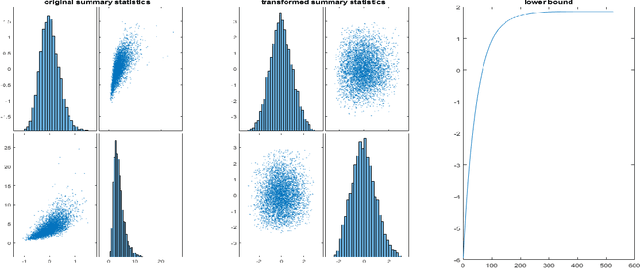

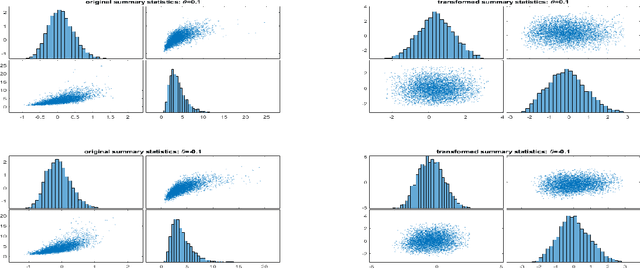

The Bayesian Synthetic Likelihood (BSL) method is a widely-used tool for likelihood-free Bayesian inference. This method assumes that some summary statistics are normally distributed, which can be incorrect in many applications. We propose a transformation, called the Wasserstein Gaussianization transformation, that uses a Wasserstein gradient flow to approximately transform the distribution of the summary statistics into a Gaussian distribution. BSL also implicitly requires compatibility between simulated summary statistics under the working model and the observed summary statistics. A robust BSL variant which achieves this has been developed in the recent literature. We combine the Wasserstein Gaussianization transformation with robust BSL, and an efficient Variational Bayes procedure for posterior approximation, to develop a highly efficient and reliable approximate Bayesian inference method for likelihood-free problems.
MANDO: Multi-Level Heterogeneous Graph Embeddings for Fine-Grained Detection of Smart Contract Vulnerabilities
Aug 28, 2022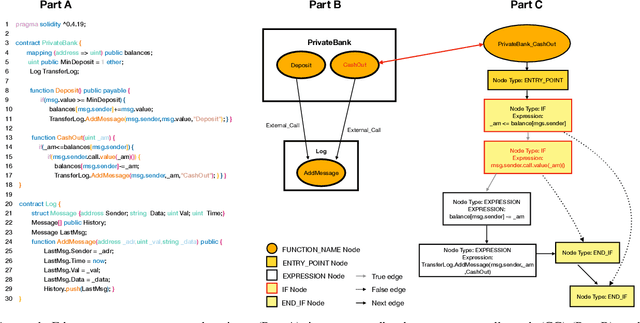
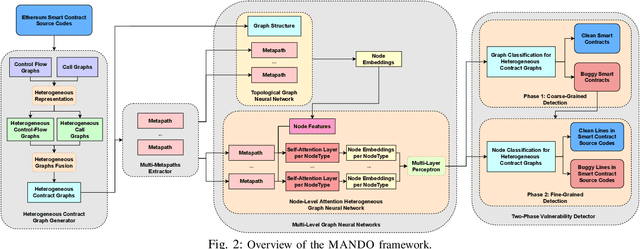
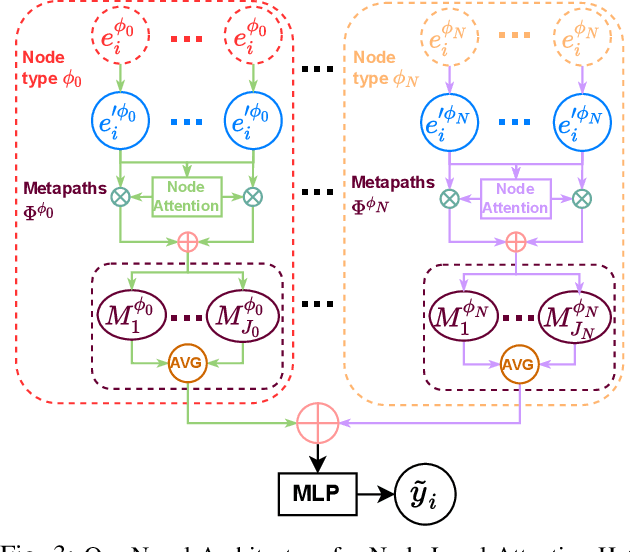
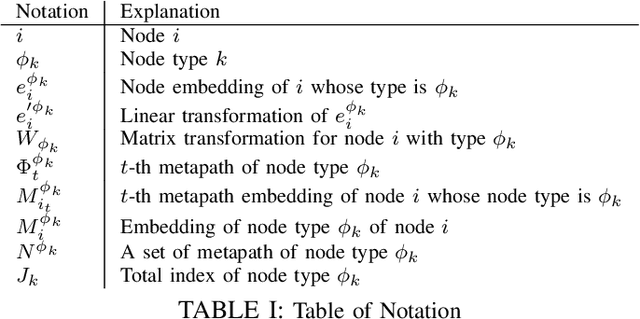
Learning heterogeneous graphs consisting of different types of nodes and edges enhances the results of homogeneous graph techniques. An interesting example of such graphs is control-flow graphs representing possible software code execution flows. As such graphs represent more semantic information of code, developing techniques and tools for such graphs can be highly beneficial for detecting vulnerabilities in software for its reliability. However, existing heterogeneous graph techniques are still insufficient in handling complex graphs where the number of different types of nodes and edges is large and variable. This paper concentrates on the Ethereum smart contracts as a sample of software codes represented by heterogeneous contract graphs built upon both control-flow graphs and call graphs containing different types of nodes and links. We propose MANDO, a new heterogeneous graph representation to learn such heterogeneous contract graphs' structures. MANDO extracts customized metapaths, which compose relational connections between different types of nodes and their neighbors. Moreover, it develops a multi-metapath heterogeneous graph attention network to learn multi-level embeddings of different types of nodes and their metapaths in the heterogeneous contract graphs, which can capture the code semantics of smart contracts more accurately and facilitate both fine-grained line-level and coarse-grained contract-level vulnerability detection. Our extensive evaluation of large smart contract datasets shows that MANDO improves the vulnerability detection results of other techniques at the coarse-grained contract level. More importantly, it is the first learning-based approach capable of identifying vulnerabilities at the fine-grained line-level, and significantly improves the traditional code analysis-based vulnerability detection approaches by 11.35% to 70.81% in terms of F1-score.