 Add to Chrome
 Add to Firefox
 Add to Edge
OpenAI GPT-5 System Card
Dec 19, 2025
This is the system card published alongside the OpenAI GPT-5 launch, August 2025. GPT-5 is a unified system with a smart and fast model that answers most questions, a deeper reasoning model for harder problems, and a real-time router that quickly decides which model to use based on conversation type, complexity, tool needs, and explicit intent (for example, if you say 'think hard about this' in the prompt). The router is continuously trained on real signals, including when users switch models, preference rates for responses, and measured correctness, improving over time. Once usage limits are reached, a mini version of each model handles remaining queries. This system card focuses primarily on gpt-5-thinking and gpt-5-main, while evaluations for other models are available in the appendix. The GPT-5 system not only outperforms previous models on benchmarks and answers questions more quickly, but -- more importantly -- is more useful for real-world queries. We've made significant advances in reducing hallucinations, improving instruction following, and minimizing sycophancy, and have leveled up GPT-5's performance in three of ChatGPT's most common uses: writing, coding, and health. All of the GPT-5 models additionally feature safe-completions, our latest approach to safety training to prevent disallowed content. Similarly to ChatGPT agent, we have decided to treat gpt-5-thinking as High capability in the Biological and Chemical domain under our Preparedness Framework, activating the associated safeguards. While we do not have definitive evidence that this model could meaningfully help a novice to create severe biological harm -- our defined threshold for High capability -- we have chosen to take a precautionary approach.

Dyna-bAbI: unlocking bAbI's potential with dynamic synthetic benchmarking
Nov 30, 2021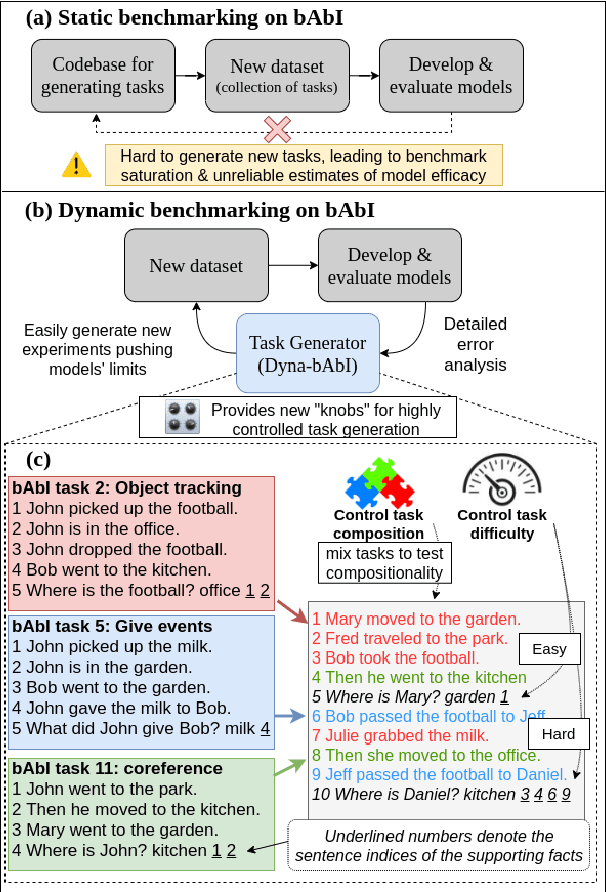
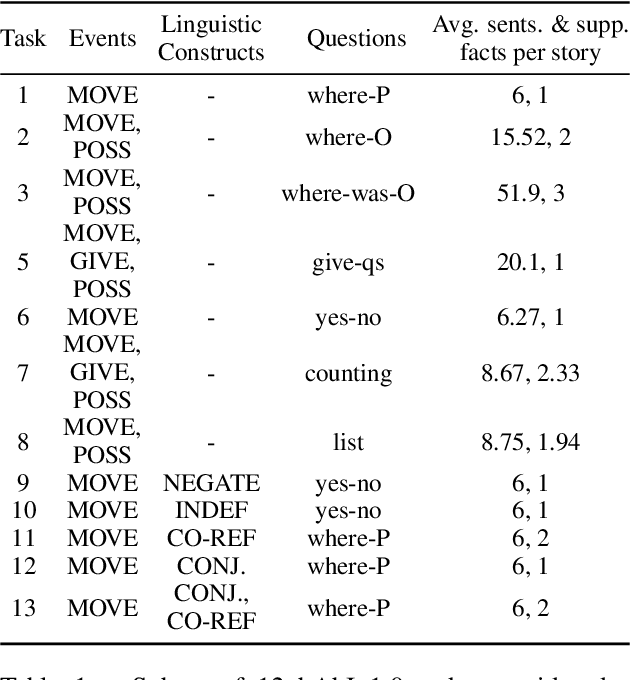
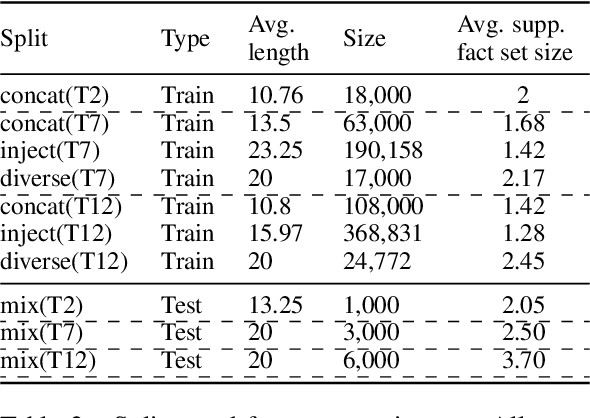
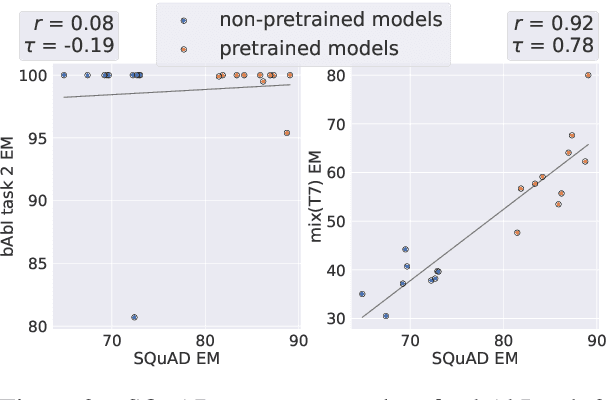
While neural language models often perform surprisingly well on natural language understanding (NLU) tasks, their strengths and limitations remain poorly understood. Controlled synthetic tasks are thus an increasingly important resource for diagnosing model behavior. In this work we focus on story understanding, a core competency for NLU systems. However, the main synthetic resource for story understanding, the bAbI benchmark, lacks such a systematic mechanism for controllable task generation. We develop Dyna-bAbI, a dynamic framework providing fine-grained control over task generation in bAbI. We demonstrate our ideas by constructing three new tasks requiring compositional generalization, an important evaluation setting absent from the original benchmark. We tested both special-purpose models developed for bAbI as well as state-of-the-art pre-trained methods, and found that while both approaches solve the original tasks (>99% accuracy), neither approach succeeded in the compositional generalization setting, indicating the limitations of the original training data. We explored ways to augment the original data, and found that though diversifying training data was far more useful than simply increasing dataset size, it was still insufficient for driving robust compositional generalization (with <70% accuracy for complex compositions). Our results underscore the importance of highly controllable task generators for creating robust NLU systems through a virtuous cycle of model and data development.
AllenNLP: A Deep Semantic Natural Language Processing Platform
May 31, 2018This paper describes AllenNLP, a platform for research on deep learning methods in natural language understanding. AllenNLP is designed to support researchers who want to build novel language understanding models quickly and easily. It is built on top of PyTorch, allowing for dynamic computation graphs, and provides (1) a flexible data API that handles intelligent batching and padding, (2) high-level abstractions for common operations in working with text, and (3) a modular and extensible experiment framework that makes doing good science easy. It also includes reference implementations of high quality approaches for both core semantic problems (e.g. semantic role labeling (Palmer et al., 2005)) and language understanding applications (e.g. machine comprehension (Rajpurkar et al., 2016)). AllenNLP is an ongoing open-source effort maintained by engineers and researchers at the Allen Institute for Artificial Intelligence.