 Add to Chrome
 Add to Firefox
 Add to Edge
Cellular Predictions on the Move: What about Data?
Jun 24, 2026
Mobile cellular load forecasting is native to network resource optimization and delivery of services with reliability, latency and quality guarantees. The mainstream of machine learning research in the area is focused primarily on developing powerful learning structures for improved prediction accuracy. The data used for forecasting traditionally belong to the cellular domain and at most contain exogenous information about the surroundings of the base stations. We approach the prediction task from the perspective of data as a vital component of any data learning process. We hypothesize that substantial improvements could be achieved when the data inform on the processes that create the cellular load. Specifically, we propose to characterize the population dynamics -- the potential number of cellular traffic sources and their mobility -- in addition to employing historical time series of mobile data traffic. We validate our hypothesis for the rarely examined highway scenario. Comprehensive experiments show forecasting improvements on the order of $60\%$ due to the use of these data alone.

Learning Combinatorial Optimization on Graphs: A Survey with Applications to Networking
May 22, 2020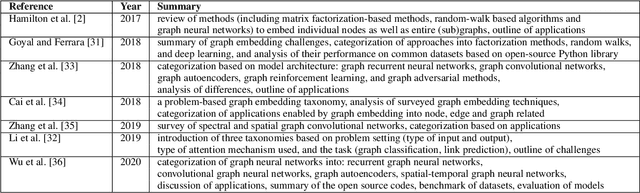
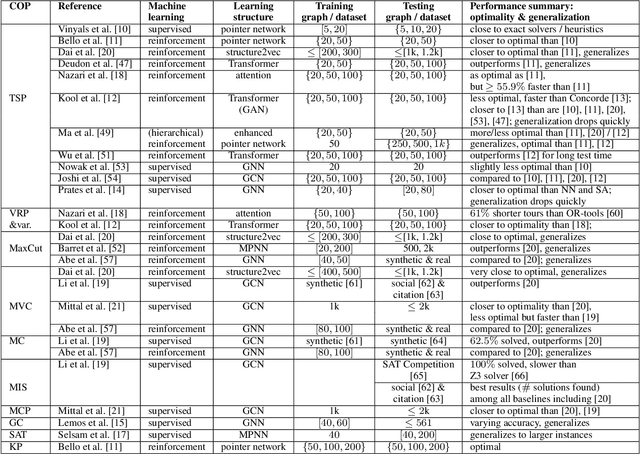
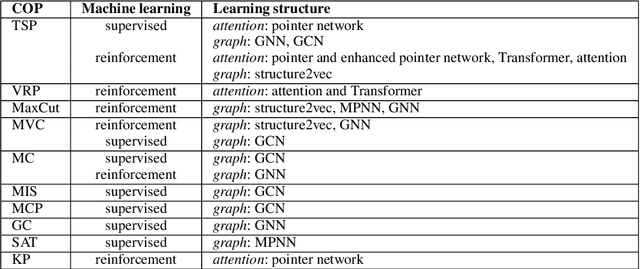

Existing approaches to solving combinatorial optimization problems on graphs suffer from the need to engineer each problem algorithmically, with practical problems recurring in many instances. The practical side of theoretical computer science, such as computational complexity then needs to be addressed. Relevant developments in machine learning research on graphs is surveyed, for this purpose. We organize and compare the structures involved with learning to solve combinatorial optimization problems, with a special eye on the telecommunications domain and its continuous development of live and research networks.