 Add to Chrome
 Add to Firefox
 Add to Edge
Context and Transcripts Improve Detection of Deepfake Audios of Public Figures
Jan 19, 2026
Humans use context to assess the veracity of information. However, current audio deepfake detectors only analyze the audio file without considering either context or transcripts. We create and analyze a Journalist-provided Deepfake Dataset (JDD) of 255 public deepfakes which were primarily contributed by over 70 journalists since early 2024. We also generate a synthetic audio dataset (SYN) of dead public figures and propose a novel Context-based Audio Deepfake Detector (CADD) architecture. In addition, we evaluate performance on two large-scale datasets: ITW and P$^2$V. We show that sufficient context and/or the transcript can significantly improve the efficacy of audio deepfake detectors. Performance (measured via F1 score, AUC, and EER) of multiple baseline audio deepfake detectors and traditional classifiers can be improved by 5%-37.58% in F1-score, 3.77%-42.79% in AUC, and 6.17%-47.83% in EER. We additionally show that CADD, via its use of context and/or transcripts, is more robust to 5 adversarial evasion strategies, limiting performance degradation to an average of just -0.71% across all experiments. Code, models, and datasets are available at our project page: https://sites.northwestern.edu/nsail/cadd-context-based-audio-deepfake-detection (access restricted during review).

Semantic Code Classification for Automated Machine Learning
Jan 25, 2022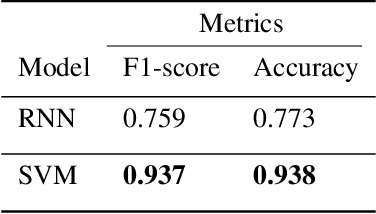
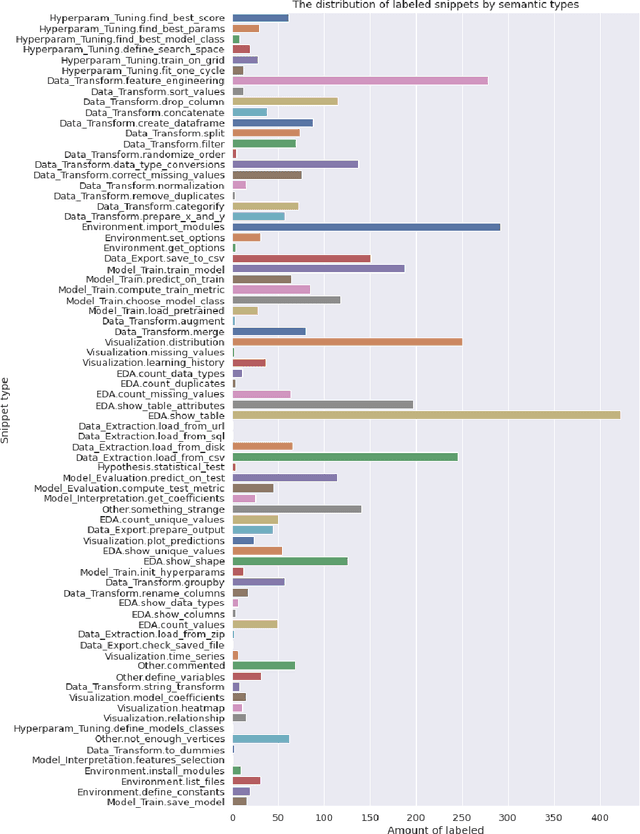
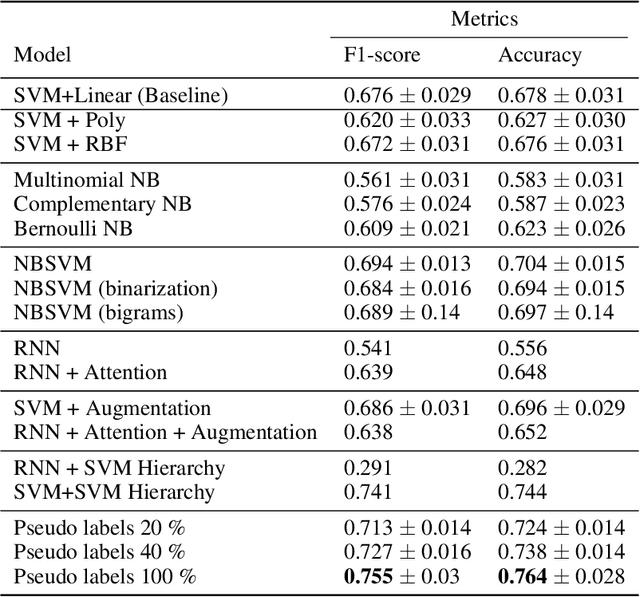
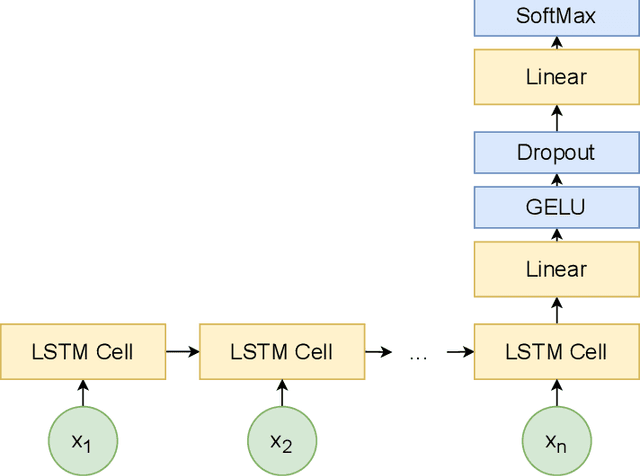
A range of applications for automatic machine learning need the generation process to be controllable. In this work, we propose a way to control the output via a sequence of simple actions, that are called semantic code classes. Finally, we present a semantic code classification task and discuss methods for solving this problem on the Natural Language to Machine Learning (NL2ML) dataset.