 Add to Chrome
 Add to Firefox
 Add to Edge
Practical Efficient Global Optimization is No-regret
Mar 26, 2026
Efficient global optimization (EGO) is one of the most widely used noise-free Bayesian optimization algorithms.It comprises the Gaussian process (GP) surrogate model and expected improvement (EI) acquisition function. In practice, when EGO is applied, a scalar matrix of a small positive value (also called a nugget or jitter) is usually added to the covariance matrix of the deterministic GP to improve numerical stability. We refer to this EGO with a positive nugget as the practical EGO. Despite its wide adoption and empirical success, to date, cumulative regret bounds for practical EGO have yet to be established. In this paper, we present for the first time the cumulative regret upper bound of practical EGO. In particular, we show that practical EGO has sublinear cumulative regret bounds and thus is a no-regret algorithm for commonly used kernels including the squared exponential (SE) and Matérn kernels ($ν>\frac{1}{2}$). Moreover, we analyze the effect of the nugget on the regret bound and discuss the theoretical implication on its choice. Numerical experiments are conducted to support and validate our findings.

Convergence Rates of Constrained Expected Improvement
May 16, 2025Constrained Bayesian optimization (CBO) methods have seen significant success in black-box optimization with constraints, and one of the most commonly used CBO methods is the constrained expected improvement (CEI) algorithm. CEI is a natural extension of the expected improvement (EI) when constraints are incorporated. However, the theoretical convergence rate of CEI has not been established. In this work, we study the convergence rate of CEI by analyzing its simple regret upper bound. First, we show that when the objective function $f$ and constraint function $c$ are assumed to each lie in a reproducing kernel Hilbert space (RKHS), CEI achieves the convergence rates of $\mathcal{O} \left(t^{-\frac{1}{2}}\log^{\frac{d+1}{2}}(t) \right) \ \text{and }\ \mathcal{O}\left(t^{\frac{-\nu}{2\nu+d}} \log^{\frac{\nu}{2\nu+d}}(t)\right)$ for the commonly used squared exponential and Mat\'{e}rn kernels, respectively. Second, we show that when $f$ and $c$ are assumed to be sampled from Gaussian processes (GPs), CEI achieves the same convergence rates with a high probability. Numerical experiments are performed to validate the theoretical analysis.
On the convergence of noisy Bayesian Optimization with Expected Improvement
Jan 16, 2025
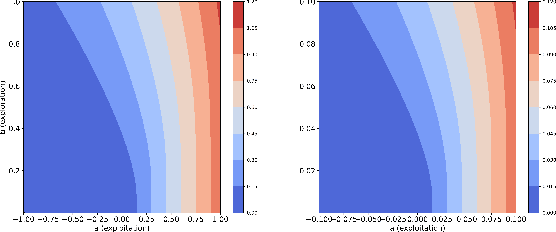
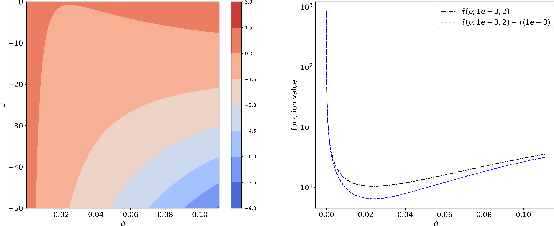
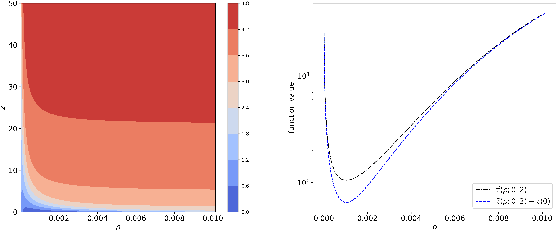
Expected improvement (EI) is one of the most widely-used acquisition functions in Bayesian optimization (BO). Despite its proven success in applications for decades, important open questions remain on the theoretical convergence behaviors and rates for EI. In this paper, we contribute to the convergence theories of EI in three novel and critical area. First, we consider objective functions that are under the Gaussian process (GP) prior assumption, whereas existing works mostly focus on functions in the reproducing kernel Hilbert space (RKHS). Second, we establish the first asymptotic error bound and its corresponding rate for GP-EI with noisy observations under the GP prior assumption. Third, by investigating the exploration and exploitation of the non-convex EI function, we prove improved error bounds for both the noise-free and noisy cases. The improved noiseless bound is extended to the RKHS assumption as well.
On Improved Regret Bounds In Bayesian Optimization with Gaussian Noise
Dec 25, 2024Bayesian optimization (BO) with Gaussian process (GP) surrogate models is a powerful black-box optimization method. Acquisition functions are a critical part of a BO algorithm as they determine how the new samples are selected. Some of the most widely used acquisition functions include upper confidence bound (UCB) and Thompson sampling (TS). The convergence analysis of BO algorithms has focused on the cumulative regret under both the Bayesian and frequentist settings for the objective. In this paper, we establish new pointwise bounds on the prediction error of GP under the frequentist setting with Gaussian noise. Consequently, we prove improved convergence rates of cumulative regret bound for both GP-UCB and GP-TS. Of note, the new prediction error bound under Gaussian noise can be applied to general BO algorithms and convergence analysis, e.g., the asymptotic convergence of expected improvement (EI) with noise.