 Add to Chrome
 Add to Firefox
 Add to Edge
PreScience: A Benchmark for Forecasting Scientific Contributions
Feb 24, 2026
Can AI systems trained on the scientific record up to a fixed point in time forecast the scientific advances that follow? Such a capability could help researchers identify collaborators and impactful research directions, and anticipate which problems and methods will become central next. We introduce PreScience -- a scientific forecasting benchmark that decomposes the research process into four interdependent generative tasks: collaborator prediction, prior work selection, contribution generation, and impact prediction. PreScience is a carefully curated dataset of 98K recent AI-related research papers, featuring disambiguated author identities, temporally aligned scholarly metadata, and a structured graph of companion author publication histories and citations spanning 502K total papers. We develop baselines and evaluations for each task, including LACERScore, a novel LLM-based measure of contribution similarity that outperforms previous metrics and approximates inter-annotator agreement. We find substantial headroom remains in each task -- e.g. in contribution generation, frontier LLMs achieve only moderate similarity to the ground-truth (GPT-5, averages 5.6 on a 1-10 scale). When composed into a 12-month end-to-end simulation of scientific production, the resulting synthetic corpus is systematically less diverse and less novel than human-authored research from the same period.

Content vs. Form: What Drives the Writing Score Gap Across Socioeconomic Backgrounds? A Generated Panel Approach
Jan 06, 2026Students from different socioeconomic backgrounds exhibit persistent gaps in test scores, gaps that can translate into unequal educational and labor-market outcomes later in life. In many assessments, performance reflects not only what students know, but also how effectively they can communicate that knowledge. This distinction is especially salient in writing assessments, where scores jointly reward the substance of students' ideas and the way those ideas are expressed. As a result, observed score gaps may conflate differences in underlying content with differences in expressive skill. A central question, therefore, is how much of the socioeconomic-status (SES) gap in scores is driven by differences in what students say versus how they say it. We study this question using a large corpus of persuasive essays written by U.S. middle- and high-school students. We introduce a new measurement strategy that separates content from style by leveraging large language models to generate multiple stylistic variants of each essay. These rewrites preserve the underlying arguments while systematically altering surface expression, creating a "generated panel" that introduces controlled within-essay variation in style. This approach allows us to decompose SES gaps in writing scores into contributions from content and style. We find an SES gap of 0.67 points on a 1-6 scale. Approximately 69% of the gap is attributable to differences in essay content quality, Style differences account for 26% of the gap, and differences in evaluation standards across SES groups account for the remaining 5%. These patterns seems stable across demographic subgroups and writing tasks. More broadly, our approach shows how large language models can be used to generate controlled variation in observational data, enabling researchers to isolate and quantify the contributions of otherwise entangled factors.
The (Short-Term) Effects of Large Language Models on Unemployment and Earnings
Sep 19, 2025Large Language Models have spread rapidly since the release of ChatGPT in late 2022, accompanied by claims of major productivity gains but also concerns about job displacement. This paper examines the short-run labor market effects of LLM adoption by comparing earnings and unemployment across occupations with differing levels of exposure to these technologies. Using a Synthetic Difference in Differences approach, we estimate the impact of LLM exposure on earnings and unemployment. Our findings show that workers in highly exposed occupations experienced earnings increases following ChatGPT's introduction, while unemployment rates remained unchanged. These results suggest that initial labor market adjustments to LLMs operate primarily through earnings rather than worker reallocation.
Introspective Growth: Automatically Advancing LLM Expertise in Technology Judgment
May 18, 2025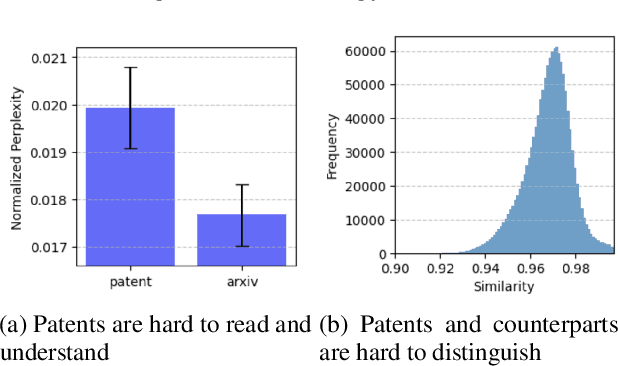
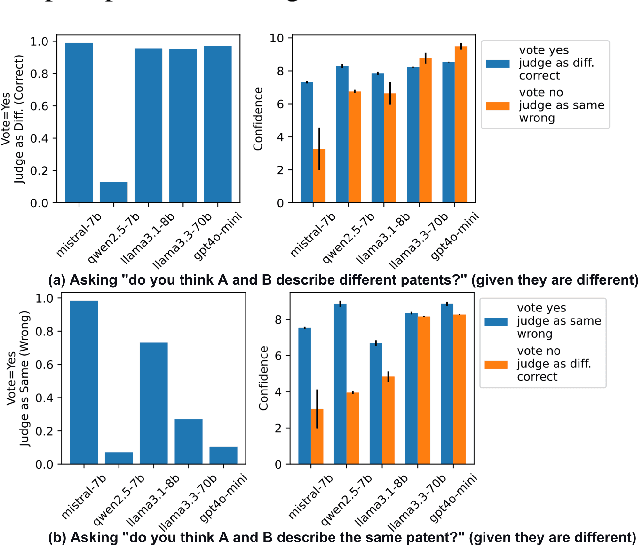
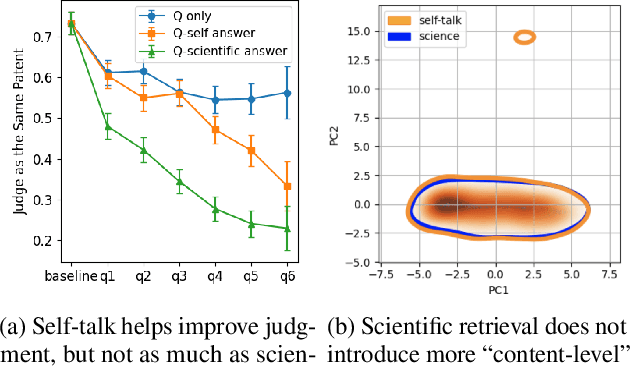
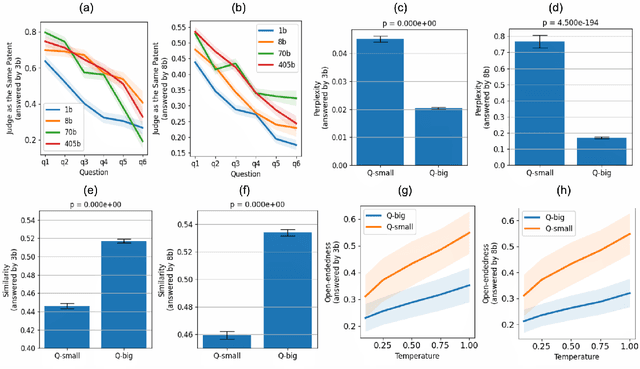
Large language models (LLMs) increasingly demonstrate signs of conceptual understanding, yet much of their internal knowledge remains latent, loosely structured, and difficult to access or evaluate. We propose self-questioning as a lightweight and scalable strategy to improve LLMs' understanding, particularly in domains where success depends on fine-grained semantic distinctions. To evaluate this approach, we introduce a challenging new benchmark of 1.3 million post-2015 computer science patent pairs, characterized by dense technical jargon and strategically complex writing. The benchmark centers on a pairwise differentiation task: can a model distinguish between closely related but substantively different inventions? We show that prompting LLMs to generate and answer their own questions - targeting the background knowledge required for the task - significantly improves performance. These self-generated questions and answers activate otherwise underutilized internal knowledge. Allowing LLMs to retrieve answers from external scientific texts further enhances performance, suggesting that model knowledge is compressed and lacks the full richness of the training data. We also find that chain-of-thought prompting and self-questioning converge, though self-questioning remains more effective for improving understanding of technical concepts. Notably, we uncover an asymmetry in prompting: smaller models often generate more fundamental, more open-ended, better-aligned questions for mid-sized models than large models with better understanding do, revealing a new strategy for cross-model collaboration. Altogether, our findings establish self-questioning as both a practical mechanism for automatically improving LLM comprehension, especially in domains with sparse and underrepresented knowledge, and a diagnostic probe of how internal and external knowledge are organized.