 Add to Chrome
 Add to Firefox
 Add to Edge
Information Theoretic Modeling of Interspecies Molecular Communication
Feb 07, 2026
Plants and insects communicate using chemical signals like volatile organic compounds (VOCs). A plant encodes information using different blends of VOCs, which propagate through the air to represent different symbolic information. This communication occurs in a noisy environment, characterized by wind, distance, and complex biological reactions. At the receiver, cross-reactive olfactory receptors produce stochastic binding events whose discretized durations form the receiver observation. In this paper, an information-theoretic framework is developed to model interspecies molecular communication (MC), where receptor responses are modeled probabilistically using a multinomial distribution. Numerical results show that the communication depends on environmental parameters such as wind speed, distance, and the number of released molecules. The proposed framework provides fundamental insights into the VOC-based interspecies communication under realistic biological and environmental conditions.

Frequency-Domain Detection for Molecular Communication with Cross-Reactive Receptors
Sep 17, 2023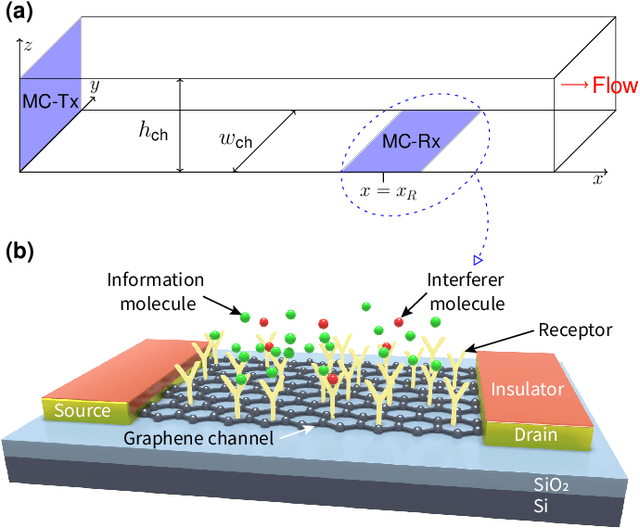
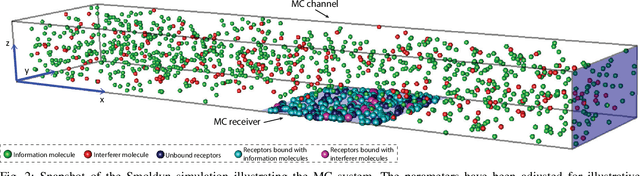
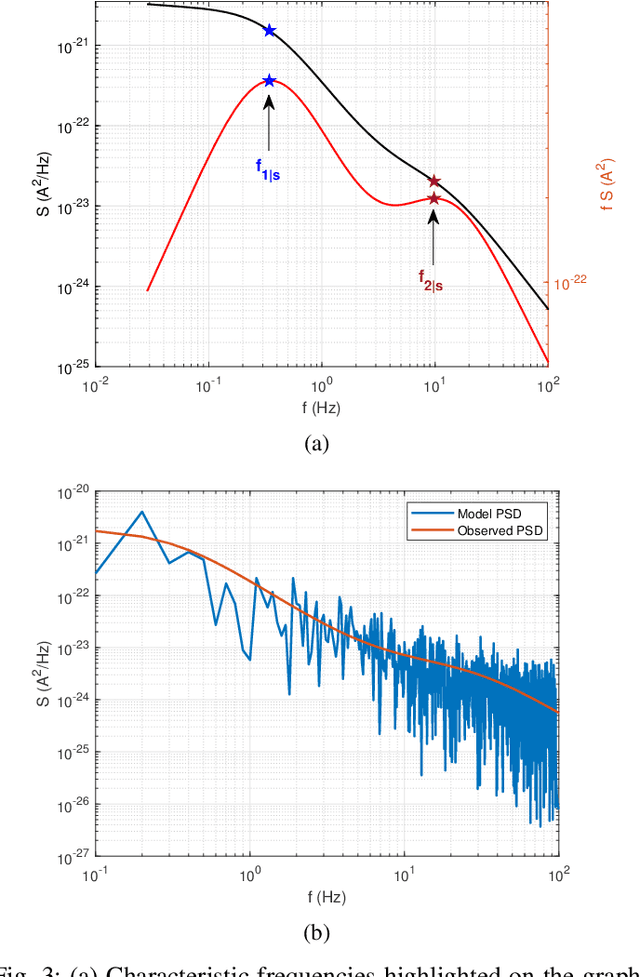
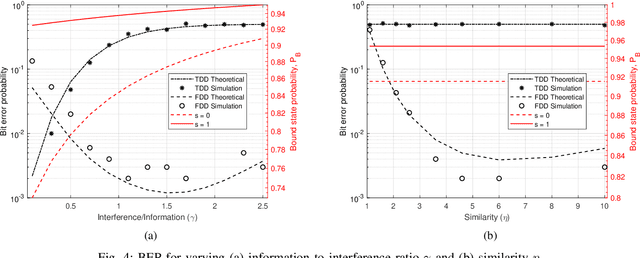
Molecular Communications (MC) is a bio-inspired communication paradigm that uses molecules as information carriers, requiring unconventional transceivers and modulation/detection techniques. Practical MC receivers (MC-Rxs) can be implemented using field-effect transistor biosensor (bioFET) architectures, where surface receptors reversibly react with ligands. The time-varying concentration of ligand-bound receptors is translated into electrical signals via field effect, which is used to decode the transmitted information. However, ligand-receptor interactions do not provide an ideal molecular selectivity, as similar ligand types, i.e., interferers, co-existing in the MC channel, can interact with the same type of receptors. Overcoming this molecular cross-talk in the time domain can be challenging, especially when Rx has no knowledge of the interferer statistics or operates near saturation. Therefore, we propose a frequency-domain detection (FDD) technique for bioFET-based MC-Rxs that exploits the difference in binding reaction rates of different ligand types reflected in the power spectrum of the ligand-receptor binding noise. We derive the bit error probability (BEP) of the FDD technique and demonstrate its effectiveness in decoding transmitted concentration signals under stochastic molecular interference compared to a widely used time-domain detection (TDD) technique. We then verified the analytical performance bounds of the FDD through a particle-based spatial stochastic simulator simulating reactions on the MC-Rx in microfluidic channels.
Frequency-Domain Detection for Molecular Communications
Jan 03, 2023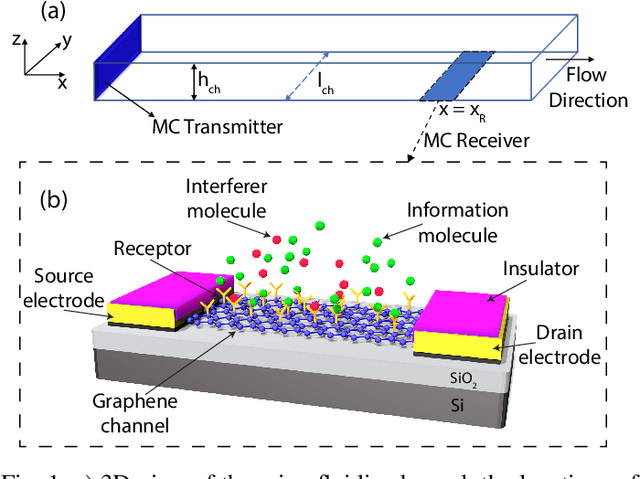
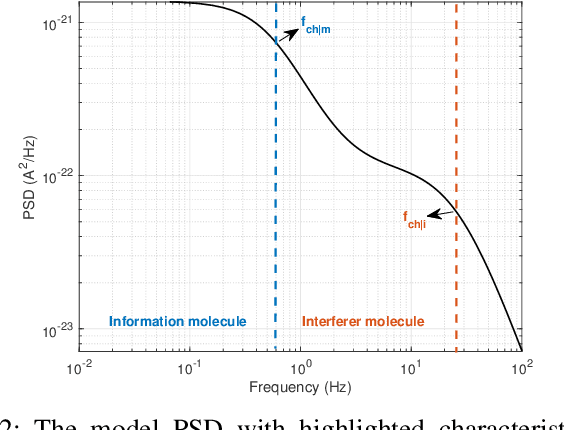
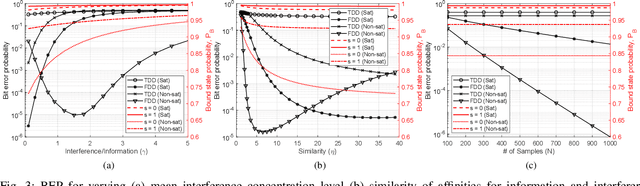
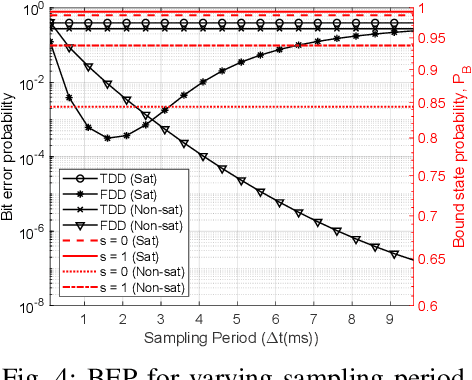
Molecular Communications (MC) is a bio-inspired communication paradigm which uses molecules as information carriers, thereby requiring unconventional transmitter/receiver architectures and modulation/detection techniques. Practical MC receivers (MC-Rxs) can be implemented based on field-effect transistor biosensor (bioFET) architectures, where surface receptors reversibly react with ligands, whose concentration encodes the information. The time-varying concentration of ligand-bound receptors is then translated into electrical signals via field-effect, which is used to decode the transmitted information. However, ligand-receptor interactions do not provide an ideal molecular selectivity, as similar types of ligands, i.e., interferers, co-existing in the MC channel can interact with the same type of receptors, resulting in cross-talk. Overcoming this molecular cross-talk with time-domain samples of the Rx's electrical output is not always attainable, especially when Rx has no knowledge of the interferer statistics or it operates near saturation. In this study, we propose a frequency-domain detection (FDD) technique for bioFET-based MC-Rxs, which exploits the difference in binding reaction rates of different types of ligands, reflected to the noise spectrum of the ligand-receptor binding fluctuations. We analytically derive the bit error probability (BEP) of the FDD technique, and demonstrate its effectiveness in decoding transmitted concentration signals under stochastic molecular interference, in comparison to a widely-used time-domain detection (TDD) technique. The proposed FDD method can be applied to any biosensor-based MC-Rxs, which employ receptor molecules as the channel-Rx interface.