 Add to Chrome
 Add to Firefox
 Add to Edge
Agents for Agents: An Interrogator-Based Secure Framework for Autonomous Internet of Underwater Things
Apr 05, 2026
Autonomous underwater vehicles (AUVs) and sensor nodes increasingly support decentralized sensing and coordination in the Internet of Underwater Things (IoUT), yet most deployments rely on static trust once authentication is established, leaving long-duration missions vulnerable to compromised or behaviorally deviating agents. In this paper, an interrogator based structure is presented that incorporates the idea of behavioral trust monitoring into underwater multi-agent operation without interfering with autonomy. Privileged interrogator module is a passive communication metadata analyzer that uses a lightweight transformer model to calculate dynamic trust scores, which are used to authorize the forwarding of mission critical data. Suspicious agents cause proportional monitoring and conditional restrictions, which allow fast containment and maintain network continuity. The evidence of trust is stored in a permissioned blockchain consortium which offers identity management which is not tampered and is decentralized without causing the overhead of public consensus mechanisms. Simulation based analysis shows that the evaluation of the result compares to a relative improvement of 21.7% in the detection accuracy compared to the static trust baselines with limited energy overhead. These findings suggest that behavior driven validation has the capability of reinforcing underwater coordination without compromising scalability and deployment.

Efficient IoT Intrusion Detection with an Improved Attention-Based CNN-BiLSTM Architecture
Mar 25, 2025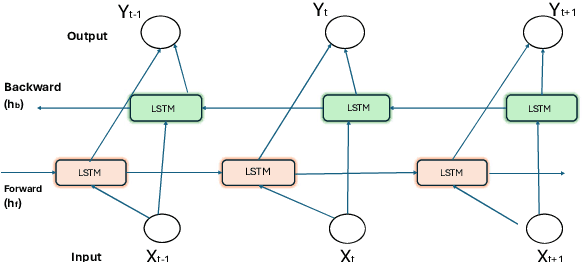
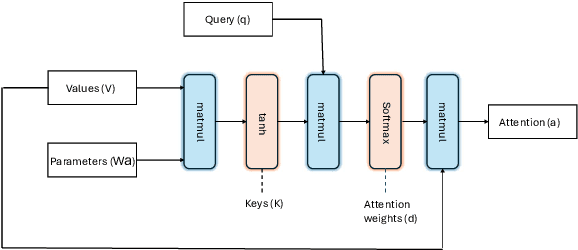
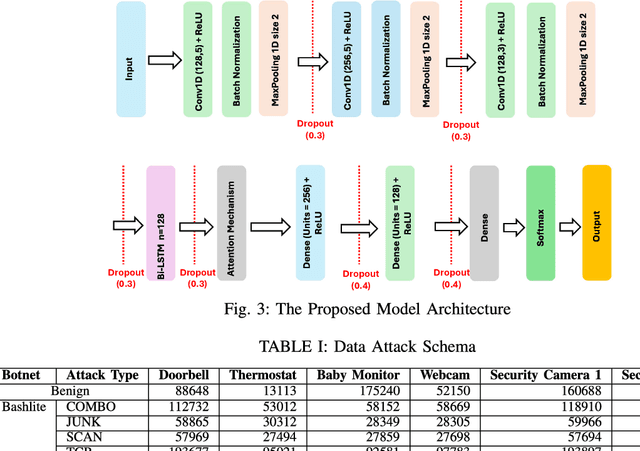
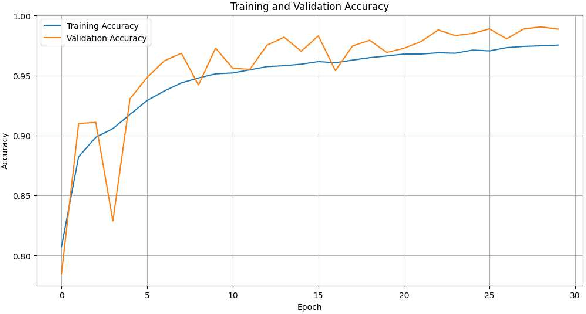
The ever-increasing security vulnerabilities in the Internet-of-Things (IoT) systems require improved threat detection approaches. This paper presents a compact and efficient approach to detect botnet attacks by employing an integrated approach that consists of traffic pattern analysis, temporal support learning, and focused feature extraction. The proposed attention-based model benefits from a hybrid CNN-BiLSTM architecture and achieves 99% classification accuracy in detecting botnet attacks utilizing the N-BaIoT dataset, while maintaining high precision and recall across various scenarios. The proposed model's performance is further validated by key parameters, such as Mathews Correlation Coefficient and Cohen's kappa Correlation Coefficient. The close-to-ideal results for these parameters demonstrate the proposed model's ability to detect botnet attacks accurately and efficiently in practical settings and on unseen data. The proposed model proved to be a powerful defense mechanism for IoT networks to face emerging security challenges.
Robust Method for Semantic Segmentation of Whole-Slide Blood Cell Microscopic Image
Jan 28, 2020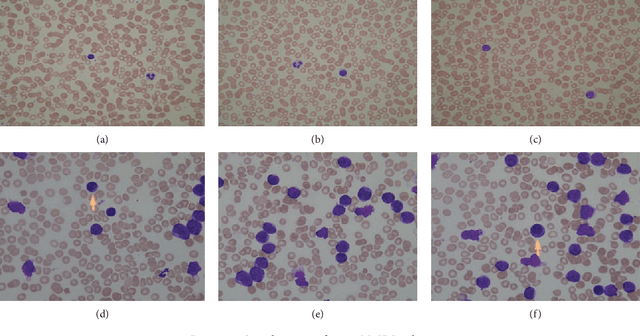
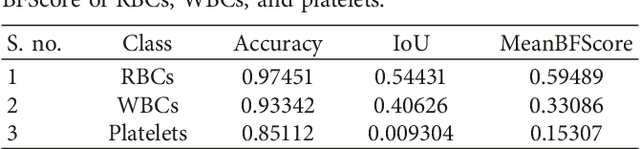
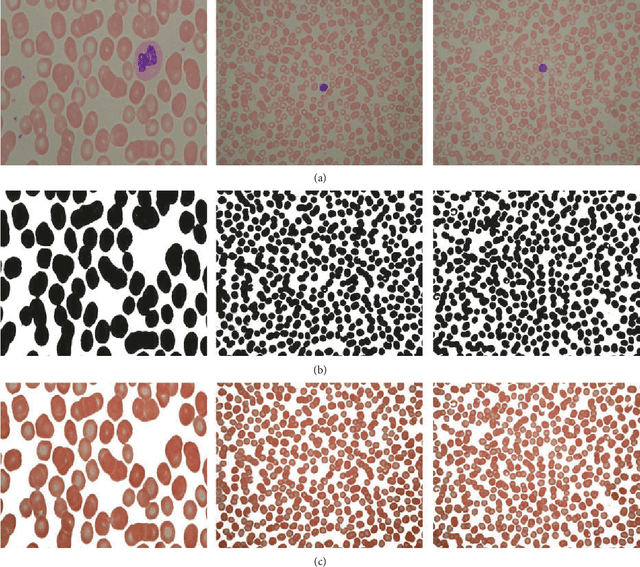
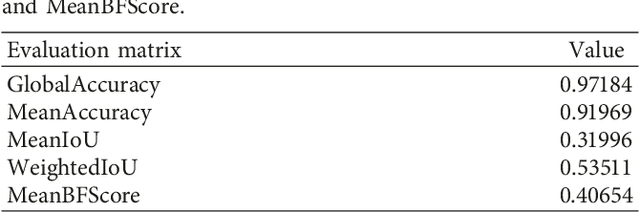
Previous works on segmentation of SEM (scanning electron microscope) blood cell image ignore the semantic segmentation approach of whole-slide blood cell segmentation. In the proposed work, we address the problem of whole-slide blood cell segmentation using the semantic segmentation approach. We design a novel convolutional encoder-decoder framework along with VGG-16 as the pixel-level feature extraction model. -e proposed framework comprises 3 main steps: First, all the original images along with manually generated ground truth masks of each blood cell type are passed through the preprocessing stage. In the preprocessing stage, pixel-level labeling, RGB to grayscale conversion of masked image and pixel fusing, and unity mask generation are performed. After that, VGG16 is loaded into the system, which acts as a pretrained pixel-level feature extraction model. In the third step, the training process is initiated on the proposed model. We have evaluated our network performance on three evaluation metrics. We obtained outstanding results with respect to classwise, as well as global and mean accuracies. Our system achieved classwise accuracies of 97.45%, 93.34%, and 85.11% for RBCs, WBCs, and platelets, respectively, while global and mean accuracies remain 97.18% and 91.96%, respectively.
* 13 pages, 13 figures