 Add to Chrome
 Add to Firefox
 Add to Edge
KD-MARL: Resource-Aware Knowledge Distillation in Multi-Agent Reinforcement Learning
Apr 08, 2026
Real world deployment of multi agent reinforcement learning MARL systems is fundamentally constrained by limited compute memory and inference time. While expert policies achieve high performance they rely on costly decision cycles and large scale models that are impractical for edge devices or embedded platforms. Knowledge distillation KD offers a promising path toward resource aware execution but existing KD methods in MARL focus narrowly on action imitation often neglecting coordination structure and assuming uniform agent capabilities. We propose resource aware Knowledge Distillation for Multi Agent Reinforcement Learning KD MARL a two stage framework that transfers coordinated behavior from a centralized expert to lightweight decentralized student agents. The student policies are trained without a critic relying instead on distilled advantage signals and structured policy supervision to preserve coordination under heterogeneous and limited observations. Our approach transfers both action level behavior and structural coordination patterns from expert policies while supporting heterogeneous student architectures allowing each agent model capacity to match its observation complexity which is crucial for efficient execution under partial or limited observability and limited onboard resources. Extensive experiments on SMAC and MPE benchmarks demonstrate that KD MARL achieves high performance retention while substantially reducing computational cost. Across standard multi agent benchmarks KD MARL retains over 90 percent of expert performance while reducing computational cost by up to 28.6 times FLOPs. The proposed approach achieves expert level coordination and preserves it through structured distillation enabling practical MARL deployment across resource constrained onboard platforms.

Onboard Optimization and Learning: A Survey
May 07, 2025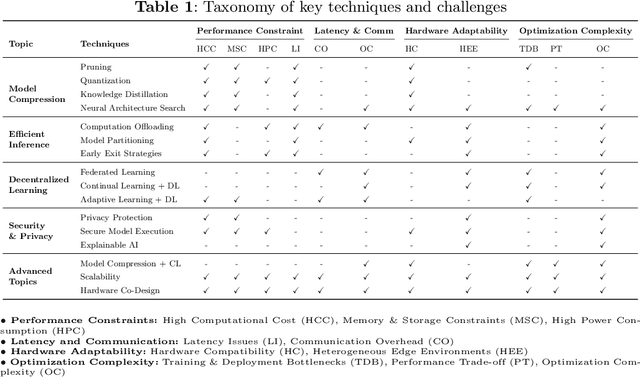
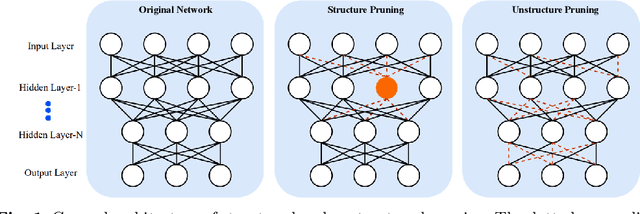
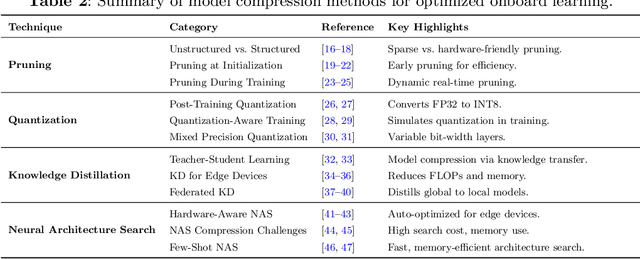
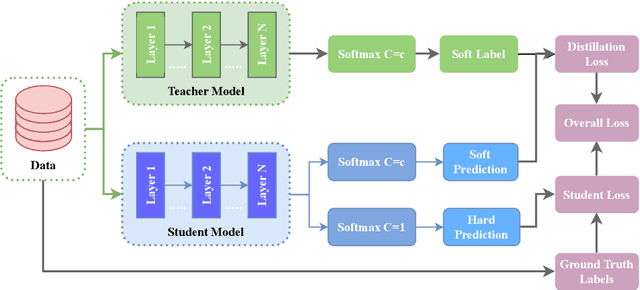
Onboard learning is a transformative approach in edge AI, enabling real-time data processing, decision-making, and adaptive model training directly on resource-constrained devices without relying on centralized servers. This paradigm is crucial for applications demanding low latency, enhanced privacy, and energy efficiency. However, onboard learning faces challenges such as limited computational resources, high inference costs, and security vulnerabilities. This survey explores a comprehensive range of methodologies that address these challenges, focusing on techniques that optimize model efficiency, accelerate inference, and support collaborative learning across distributed devices. Approaches for reducing model complexity, improving inference speed, and ensuring privacy-preserving computation are examined alongside emerging strategies that enhance scalability and adaptability in dynamic environments. By bridging advancements in hardware-software co-design, model compression, and decentralized learning, this survey provides insights into the current state of onboard learning to enable robust, efficient, and secure AI deployment at the edge.