 Add to Chrome
 Add to Firefox
 Add to Edge
Transformer-Based Multi-Region Segmentation and Radiomic Analysis of HR-pQCT Imaging for Osteoporosis Classification
Mar 11, 2026
Osteoporosis is a skeletal disease typically diagnosed using dual-energy X-ray absorptiometry (DXA), which quantifies areal bone mineral density but overlooks bone microarchitecture and surrounding soft tissues. High-resolution peripheral quantitative computed tomography (HR-pQCT) enables three-dimensional microstructural imaging with minimal radiation. However, current analysis pipelines largely focus on mineralized bone compartments, leaving much of the acquired image data underutilized. We introduce a fully automated framework for binary osteoporosis classification using radiomics features extracted from anatomically segmented HR-pQCT images. To our knowledge, this work is the first to leverage a transformer-based segmentation architecture, i.e., the SegFormer, for fully automated multi-region HR-pQCT analysis. The SegFormer model simultaneously delineated the cortical and trabecular bone of the tibia and fibula along with surrounding soft tissues and achieved a mean F1 score of 95.36%. Soft tissues were further subdivided into skin, myotendinous, and adipose regions through post-processing. From each region, 939 radiomic features were extracted and dimensionally reduced to train six machine learning classifiers on an independent dataset comprising 20,496 images from 122 HR-pQCT scans. The best image level performance was achieved using myotendinous tissue features, yielding an accuracy of 80.08% and an area under the receiver operating characteristic curve (AUROC) of 0.85, outperforming bone-based models. At the patient level, replacing standard biological, DXA, and HR-pQCT parameters with soft tissue radiomics improved AUROC from 0.792 to 0.875. These findings demonstrate that automated, multi-region HR-pQCT segmentation enables the extraction of clinically informative signals beyond bone alone, highlighting the importance of integrated tissue assessment for osteoporosis detection.

Heart Abnormality Detection from Heart Sound Signals using MFCC Feature and Dual Stream Attention Based Network
Nov 17, 2022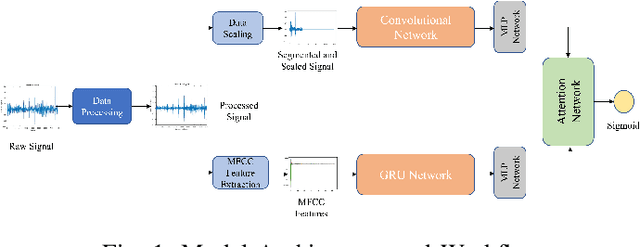
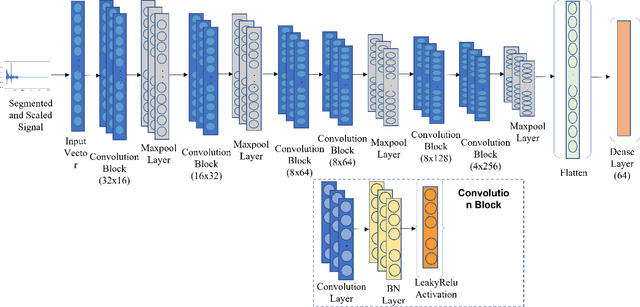
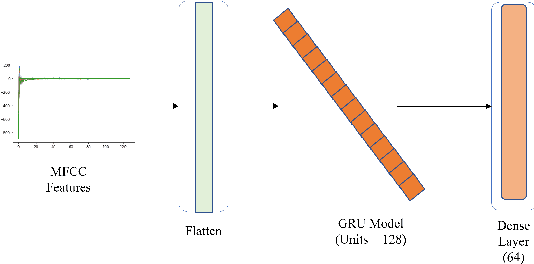
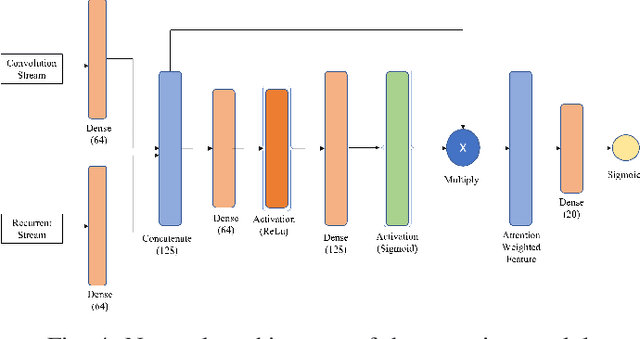
Cardiovascular diseases are one of the leading cause of death in today's world and early screening of heart condition plays a crucial role in preventing them. The heart sound signal is one of the primary indicator of heart condition and can be used to detect abnormality in the heart. The acquisition of heart sound signal is non-invasive, cost effective and requires minimum equipment. But currently the detection of heart abnormality from heart sound signal depends largely on the expertise and experience of the physician. As such an automatic detection system for heart abnormality detection from heart sound signal can be a great asset for the people living in underdeveloped areas. In this paper we propose a novel deep learning based dual stream network with attention mechanism that uses both the raw heart sound signal and the MFCC features to detect abnormality in heart condition of a patient. The deep neural network has a convolutional stream that uses the raw heart sound signal and a recurrent stream that uses the MFCC features of the signal. The features from these two streams are merged together using a novel attention network and passed through the classification network. The model is trained on the largest publicly available dataset of PCG signal and achieves an accuracy of 87.11, sensitivity of 82.41, specificty of 91.8 and a MACC of 87.12.