 Add to Chrome
 Add to Firefox
 Add to Edge
Fanar 2.0: Arabic Generative AI Stack
Mar 17, 2026
We present Fanar 2.0, the second generation of Qatar's Arabic-centric Generative AI platform. Sovereignty is a first-class design principle: every component, from data pipelines to deployment infrastructure, was designed and operated entirely at QCRI, Hamad Bin Khalifa University. Fanar 2.0 is a story of resource-constrained excellence: the effort ran on 256 NVIDIA H100 GPUs, with Arabic having only ~0.5% of web data despite 400 million native speakers. Fanar 2.0 adopts a disciplined strategy of data quality over quantity, targeted continual pre-training, and model merging to achieve substantial gains within these constraints. At the core is Fanar-27B, continually pre-trained from a Gemma-3-27B backbone on a curated corpus of 120 billion high-quality tokens across three data recipes. Despite using 8x fewer pre-training tokens than Fanar 1.0, it delivers substantial benchmark improvements: Arabic knowledge (+9.1 pts), language (+7.3 pts), dialects (+3.5 pts), and English capability (+7.6 pts). Beyond the core LLM, Fanar 2.0 introduces a rich stack of new capabilities. FanarGuard is a state-of-the-art 4B bilingual moderation filter for Arabic safety and cultural alignment. The speech family Aura gains a long-form ASR model for hours-long audio. Oryx vision family adds Arabic-aware image and video understanding alongside culturally grounded image generation. An agentic tool-calling framework enables multi-step workflows. Fanar-Sadiq utilizes a multi-agent architecture for Islamic content. Fanar-Diwan provides classical Arabic poetry generation. FanarShaheen delivers LLM-powered bilingual translation. A redesigned multi-layer orchestrator coordinates all components through intent-aware routing and defense-in-depth safety validation. Taken together, Fanar 2.0 demonstrates that sovereign, resource-constrained AI development can produce systems competitive with those built at far greater scale.

Driver Drowsiness Detection Model Using Convolutional Neural Networks Techniques for Android Application
Jan 17, 2020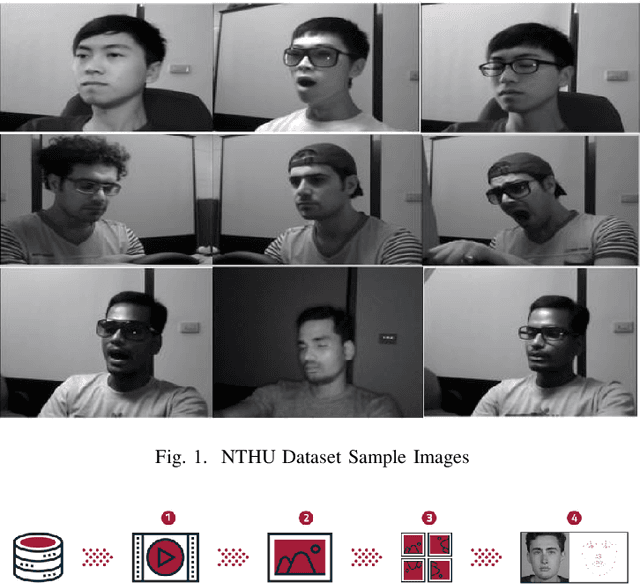
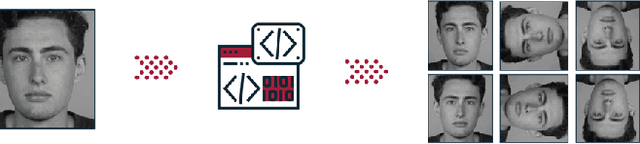

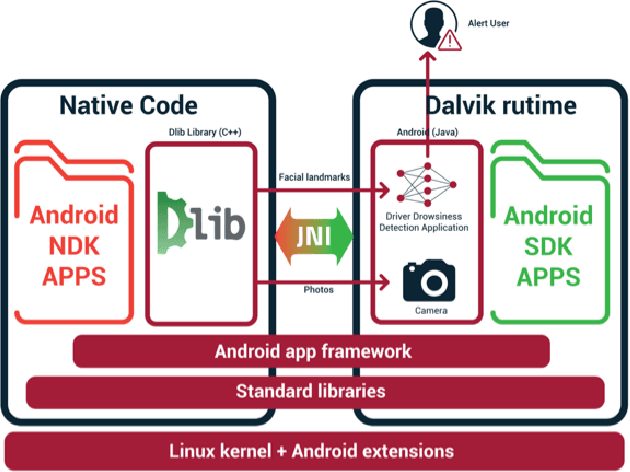
A sleepy driver is arguably much more dangerous on the road than the one who is speeding as he is a victim of microsleeps. Automotive researchers and manufacturers are trying to curb this problem with several technological solutions that will avert such a crisis. This article focuses on the detection of such micro sleep and drowsiness using neural network based methodologies. Our previous work in this field involved using machine learning with multi-layer perceptron to detect the same. In this paper, accuracy was increased by utilizing facial landmarks which are detected by the camera and that is passed to a Convolutional Neural Network (CNN) to classify drowsiness. The achievement with this work is the capability to provide a lightweight alternative to heavier classification models with more than 88% for the category without glasses, more than 85% for the category night without glasses. On average, more than 83% of accuracy was achieved in all categories. Moreover, as for model size, complexity and storage, there is a marked reduction in the new proposed model in comparison to the benchmark model where the maximum size is 75 KB. The proposed CNN based model can be used to build a real-time driver drowsiness detection system for embedded systems and Android devices with high accuracy and ease of use.