 Add to Chrome
 Add to Firefox
 Add to Edge
DBMSolver: A Training-free Diffusion Bridge Sampler for High-Quality Image-to-Image Translation
May 07, 2026
Diffusion-based image-to-image (I2I) translation excels in high-fidelity generation but suffers from slow sampling in state-of-the-art Diffusion Bridge Models (DBMs), often requiring dozens of function evaluations (NFEs). We introduce DBMSolver, a training-free sampler that exploits the semi-linear structure of DBM's underlying SDE and ODE via exponential integrators, yielding highly-efficient 1st- and 2nd-order solutions. This reduces NFEs by up to 5x while boosting quality (e.g., FID drops 53% on DIODE at 20 NFEs vs. 2nd-order baseline). Experiments on inpainting, stylization, and semantics-to-image tasks across resolutions up to 256x256 show DBMSolver sets new SOTA efficiency-quality tradeoffs, enabling real-world applicability. Our code is publicly available at https://github.com/snumprlab/dbmsolver.

Generalizing AI-driven Assessment of Immunohistochemistry across Immunostains and Cancer Types: A Universal Immunohistochemistry Analyzer
Jul 30, 2024Despite advancements in methodologies, immunohistochemistry (IHC) remains the most utilized ancillary test for histopathologic and companion diagnostics in targeted therapies. However, objective IHC assessment poses challenges. Artificial intelligence (AI) has emerged as a potential solution, yet its development requires extensive training for each cancer and IHC type, limiting versatility. We developed a Universal IHC (UIHC) analyzer, an AI model for interpreting IHC images regardless of tumor or IHC types, using training datasets from various cancers stained for PD-L1 and/or HER2. This multi-cohort trained model outperforms conventional single-cohort models in interpreting unseen IHCs (Kappa score 0.578 vs. up to 0.509) and consistently shows superior performance across different positive staining cutoff values. Qualitative analysis reveals that UIHC effectively clusters patches based on expression levels. The UIHC model also quantitatively assesses c-MET expression with MET mutations, representing a significant advancement in AI application in the era of personalized medicine and accumulating novel biomarkers.
MRI brain tumor segmentation using informative feature vectors and kernel dictionary learning
Oct 17, 2023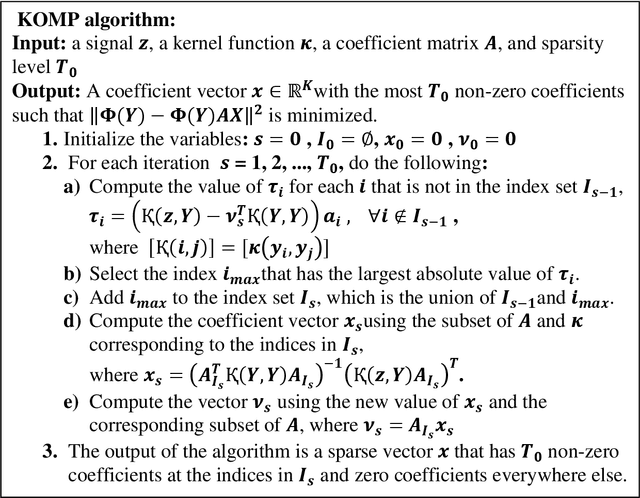
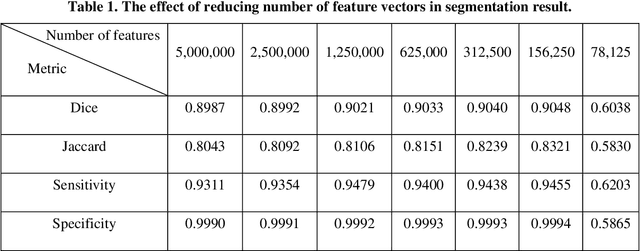
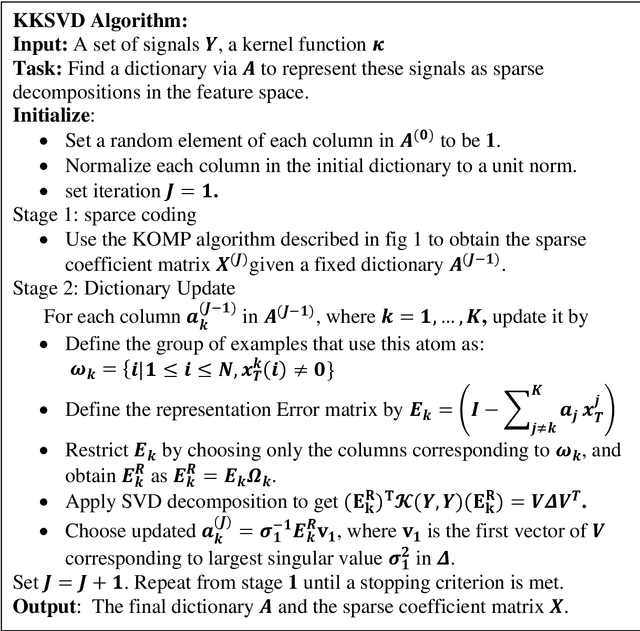
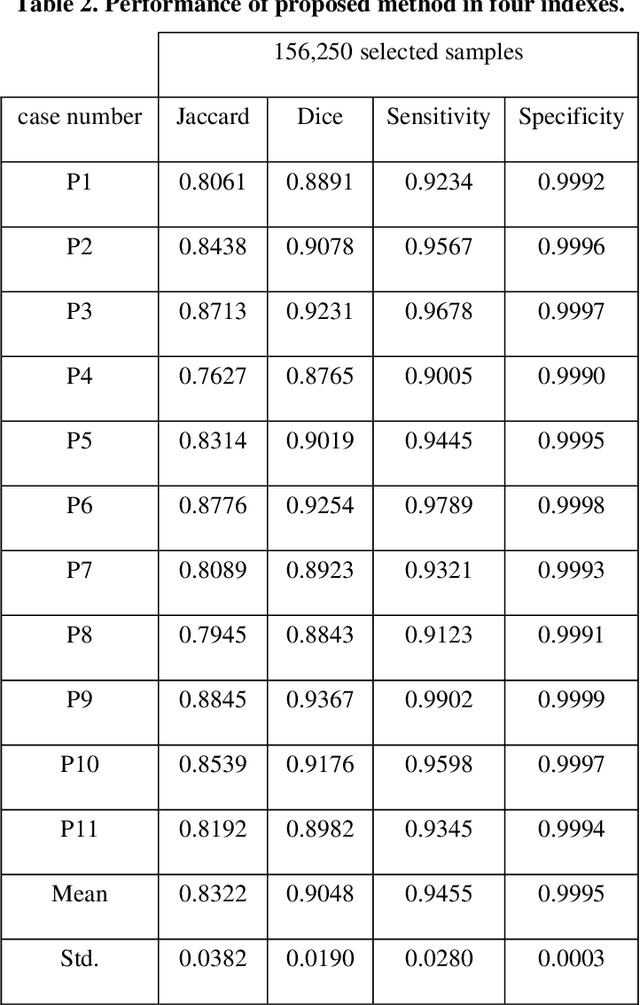
This paper presents a method based on a kernel dictionary learning algorithm for segmenting brain tumor regions in magnetic resonance images (MRI). A set of first-order and second-order statistical feature vectors are extracted from patches of size 3 * 3 around pixels in the brain MRI scans. These feature vectors are utilized to train two kernel dictionaries separately for healthy and tumorous tissues. To enhance the efficiency of the dictionaries and reduce training time, a correlation-based sample selection technique is developed to identify the most informative and discriminative subset of feature vectors. This technique aims to improve the performance of the dictionaries by selecting a subset of feature vectors that provide valuable information for the segmentation task. Subsequently, a linear classifier is utilized to distinguish between healthy and unhealthy pixels based on the learned dictionaries. The results demonstrate that the proposed method outperforms other existing methods in terms of segmentation accuracy and significantly reduces both the time and memory required, resulting in a remarkably fast training process.