 Add to Chrome
 Add to Firefox
 Add to Edge
Inter-Layer Scheduling Space Exploration for Multi-model Inference on Heterogeneous Chiplets
Dec 14, 2023
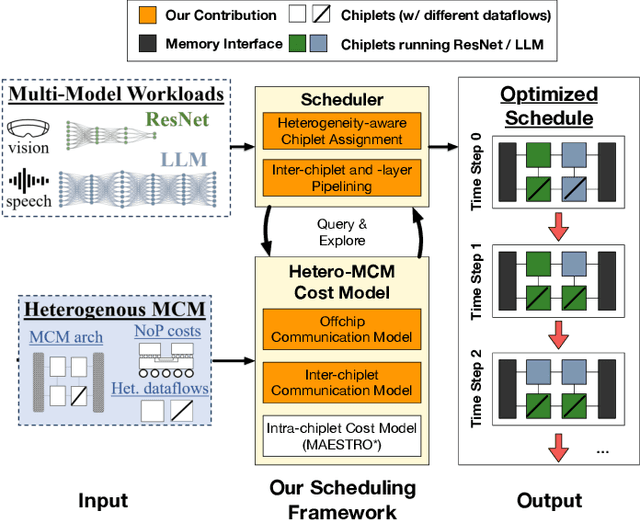

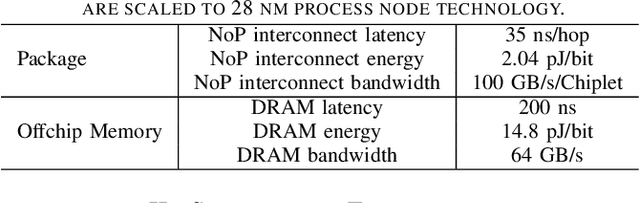
To address increasing compute demand from recent multi-model workloads with heavy models like large language models, we propose to deploy heterogeneous chiplet-based multi-chip module (MCM)-based accelerators. We develop an advanced scheduling framework for heterogeneous MCM accelerators that comprehensively consider complex heterogeneity and inter-chiplet pipelining. Our experiments using our framework on GPT-2 and ResNet-50 models on a 4-chiplet system have shown upto 2.2x and 1.9x increase in throughput and energy efficiency, compared to a monolithic accelerator with an optimized output-stationary dataflow.

Robust and Scalable Hyperdimensional Computing With Brain-Like Neural Adaptations
Nov 13, 2023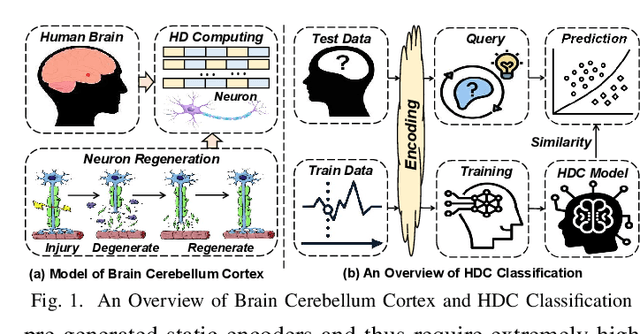
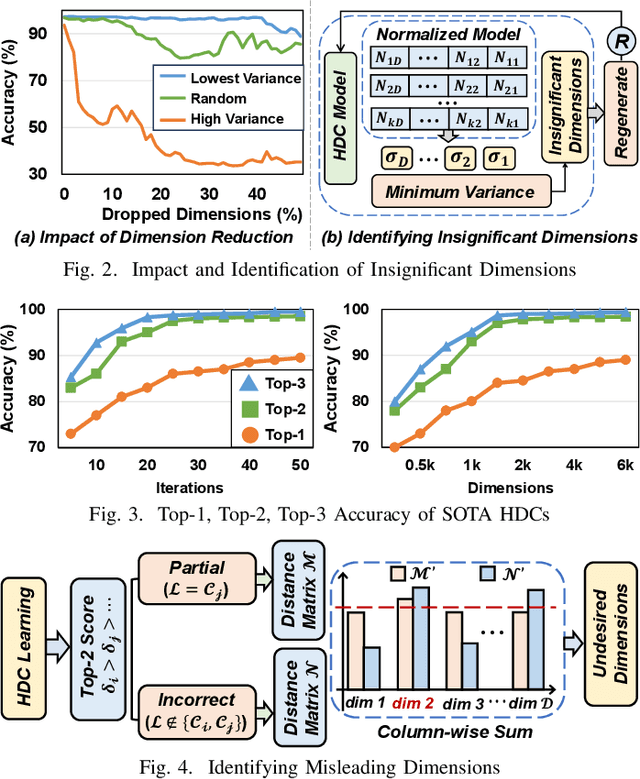
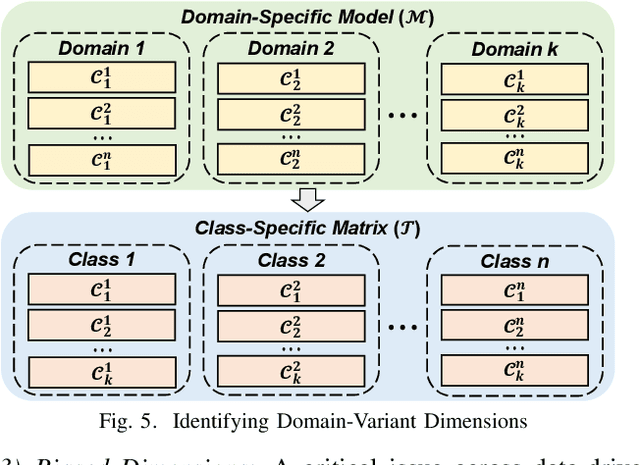
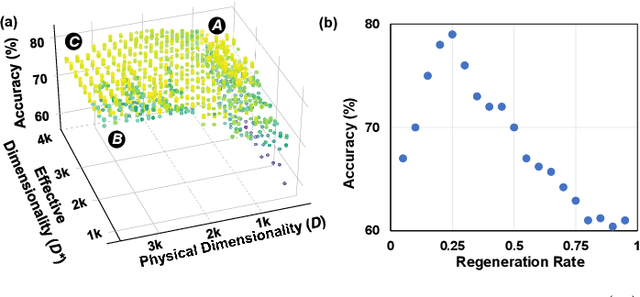
The Internet of Things (IoT) has facilitated many applications utilizing edge-based machine learning (ML) methods to analyze locally collected data. Unfortunately, popular ML algorithms often require intensive computations beyond the capabilities of today's IoT devices. Brain-inspired hyperdimensional computing (HDC) has been introduced to address this issue. However, existing HDCs use static encoders, requiring extremely high dimensionality and hundreds of training iterations to achieve reasonable accuracy. This results in a huge efficiency loss, severely impeding the application of HDCs in IoT systems. We observed that a main cause is that the encoding module of existing HDCs lacks the capability to utilize and adapt to information learned during training. In contrast, neurons in human brains dynamically regenerate all the time and provide more useful functionalities when learning new information. While the goal of HDC is to exploit the high-dimensionality of randomly generated base hypervectors to represent the information as a pattern of neural activity, it remains challenging for existing HDCs to support a similar behavior as brain neural regeneration. In this work, we present dynamic HDC learning frameworks that identify and regenerate undesired dimensions to provide adequate accuracy with significantly lowered dimensionalities, thereby accelerating both the training and inference.
DOMINO: Domain-invariant Hyperdimensional Classification for Multi-Sensor Time Series Data
Aug 18, 2023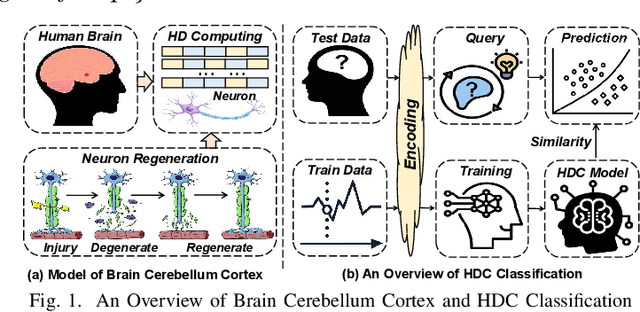
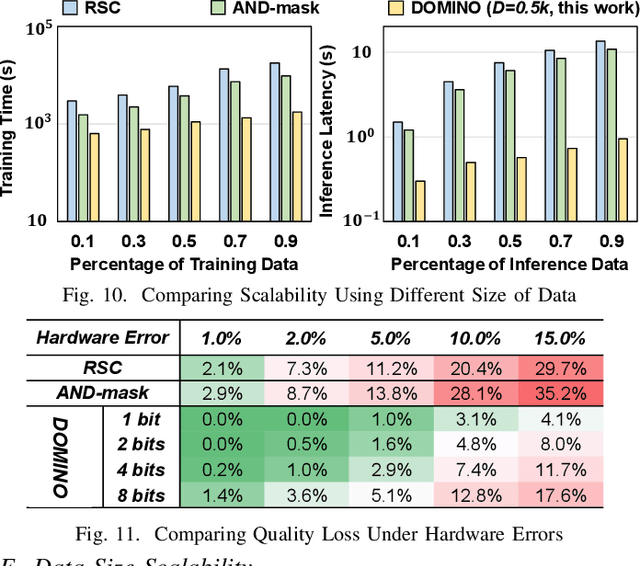

With the rapid evolution of the Internet of Things, many real-world applications utilize heterogeneously connected sensors to capture time-series information. Edge-based machine learning (ML) methodologies are often employed to analyze locally collected data. However, a fundamental issue across data-driven ML approaches is distribution shift. It occurs when a model is deployed on a data distribution different from what it was trained on, and can substantially degrade model performance. Additionally, increasingly sophisticated deep neural networks (DNNs) have been proposed to capture spatial and temporal dependencies in multi-sensor time series data, requiring intensive computational resources beyond the capacity of today's edge devices. While brain-inspired hyperdimensional computing (HDC) has been introduced as a lightweight solution for edge-based learning, existing HDCs are also vulnerable to the distribution shift challenge. In this paper, we propose DOMINO, a novel HDC learning framework addressing the distribution shift problem in noisy multi-sensor time-series data. DOMINO leverages efficient and parallel matrix operations on high-dimensional space to dynamically identify and filter out domain-variant dimensions. Our evaluation on a wide range of multi-sensor time series classification tasks shows that DOMINO achieves on average 2.04% higher accuracy than state-of-the-art (SOTA) DNN-based domain generalization techniques, and delivers 16.34x faster training and 2.89x faster inference. More importantly, DOMINO performs notably better when learning from partially labeled and highly imbalanced data, providing 10.93x higher robustness against hardware noises than SOTA DNNs.
MaGNAS: A Mapping-Aware Graph Neural Architecture Search Framework for Heterogeneous MPSoC Deployment
Jul 16, 2023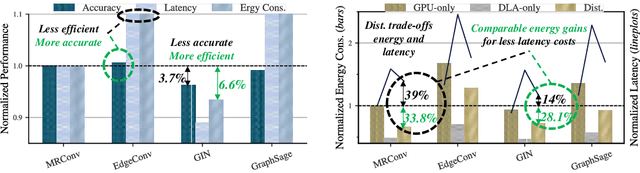
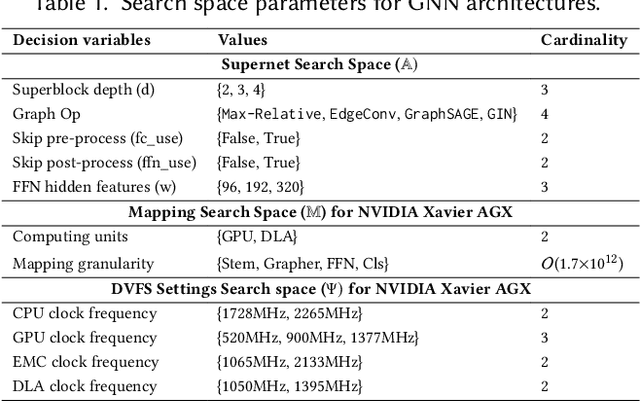
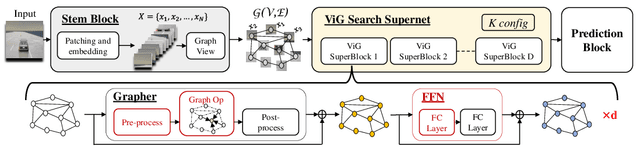
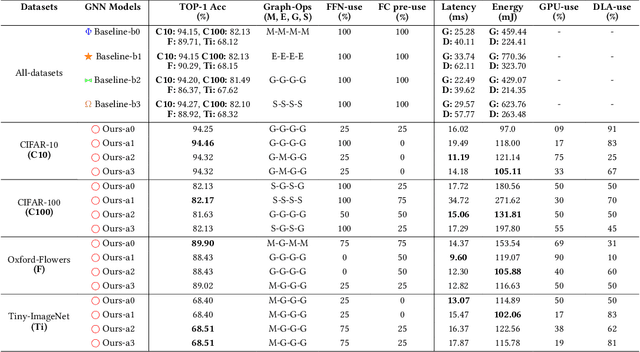
Graph Neural Networks (GNNs) are becoming increasingly popular for vision-based applications due to their intrinsic capacity in modeling structural and contextual relations between various parts of an image frame. On another front, the rising popularity of deep vision-based applications at the edge has been facilitated by the recent advancements in heterogeneous multi-processor Systems on Chips (MPSoCs) that enable inference under real-time, stringent execution requirements. By extension, GNNs employed for vision-based applications must adhere to the same execution requirements. Yet contrary to typical deep neural networks, the irregular flow of graph learning operations poses a challenge to running GNNs on such heterogeneous MPSoC platforms. In this paper, we propose a novel unified design-mapping approach for efficient processing of vision GNN workloads on heterogeneous MPSoC platforms. Particularly, we develop MaGNAS, a mapping-aware Graph Neural Architecture Search framework. MaGNAS proposes a GNN architectural design space coupled with prospective mapping options on a heterogeneous SoC to identify model architectures that maximize on-device resource efficiency. To achieve this, MaGNAS employs a two-tier evolutionary search to identify optimal GNNs and mapping pairings that yield the best performance trade-offs. Through designing a supernet derived from the recent Vision GNN (ViG) architecture, we conducted experiments on four (04) state-of-the-art vision datasets using both (i) a real hardware SoC platform (NVIDIA Xavier AGX) and (ii) a performance/cost model simulator for DNN accelerators. Our experimental results demonstrate that MaGNAS is able to provide 1.57x latency speedup and is 3.38x more energy-efficient for several vision datasets executed on the Xavier MPSoC vs. the GPU-only deployment while sustaining an average 0.11% accuracy reduction from the baseline.
CARMA: Context-Aware Runtime Reconfiguration for Energy-Efficient Sensor Fusion
Jun 27, 2023

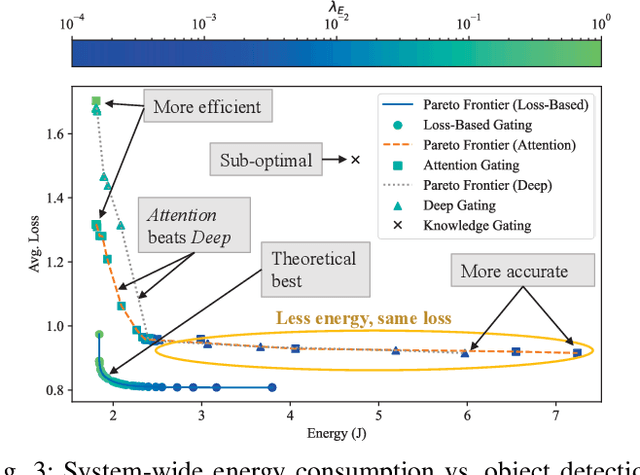

Autonomous systems (AS) are systems that can adapt and change their behavior in response to unanticipated events and include systems such as aerial drones, autonomous vehicles, and ground/aquatic robots. AS require a wide array of sensors, deep-learning models, and powerful hardware platforms to perceive and safely operate in real-time. However, in many contexts, some sensing modalities negatively impact perception while increasing the system's overall energy consumption. Since AS are often energy-constrained edge devices, energy-efficient sensor fusion methods have been proposed. However, existing methods either fail to adapt to changing scenario conditions or to optimize energy efficiency system-wide. We propose CARMA: a context-aware sensor fusion approach that uses context to dynamically reconfigure the computation flow on a Field-Programmable Gate Array (FPGA) at runtime. By clock-gating unused sensors and model sub-components, CARMA significantly reduces the energy used by a multi-sensory object detector without compromising performance. We use a Deep-learning Processor Unit (DPU) based reconfiguration approach to minimize the latency of model reconfiguration. We evaluate multiple context-identification strategies, propose a novel system-wide energy-performance joint optimization, and evaluate scenario-specific perception performance. Across challenging real-world sensing contexts, CARMA outperforms state-of-the-art methods with up to 1.3x speedup and 73% lower energy consumption.
RS2G: Data-Driven Scene-Graph Extraction and Embedding for Robust Autonomous Perception and Scenario Understanding
Apr 17, 2023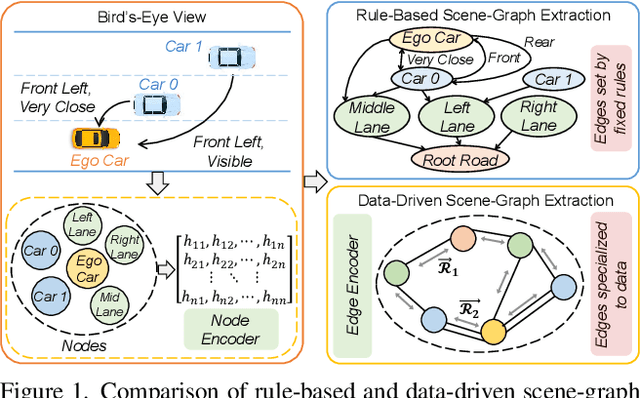
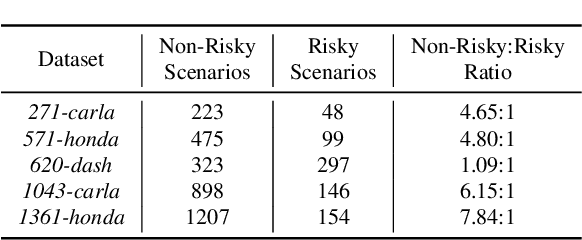
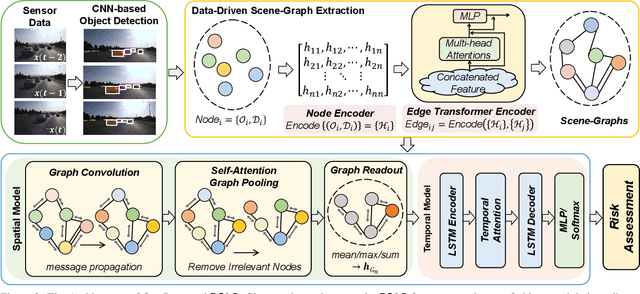
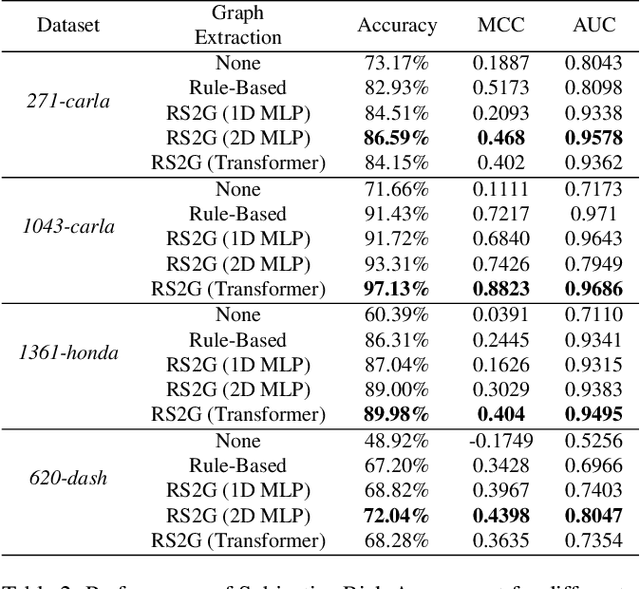
Human drivers naturally reason about interactions between road users to understand and safely navigate through traffic. Thus, developing autonomous vehicles necessitates the ability to mimic such knowledge and model interactions between road users to understand and navigate unpredictable, dynamic environments. However, since real-world scenarios often differ from training datasets, effectively modeling the behavior of various road users in an environment remains a significant research challenge. This reality necessitates models that generalize to a broad range of domains and explicitly model interactions between road users and the environment to improve scenario understanding. Graph learning methods address this problem by modeling interactions using graph representations of scenarios. However, existing methods cannot effectively transfer knowledge gained from the training domain to real-world scenarios. This constraint is caused by the domain-specific rules used for graph extraction that can vary in effectiveness across domains, limiting generalization ability. To address these limitations, we propose RoadScene2Graph (RS2G): a data-driven graph extraction and modeling approach that learns to extract the best graph representation of a road scene for solving autonomous scene understanding tasks. We show that RS2G enables better performance at subjective risk assessment than rule-based graph extraction methods and deep-learning-based models. RS2G also improves generalization and Sim2Real transfer learning, which denotes the ability to transfer knowledge gained from simulation datasets to unseen real-world scenarios. We also present ablation studies showing how RS2G produces a more useful graph representation for downstream classifiers. Finally, we show how RS2G can identify the relative importance of rule-based graph edges and enables intelligent graph sparsity tuning.
Stress Detection using Context-Aware Sensor Fusion from Wearable Devices
Mar 14, 2023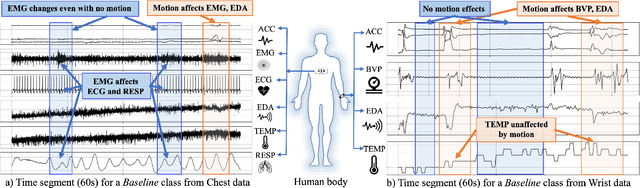
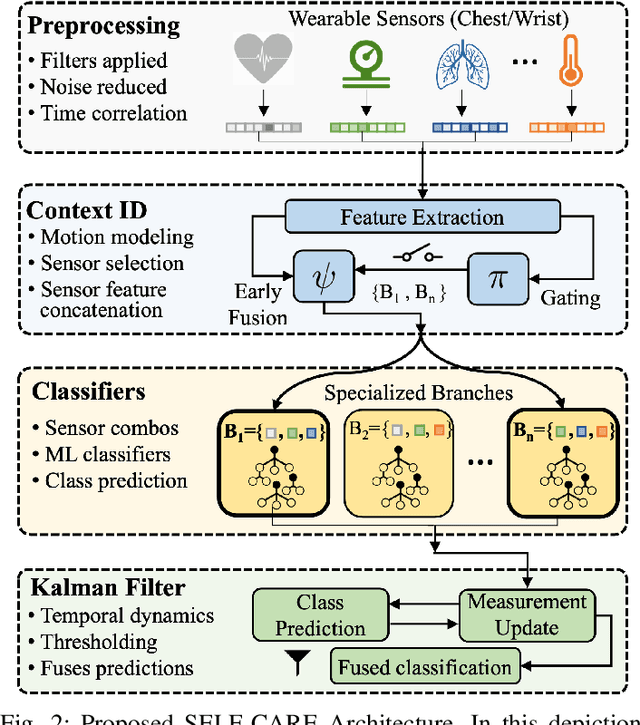
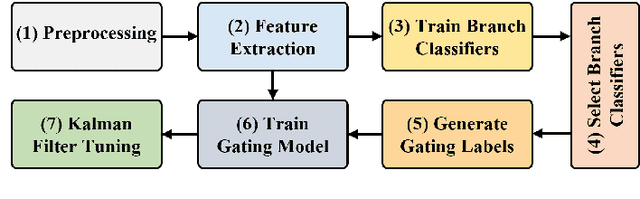
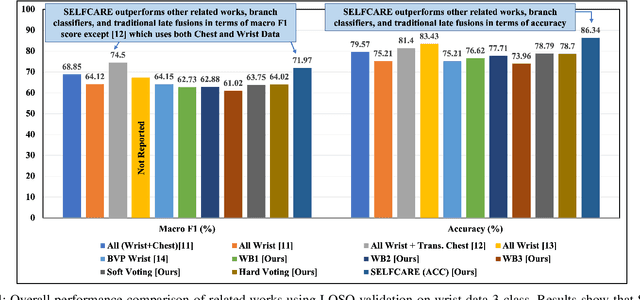
Wearable medical technology has become increasingly popular in recent years. One function of wearable health devices is stress detection, which relies on sensor inputs to determine the mental state of patients. This continuous, real-time monitoring can provide healthcare professionals with vital physiological data and enhance the quality of patient care. Current methods of stress detection lack: (i) robustness -- wearable health sensors contain high levels of measurement noise that degrades performance, and (ii) adaptation -- static architectures fail to adapt to changing contexts in sensing conditions. We propose to address these deficiencies with SELF-CARE, a generalized selective sensor fusion method of stress detection that employs novel techniques of context identification and ensemble machine learning. SELF-CARE uses a learning-based classifier to process sensor features and model the environmental variations in sensing conditions known as the noise context. SELF-CARE uses noise context to selectively fuse different sensor combinations across an ensemble of models to perform robust stress classification. Our findings suggest that for wrist-worn devices, sensors that measure motion are most suitable to understand noise context, while for chest-worn devices, the most suitable sensors are those that detect muscle contraction. SELF-CARE demonstrates state-of-the-art performance on the WESAD dataset. Using wrist-based sensors, SELF-CARE achieves 86.34% and 94.12% accuracy for the 3-class and 2-class stress classification problems, respectively. For chest-based wearable sensors, SELF-CARE achieves 86.19% (3-class) and 93.68% (2-class) classification accuracy. This work demonstrates the benefits of utilizing selective, context-aware sensor fusion in mobile health sensing that can be applied broadly to Internet of Things applications.
ERUDITE: Human-in-the-Loop IoT for an Adaptive Personalized Learning System
Mar 07, 2023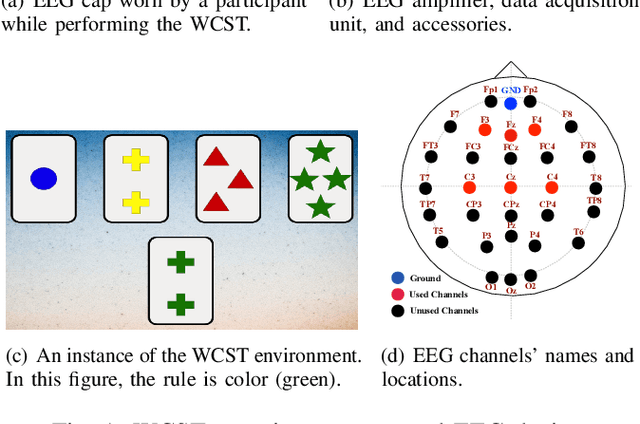
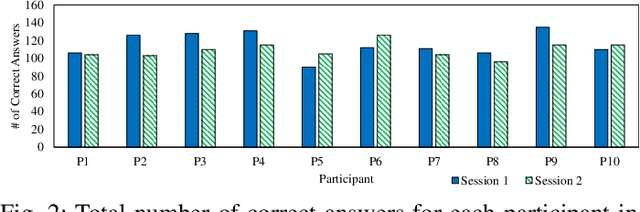

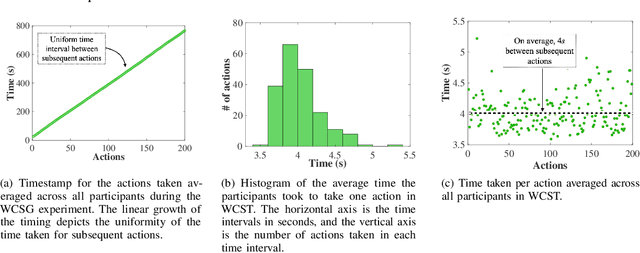
Thanks to the rapid growth in wearable technologies and recent advancement in machine learning and signal processing, monitoring complex human contexts becomes feasible, paving the way to develop human-in-the-loop IoT systems that naturally evolve to adapt to the human and environment state autonomously. Nevertheless, a central challenge in designing many of these IoT systems arises from the requirement to infer the human mental state, such as intention, stress, cognition load, or learning ability. While different human contexts can be inferred from the fusion of different sensor modalities that can correlate to a particular mental state, the human brain provides a richer sensor modality that gives us more insights into the required human context. This paper proposes ERUDITE, a human-in-the-loop IoT system for the learning environment that exploits recent wearable neurotechnology to decode brain signals. Through insights from concept learning theory, ERUDITE can infer the human state of learning and understand when human learning increases or declines. By quantifying human learning as an input sensory signal, ERUDITE can provide adequate personalized feedback to humans in a learning environment to enhance their learning experience. ERUDITE is evaluated across $15$ participants and showed that by using the brain signals as a sensor modality to infer the human learning state and providing personalized adaptation to the learning environment, the participants' learning performance increased on average by $26\%$. Furthermore, we showed that ERUDITE can be deployed on an edge-based prototype to evaluate its practicality and scalability.
Map-and-Conquer: Energy-Efficient Mapping of Dynamic Neural Nets onto Heterogeneous MPSoCs
Feb 24, 2023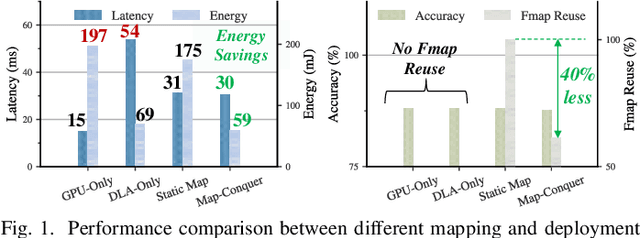
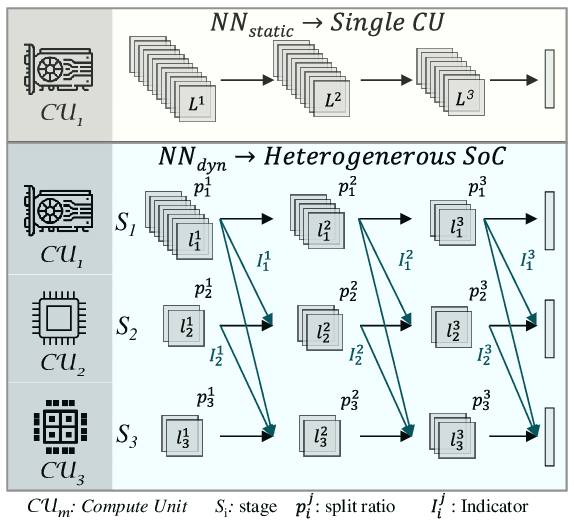
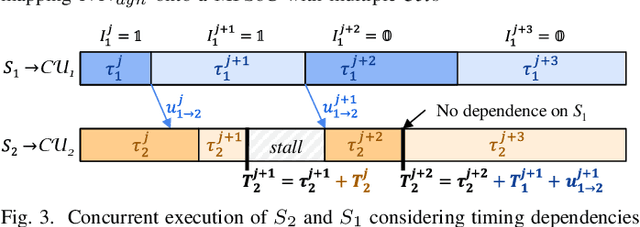
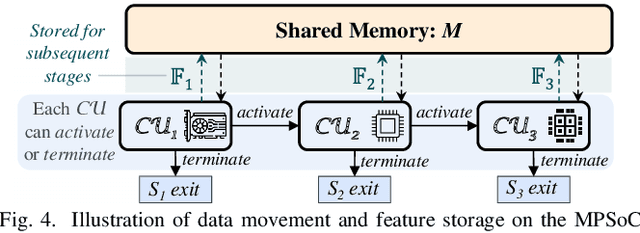
Heterogeneous MPSoCs comprise diverse processing units of varying compute capabilities. To date, the mapping strategies of neural networks (NNs) onto such systems are yet to exploit the full potential of processing parallelism, made possible through both the intrinsic NNs' structure and underlying hardware composition. In this paper, we propose a novel framework to effectively map NNs onto heterogeneous MPSoCs in a manner that enables them to leverage the underlying processing concurrency. Specifically, our approach identifies an optimal partitioning scheme of the NN along its `width' dimension, which facilitates deployment of concurrent NN blocks onto different hardware computing units. Additionally, our approach contributes a novel scheme to deploy partitioned NNs onto the MPSoC as dynamic multi-exit networks for additional performance gains. Our experiments on a standard MPSoC platform have yielded dynamic mapping configurations that are 2.1x more energy-efficient than the GPU-only mapping while incurring 1.7x less latency than DLA-only mapping.
SEO: Safety-Aware Energy Optimization Framework for Multi-Sensor Neural Controllers at the Edge
Feb 24, 2023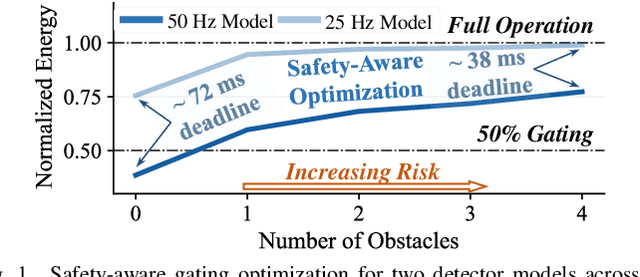
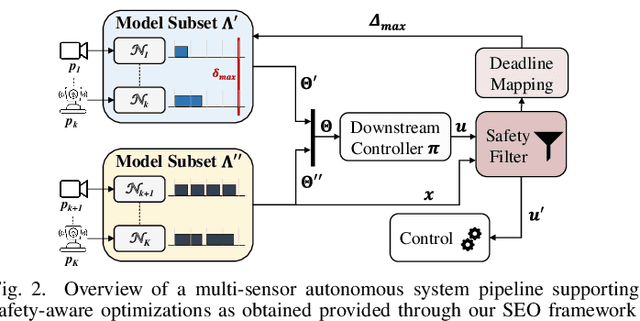


Runtime energy management has become quintessential for multi-sensor autonomous systems at the edge for achieving high performance given the platform constraints. Typical for such systems, however, is to have their controllers designed with formal guarantees on safety that precede in priority such optimizations, which in turn limits their application in real settings. In this paper, we propose a novel energy optimization framework that is aware of the autonomous system's safety state, and leverages it to regulate the application of energy optimization methods so that the system's formal safety properties are preserved. In particular, through the formal characterization of a system's safety state as a dynamic processing deadline, the computing workloads of the underlying models can be adapted accordingly. For our experiments, we model two popular runtime energy optimization methods, offloading and gating, and simulate an autonomous driving system (ADS) use-case in the CARLA simulation environment with performance characterizations obtained from the standard Nvidia Drive PX2 ADS platform. Our results demonstrate that through a formal awareness of the perceived risks in the test case scenario, energy efficiency gains are still achieved (reaching 89.9%) while maintaining the desired safety properties.