 Add to Chrome
 Add to Firefox
 Add to Edge
Bounding Box Anomaly Scoring for simple and efficient Out-of-Distribution detection
Mar 24, 2026
Out-of-distribution (OOD) detection aims to identify inputs that differ from the training distribution in order to reduce unreliable predictions by deep neural networks. Among post-hoc feature-space approaches, OOD detection is commonly performed by approximating the in-distribution support in the representation space of a pretrained network. Existing methods often reflect a trade-off between compact parametric models, such as Mahalanobis-based scores, and more flexible but reference-based methods, such as k-nearest neighbors. Bounding-box abstraction provides an attractive intermediate perspective by representing in-distribution support through compact axis-aligned summaries of hidden activations. In this paper, we introduce Bounding Box Anomaly Scoring (BBAS), a post-hoc OOD detection method that leverages bounding-box abstraction. BBAS combines graded anomaly scores based on interval exceedances, monitoring variables adapted to convolutional layers, and decoupled clustering and box construction for richer and multi-layer representations. Experiments on image-classification benchmarks show that BBAS provides robust separation between in-distribution and out-of-distribution samples while preserving the simplicity, compactness, and updateability of the bounding-box approach.

Deep Learning reconstruction with uncertainty estimation for $γ$ photon interaction in fast scintillator detectors
Oct 10, 2023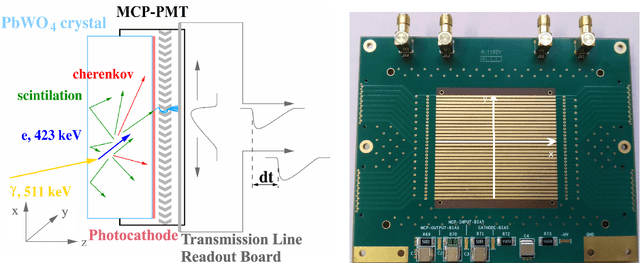


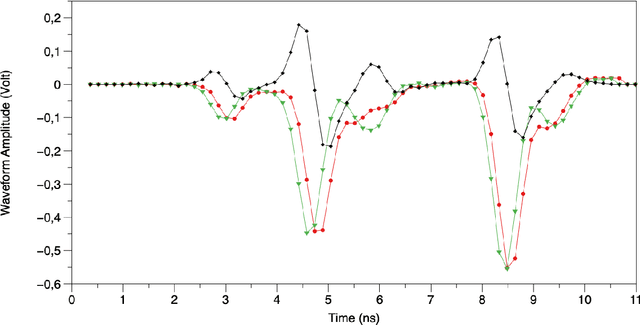
This article presents a physics-informed deep learning method for the quantitative estimation of the spatial coordinates of gamma interactions within a monolithic scintillator, with a focus on Positron Emission Tomography (PET) imaging. A Density Neural Network approach is designed to estimate the 2-dimensional gamma photon interaction coordinates in a fast lead tungstate (PbWO4) monolithic scintillator detector. We introduce a custom loss function to estimate the inherent uncertainties associated with the reconstruction process and to incorporate the physical constraints of the detector. This unique combination allows for more robust and reliable position estimations and the obtained results demonstrate the effectiveness of the proposed approach and highlights the significant benefits of the uncertainties estimation. We discuss its potential impact on improving PET imaging quality and show how the results can be used to improve the exploitation of the model, to bring benefits to the application and how to evaluate the validity of the given prediction and the associated uncertainties. Importantly, our proposed methodology extends beyond this specific use case, as it can be generalized to other applications beyond PET imaging.