 Add to Chrome
 Add to Firefox
 Add to Edge
Illusions of the Gold Standard: A Large-scale Analysis of Human Evaluation Protocols for Long-form Text Generation
Jun 09, 2026
Human evaluation plays a critical role in assessing the quality of generated text. However, the reliability and reproducibility of these evaluations depend on transparent and well-documented protocols -- details that are frequently missing in current practice. In this work, we conduct a large-scale analysis of human evaluation protocols for evaluating long-form generation tasks in *CL conference publications from 2023--2025, including a full manual review of 284 papers and LLM-assisted analysis for another 1.8k+ papers. We define a set of 20 reportable criteria related to reproducibility of human evaluation studies, and apply these criteria to systematically examine reporting norms and practices within the community. We find widespread under-reporting of important aspects of human evaluation study design, leading to ambiguity about what was measured and how, who contributed judgments, and how judgments should be interpreted. Based on these findings, we outline actionable recommendations to support more transparent and reproducible reporting in future research. Our analysis code and annotated dataset can be found at: https://github.com/larchlab/Illusions-of-the-Gold-Standard

Reliability Across Parametric and External Knowledge: Understanding Knowledge Handling in LLMs
Feb 19, 2025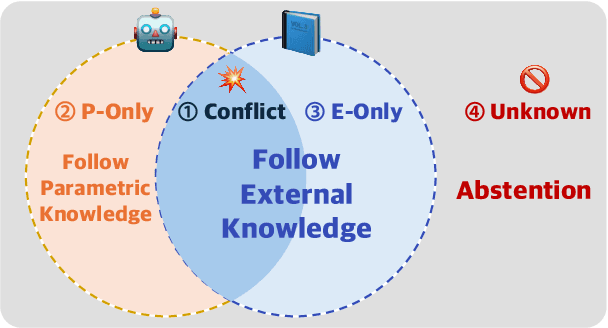
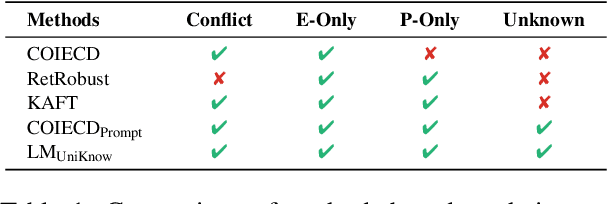
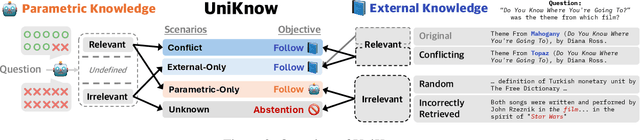
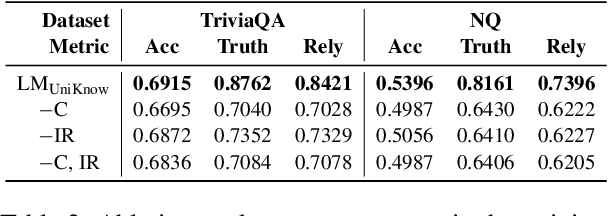
Large Language Models (LLMs) enhance their problem-solving capability by leveraging both parametric and external knowledge. Beyond leveraging external knowledge to improve response accuracy, they require key capabilities for reliable knowledge-handling: resolving conflicts between knowledge sources, avoiding distraction from uninformative external knowledge, and abstaining when sufficient knowledge is unavailable. Prior studies have examined these scenarios in isolation or with limited scope. To systematically evaluate these capabilities, we introduce a comprehensive framework for analyzing knowledge-handling based on two key dimensions: the presence of parametric knowledge and the informativeness of external knowledge. Through analysis, we identify biases in knowledge utilization and examine how the ability to handle one scenario impacts performance in others. Furthermore, we demonstrate that training on data constructed based on the knowledge-handling scenarios improves LLMs' reliability in integrating and utilizing knowledge.