 Add to Chrome
 Add to Firefox
 Add to Edge
Relevance-Aware Rule: Structural Deletion of Irrelevant Conditions in Decision Trees
Jul 15, 2026
Decision trees generate interpretable if--then rules, yet they contain irrelevant conditions (IRCs). These IRCs arise from the structural mechanism of tree splitting and persist even in modern optimal sparse tree induction algorithms. Existing IRC deletion methods overlook this structural mechanism; therefore, they either preserve the original tree too loosely to remain reliable, or too strictly to achieve meaningful simplification. This study provides theoretical foundations for reliable IRC deletion by establishing theorems and propositions related to the underlying IRC mechanism. The key finding is that a binary split shifts class proportions in opposite directions relative to the parent. Specifically, an increase in the class-1 proportion along one branch necessitates an increase in the class-0 proportion along its sibling, thereby generating a C1-link and a C0-link. Based on this structural fact, we propose a structural IRC deletion framework. Relative to each leaf, links that increase the leaf-class proportion are matched, whereas links that increase the proportion of the opposite leaf-class are mismatched. These mismatched links are flagged as structurally suspicious IRC candidates. Rather than deleting them outright, the framework rigorously diagnoses their relevance by assessing prediction reliability. It selectively deletes conditions that are structurally and empirically irrelevant, while strictly protecting those whose deletion would reduce the rule's reliability. Experimental results confirm that the proposed framework achieves substantial rule simplification without sacrificing the reliability of the original tree.

An intelligent financial portfolio trading strategy using deep Q-learning
Aug 31, 2019
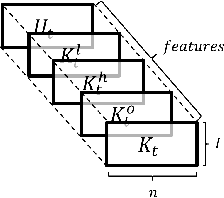


Portfolio traders strive to identify dynamic portfolio allocation schemes so that their total budgets are well allocated through the investment horizon. This study proposes a novel portfolio trading strategy in which an intelligent agent is trained to identify an optimal trading action by using an algorithm called deep Q-learning. This study formulates a portfolio trading process as a Markov decision process in which the agent can learn about the financial market environment, and it identifies a deep neural network structure as an approximation of the Q-function. To ensure applicability to real-world trading, we devise three novel techniques that are both reasonable and implementable. First, the agent's action space is modeled as a combinatorial action space of trading directions with prespecified trading sizes for each asset. Second, we introduce a mapping function that can replace an initially-determined action that may be infeasible with a feasible action that is reasonably close to the original, ideal action. Last, we introduce a technique by which an agent simulates all feasible actions in each state and learns about these experiences to derive a multi-asset trading strategy that best reflects financial data. To validate our approach, we conduct backtests for two representative portfolios and demonstrate superior results over the benchmark strategies.