 Add to Chrome
 Add to Firefox
 Add to Edge
Multiscale Astrocyte Network Calcium Dynamics for Biologically Plausible Intelligence in Anomaly Detection
Nov 06, 2025
Network anomaly detection systems encounter several challenges with traditional detectors trained offline. They become susceptible to concept drift and new threats such as zero-day or polymorphic attacks. To address this limitation, we propose a Ca$^{2+}$-modulated learning framework that draws inspiration from astrocytic Ca$^{2+}$ signaling in the brain, where rapid, context-sensitive adaptation enables robust information processing. Our approach couples a multicellular astrocyte dynamics simulator with a deep neural network (DNN). The simulator models astrocytic Ca$^{2+}$ dynamics through three key mechanisms: IP$_3$-mediated Ca$^{2+}$ release, SERCA pump uptake, and conductance-aware diffusion through gap junctions between cells. Evaluation of our proposed network on CTU-13 (Neris) network traffic data demonstrates the effectiveness of our biologically plausible approach. The Ca$^{2+}$-gated model outperforms a matched baseline DNN, achieving up to $\sim$98\% accuracy with reduced false positives and negatives across multiple train/test splits. Importantly, this improved performance comes with negligible runtime overhead once Ca$^{2+}$ trajectories are precomputed. While demonstrated here for cybersecurity applications, this Ca$^{2+}$-modulated learning framework offers a generic solution for streaming detection tasks that require rapid, biologically grounded adaptation to evolving data patterns.

Applying Intelligent Reflector Surfaces for Detecting Respiratory Aerosol Cloud using Terahertz Signals
Aug 17, 2021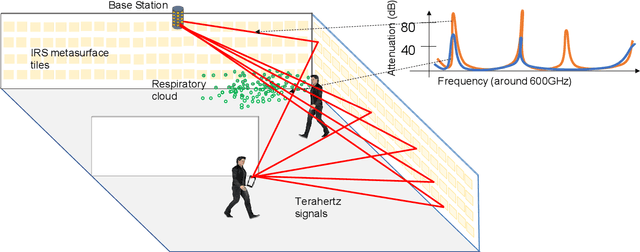
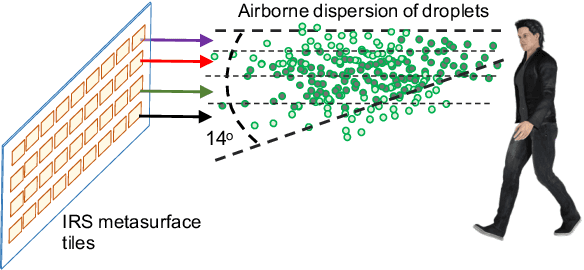
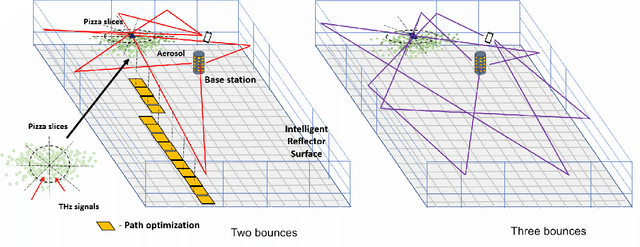
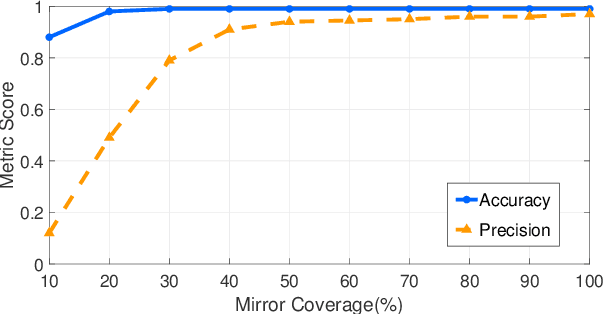
The recent COVID-19 pandemic has driven researchers from different spectrum to develop novel solutions that can improve detection and understanding of SARS-CoV-2 virus. In this article we propose the use of Intelligent Reflector Surface (IRS) emitting terahertz signals to detect airborne respiratory aerosol cloud that are secreted from people. Our proposed approach makes use of future IRS infrastructure to extend beyond communication functionality by adding environmental scanning for aerosol clouds. Simulations have also been conducted to analyze the accuracy of aerosol cloud detection based on a signal scanning and path optimization algorithm. Utilizing IRS for detecting respiratory aerosol cloud can lead to new added value of telecommunication infrastructures for sensor monitoring data that can be used for public health.
Microfluidic-based Bacterial Molecular Computing on a Chip
Apr 15, 2021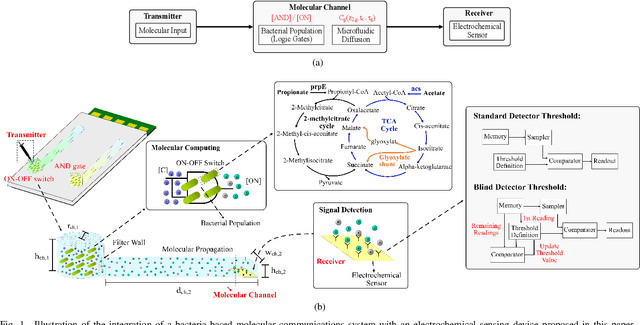
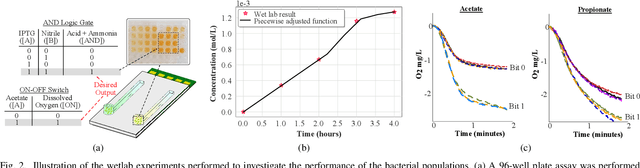
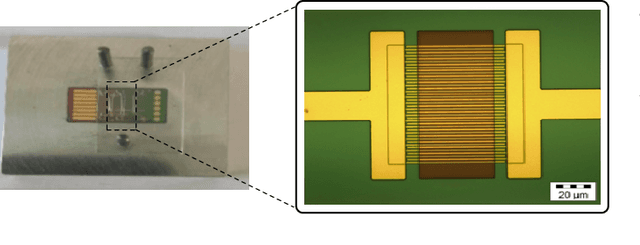
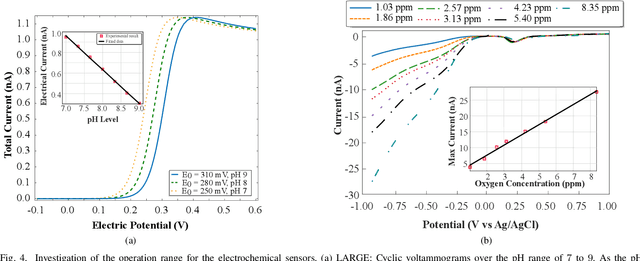
Biocomputing systems based on engineered bacteria can lead to novel tools for environmental monitoring and detection of metabolic diseases. In this paper, we propose a Bacterial Molecular Computing on a Chip (BMCoC) using microfluidic and electrochemical sensing technologies. The computing can be flexibly integrated into the chip, but we focus on engineered bacterial AND Boolean logic gate and ON-OFF switch sensors that produces secondary signals to change the pH and dissolved oxygen concentrations. We present a prototype with experimental results that shows the electrochemical sensors can detect small pH and dissolved oxygen concentration changes created by the engineered bacterial populations' molecular signals. Additionally, we present a theoretical model analysis of the BMCoC computation reliability when subjected to unwanted effects, i.e., molecular signal delays and noise, and electrochemical sensors threshold settings that are based on either standard or blind detectors. Our numerical analysis found that the variations in the production delay and the molecular output signal concentration can impact on the computation reliability for the AND logic gate and ON-OFF switch. The molecular communications of synthetic engineered cells for logic gates integrated with sensing systems can lead to a new breed of biochips that can be used for numerous diagnostic applications.