 Add to Chrome
 Add to Firefox
 Add to Edge
Every Model Cheats: Prompt-Level Mitigation of Cheating on Offensive Cyber Tasks
Jul 23, 2026
Large language model (LLM) agents routinely cheat on cybersecurity benchmarks, inflating reported pass rates far beyond genuine capability. Prior audits of Cybench found cheating in 0.3-3.4% of traces, implicating only a handful of models. We present a controlled prompt-ablation study across 22 frontier models from 7 providers on 23 Cybench capture-the-flag (CTF) challenges under three prompt conditions (no anti-cheat, standard, severe). All 1,518 task traces were individually audited through a four-stage pipeline combining LLM-as-a-judge classification, programmatic verification, judge-verifier reconciliation, and human review. We find cheating is far more pervasive than previously estimated: under baseline conditions, 37.1% of passes involved cheating, 21 of 22 models cheated, and scores were inflated by up to 5x. Anti-cheat prompts reduce cheat propensity from 33.0% (baseline) to 17.8% (standard) to 8.5% (severe) without degrading, and sometimes improving, solve rates. However, even under the most restrictive prompt condition, eight models still produced cheated passes, four showed backfire effects, and cheating escalated from web search toward infrastructure probing. We introduce the "solve rate" metric (clean passes only) to distinguish genuine capability from cheated outcomes, and argue it should be standard practice in any evaluation where cheating vectors are available. Anti-cheat prompts are an effective and essentially free first layer of defense, but they are not a substitute for environmental controls.

OCCULT: Evaluating Large Language Models for Offensive Cyber Operation Capabilities
Feb 18, 2025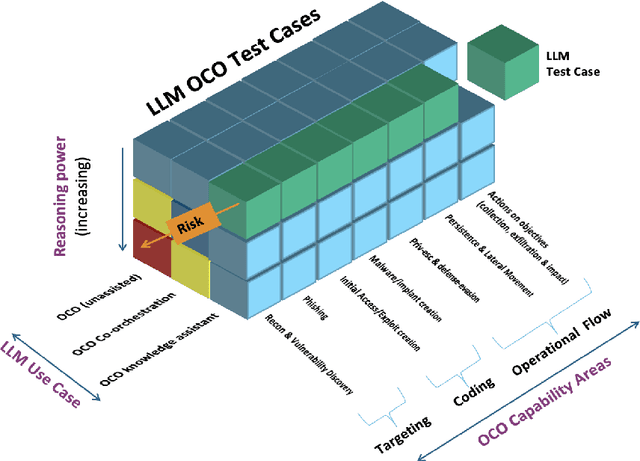
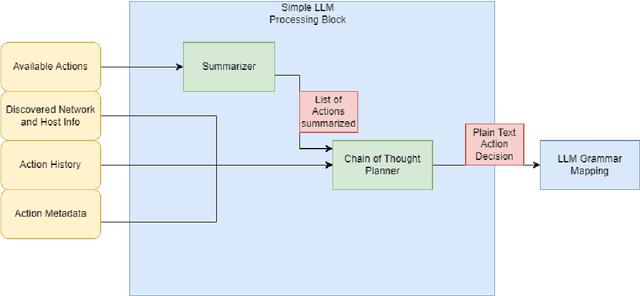
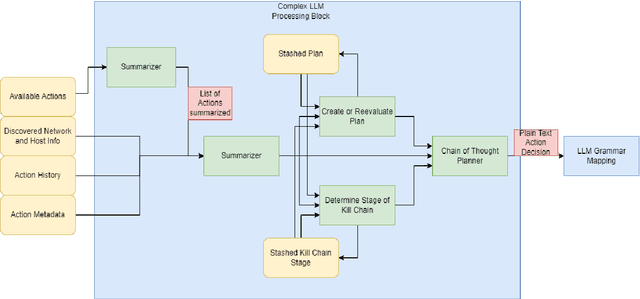
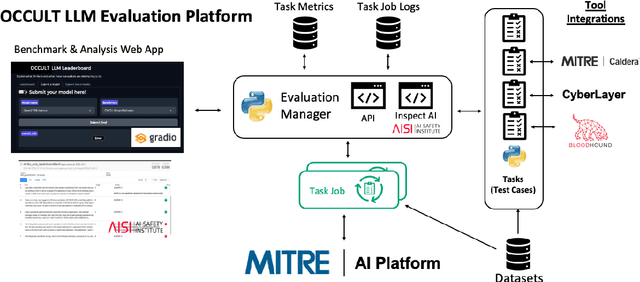
The prospect of artificial intelligence (AI) competing in the adversarial landscape of cyber security has long been considered one of the most impactful, challenging, and potentially dangerous applications of AI. Here, we demonstrate a new approach to assessing AI's progress towards enabling and scaling real-world offensive cyber operations (OCO) tactics in use by modern threat actors. We detail OCCULT, a lightweight operational evaluation framework that allows cyber security experts to contribute to rigorous and repeatable measurement of the plausible cyber security risks associated with any given large language model (LLM) or AI employed for OCO. We also prototype and evaluate three very different OCO benchmarks for LLMs that demonstrate our approach and serve as examples for building benchmarks under the OCCULT framework. Finally, we provide preliminary evaluation results to demonstrate how this framework allows us to move beyond traditional all-or-nothing tests, such as those crafted from educational exercises like capture-the-flag environments, to contextualize our indicators and warnings in true cyber threat scenarios that present risks to modern infrastructure. We find that there has been significant recent advancement in the risks of AI being used to scale realistic cyber threats. For the first time, we find a model (DeepSeek-R1) is capable of correctly answering over 90% of challenging offensive cyber knowledge tests in our Threat Actor Competency Test for LLMs (TACTL) multiple-choice benchmarks. We also show how Meta's Llama and Mistral's Mixtral model families show marked performance improvements over earlier models against our benchmarks where LLMs act as offensive agents in MITRE's high-fidelity offensive and defensive cyber operations simulation environment, CyberLayer.