 Add to Chrome
 Add to Firefox
 Add to Edge
Functional and Secure Code Generation with Task Vectors
Jul 08, 2026
Large language models (LLMs) are increasingly used for code generation, but they struggle to generate functional code free of security vulnerabilities. Prior work to improve the secure code generation abilities of such coding LLMs has largely focused on evaluating code functionality and security separately using different datasets, or focused on finding vulnerabilities post-generation. At the same time, the text-generation domain has seen significant work on alignment techniques, where models are tuned such that their outputs exhibit certain qualities (e.g., helpfulness, harmlessness). Of particular interest is task-vector arithmetic, where linear operations on LLM weights can be used to arbitrarily enhance alignment while incurring only minimal computational overhead. We develop a novel method, SecVecCoder, leveraging task vectors to produce trustworthy code that is simultaneously functional and secure without the need for post-generation adjustment. Across six coding LLMs from three families on the CodeGuard+ benchmark, SecVecCoder improves the rate of trustworthy code completions by 2.1-36.0 percentage points over the base model, with improvements on unseen CWE types reaching up to 39.1 percentage points. Since the effectiveness of the coding LLM relies only on changing the model weights, SecVecCoder requires no method-specific decoding and hence achieves a decoding latency within 0.6% of the base model's, on average.

LLbezpeky: Leveraging Large Language Models for Vulnerability Detection
Jan 02, 2024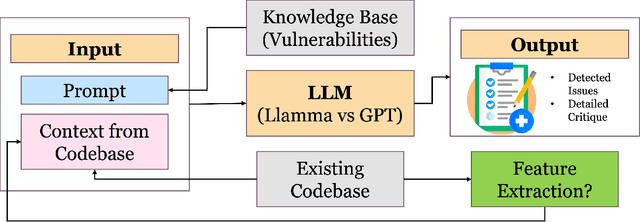
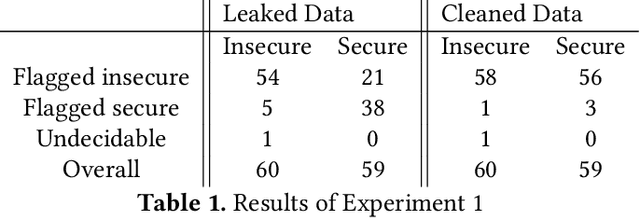
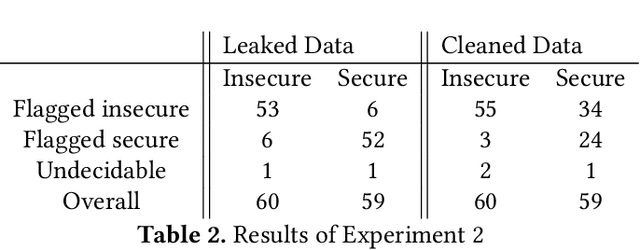
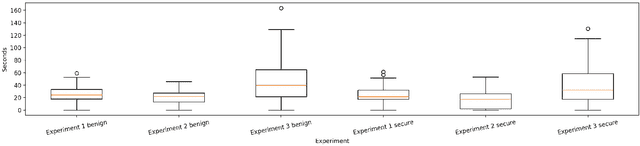
Despite the continued research and progress in building secure systems, Android applications continue to be ridden with vulnerabilities, necessitating effective detection methods. Current strategies involving static and dynamic analysis tools come with limitations like overwhelming number of false positives and limited scope of analysis which make either difficult to adopt. Over the past years, machine learning based approaches have been extensively explored for vulnerability detection, but its real-world applicability is constrained by data requirements and feature engineering challenges. Large Language Models (LLMs), with their vast parameters, have shown tremendous potential in understanding semnatics in human as well as programming languages. We dive into the efficacy of LLMs for detecting vulnerabilities in the context of Android security. We focus on building an AI-driven workflow to assist developers in identifying and rectifying vulnerabilities. Our experiments show that LLMs outperform our expectations in finding issues within applications correctly flagging insecure apps in 91.67% of cases in the Ghera benchmark. We use inferences from our experiments towards building a robust and actionable vulnerability detection system and demonstrate its effectiveness. Our experiments also shed light on how different various simple configurations can affect the True Positive (TP) and False Positive (FP) rates.