 Add to Chrome
 Add to Firefox
 Add to Edge
The Subjectivity of Respect in Police Traffic Stops: Modeling Community Perspectives in Body-Worn Camera Footage
Feb 10, 2026
Traffic stops are among the most frequent police-civilian interactions, and body-worn cameras (BWCs) provide a unique record of how these encounters unfold. Respect is a central dimension of these interactions, shaping public trust and perceived legitimacy, yet its interpretation is inherently subjective and shaped by lived experience, rendering community-specific perspectives a critical consideration. Leveraging unprecedented access to Los Angeles Police Department BWC footage, we introduce the first large-scale traffic-stop dataset annotated with respect ratings and free-text rationales from multiple perspectives. By sampling annotators from police-affiliated, justice-system-impacted, and non-affiliated Los Angeles residents, we enable the systematic study of perceptual differences across diverse communities. To this end, we (i) develop a domain-specific evaluation rubric grounded in procedural justice theory, LAPD training materials, and extensive fieldwork; (ii) introduce a rubric-driven preference data construction framework for perspective-consistent alignment; and (iii) propose a perspective-aware modeling framework that predicts personalized respect ratings and generates annotator-specific rationales for both officers and civilian drivers from traffic-stop transcripts. Across all three annotator groups, our approach improves both rating prediction performance and rationale alignment. Our perspective-aware framework enables law enforcement to better understand diverse community expectations, providing a vital tool for building public trust and procedural legitimacy.

Enhancing Multi-Modal Video Sentiment Classification Through Semi-Supervised Clustering
Jan 11, 2025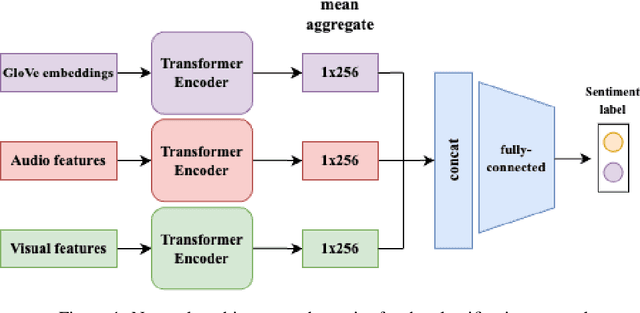
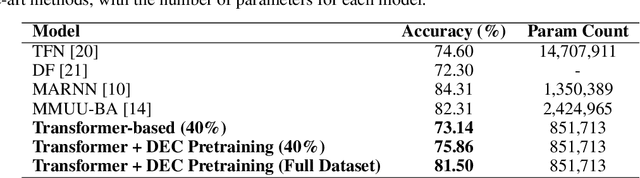
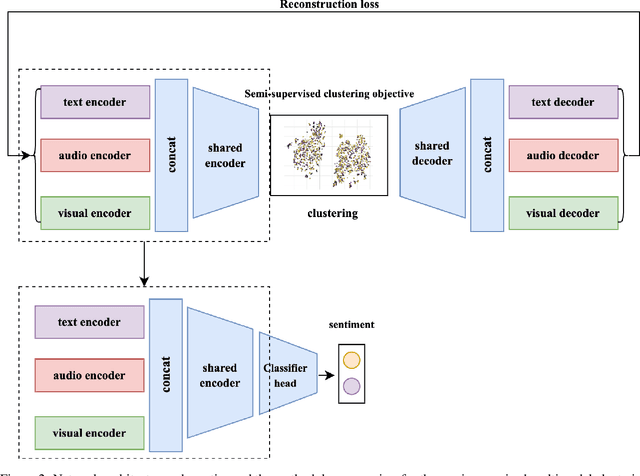
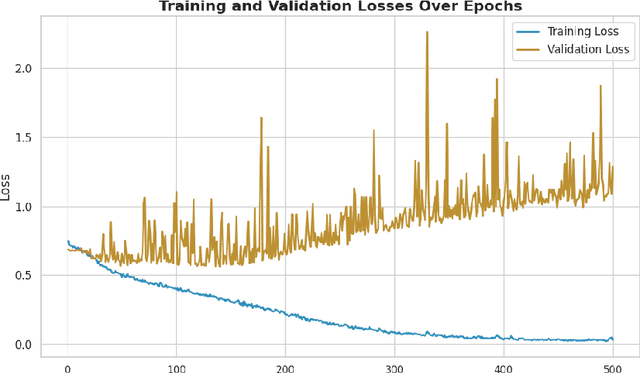
Understanding emotions in videos is a challenging task. However, videos contain several modalities which make them a rich source of data for machine learning and deep learning tasks. In this work, we aim to improve video sentiment classification by focusing on two key aspects: the video itself, the accompanying text, and the acoustic features. To address the limitations of relying on large labeled datasets, we are developing a method that utilizes clustering-based semi-supervised pre-training to extract meaningful representations from the data. This pre-training step identifies patterns in the video and text data, allowing the model to learn underlying structures and relationships without requiring extensive labeled information at the outset. Once these patterns are established, we fine-tune the system in a supervised manner to classify the sentiment expressed in videos. We believe that this multi-modal approach, combining clustering with supervised fine-tuning, will lead to more accurate and insightful sentiment classification, especially in cases where labeled data is limited.
An Explainable Deep Learning-Based Method For Schizophrenia Diagnosis Using Generative Data-Augmentation
Oct 25, 2023In this study, we leverage a deep learning-based method for the automatic diagnosis of schizophrenia using EEG brain recordings. This approach utilizes generative data augmentation, a powerful technique that enhances the accuracy of the diagnosis. To enable the utilization of time-frequency features, spectrograms were extracted from the raw signals. After exploring several neural network architectural setups, a proper convolutional neural network (CNN) was used for the initial diagnosis. Subsequently, using Wasserstein GAN with Gradient Penalty (WGAN-GP) and Variational Autoencoder (VAE), two different synthetic datasets were generated in order to augment the initial dataset and address the over-fitting issue. The augmented dataset using VAE achieved a 3.0\% improvement in accuracy reaching up to 99.0\% and yielded a lower loss value as well as a faster convergence. Finally, we addressed the lack of trust in black-box models using the Local Interpretable Model-agnostic Explanations (LIME) algorithm to determine the most important superpixels (frequencies) in the diagnosis process.