 Add to Chrome
 Add to Firefox
 Add to Edge
Just-in-Time Catching Test Generation at Meta
Jan 30, 2026
We report on Just-in-Time catching test generation at Meta, designed to prevent bugs in large scale backend systems of hundreds of millions of line of code. Unlike traditional hardening tests, which pass at generation time, catching tests are meant to fail, surfacing bugs before code lands. The primary challenge is to reduce development drag from false positive test failures. Analyzing 22,126 generated tests, we show code-change-aware methods improve candidate catch generation 4x over hardening tests and 20x over coincidentally failing tests. To address false positives, we use rule-based and LLM-based assessors. These assessors reduce human review load by 70%. Inferential statistical analysis showed that human-accepted code changes are assessed to have significantly more false positives, while human-rejected changes have significantly more true positives. We reported 41 candidate catches to engineers; 8 were confirmed to be true positives, 4 of which would have led to serious failures had they remained uncaught. Overall, our results show that Just-in-Time catching is scalable, industrially applicable, and that it prevents serious failures from reaching production.

Federated Analytics in Practice: Engineering for Privacy, Scalability and Practicality
Dec 03, 2024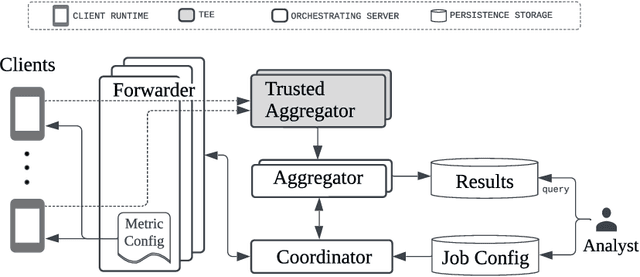
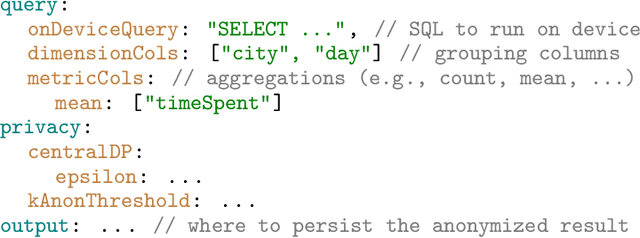
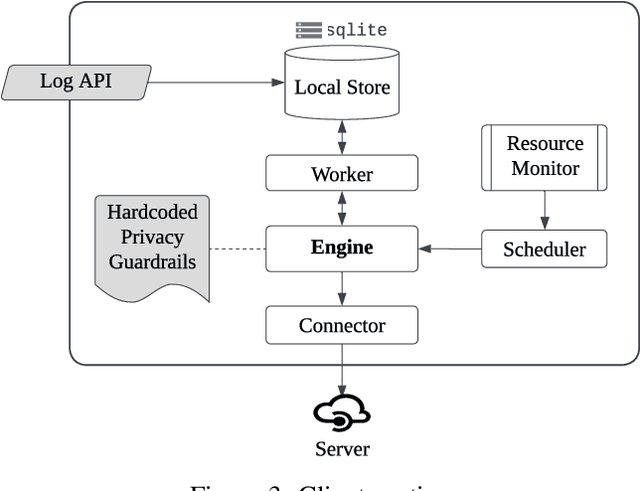
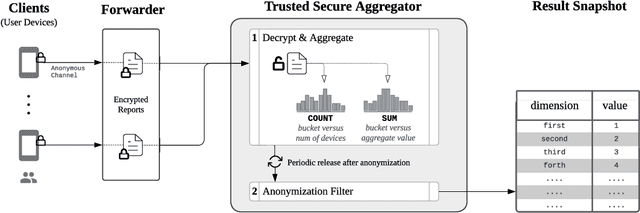
Cross-device Federated Analytics (FA) is a distributed computation paradigm designed to answer analytics queries about and derive insights from data held locally on users' devices. On-device computations combined with other privacy and security measures ensure that only minimal data is transmitted off-device, achieving a high standard of data protection. Despite FA's broad relevance, the applicability of existing FA systems is limited by compromised accuracy; lack of flexibility for data analytics; and an inability to scale effectively. In this paper, we describe our approach to combine privacy, scalability, and practicality to build and deploy a system that overcomes these limitations. Our FA system leverages trusted execution environments (TEEs) and optimizes the use of on-device computing resources to facilitate federated data processing across large fleets of devices, while ensuring robust, defensible, and verifiable privacy safeguards. We focus on federated analytics (statistics and monitoring), in contrast to systems for federated learning (ML workloads), and we flag the key differences.